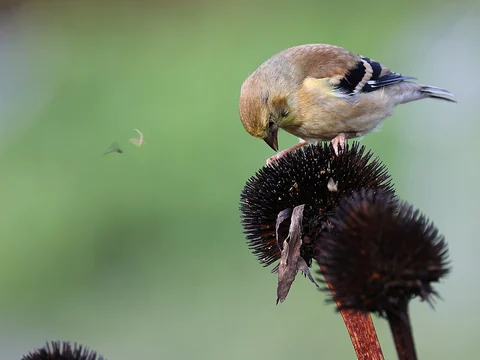
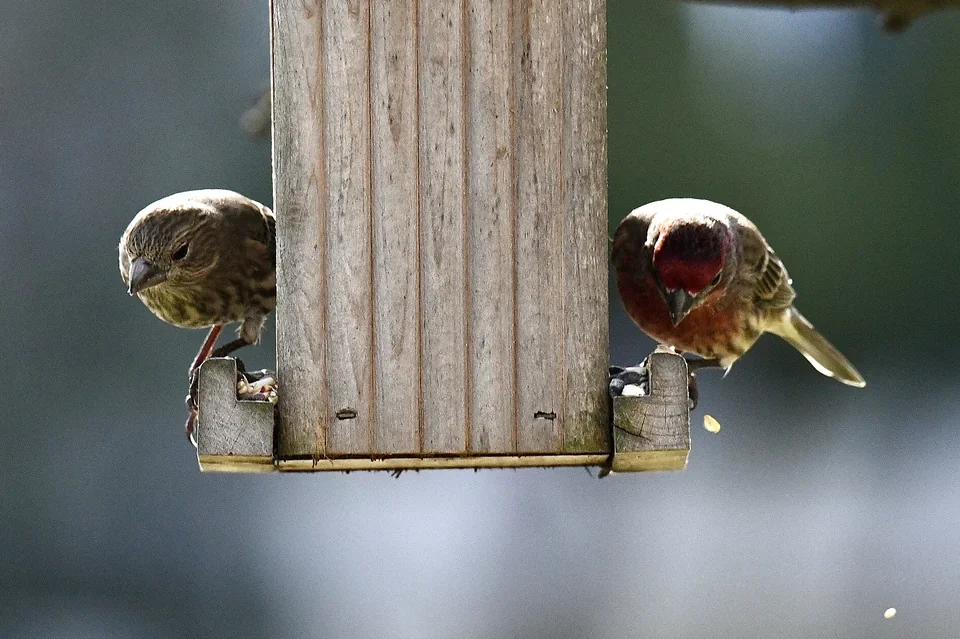
Photo: Michele Dorsey Walfred · House finches at bird feeder.jpg · CC BY 2.0. Resized from the credited adaptation.
The short answer
Summer feeding can fit a well-maintained yard when local wildlife guidance allows it. Offer small quantities, inspect food often, clean equipment, and adjust nectar care to the heat. Pause feeding when disease guidance or your own care limits call for it.
Summer feeding starts with a smaller, cleaner station
You can feed backyard birds in summer when local wildlife guidance allows it and you can keep the station clean. The season does not require a permanently full collection of feeders. Warmth, humidity, rain, and perishable foods make portions and maintenance especially important.
Begin by checking what is already happening. Are birds finishing the food promptly? Is seed collecting beneath the feeder? Does the nectar remain in the reservoir long after it should be replaced? The answers tell you more than a general rule that summer feeding is always good or always unnecessary.
Natural food is part of the picture. Birds may spend more time collecting insects, using fruiting plants, or feeding away from your usual viewing area. A quieter feeder does not automatically mean that food is needed elsewhere in the yard. It may mean the feeder is only a small part of the birds' day.
This guide helps you choose a manageable summer routine, compare food types, recognize reasons to pause, and plan for heat waves or travel. The central decision is practical: offer only what you can keep in good condition. A clean empty feeder during an absence is preferable to old food left out because the birds might arrive later.
Check local guidance before setting the routine
Wildlife advice can change during disease events, bear activity, or other local conditions. Check your state wildlife agency or relevant local authority before relying on a general feeding calendar. An instruction to suspend feeding in your area takes priority over an ordinary backyard routine.
Cornell's avian-influenza and feeder guidance distinguishes different situations, including properties with domestic poultry. Read the current version rather than copying a dated social-media summary. Do not assume an advisory from another state describes your own circumstances.
If you keep poultry or other captive birds, follow the USDA APHIS guidance on separating poultry from wildlife. Wild-bird feeding, footwear, equipment, and shared access need to be considered within that property's biosecurity plan.
For a simple household record, save the official page you checked and note any action that applies. There is no need to turn ordinary feeding into a complicated monitoring system. The useful habit is knowing where current local instructions come from and checking again when you see concerning birds or hear a specific local advisory.
Inventory the food before adding another feeder
Walk the station with an empty container and inspect each food source. Look at the reservoir, ports, tray, support, and ground beneath it. Include forgotten items such as an old orange half, a suet cage behind foliage, or seed caught in a decorative ledge.
Sort what you find into three questions: is the food fresh, is it being used, and can the surface be cleaned fully? A feeder can pass one question and fail another. Fresh seed in a reservoir above a dirty tray still needs attention.
Remove unused equipment if it no longer has a purpose. Fewer active food types make it easier to keep a reliable routine. You can add a seasonal offering later when an identified bird and a manageable care plan justify it.
Write down the actual daily work for the station you keep. Nectar replacement, seed inspection, dish washing, and ground cleanup are separate tasks. If that list is longer than the time you can give it, reduce the setup now. Summer problems often begin when a winter-sized feeding arrangement stays in place even though moisture, spoilage, and household schedules have changed.
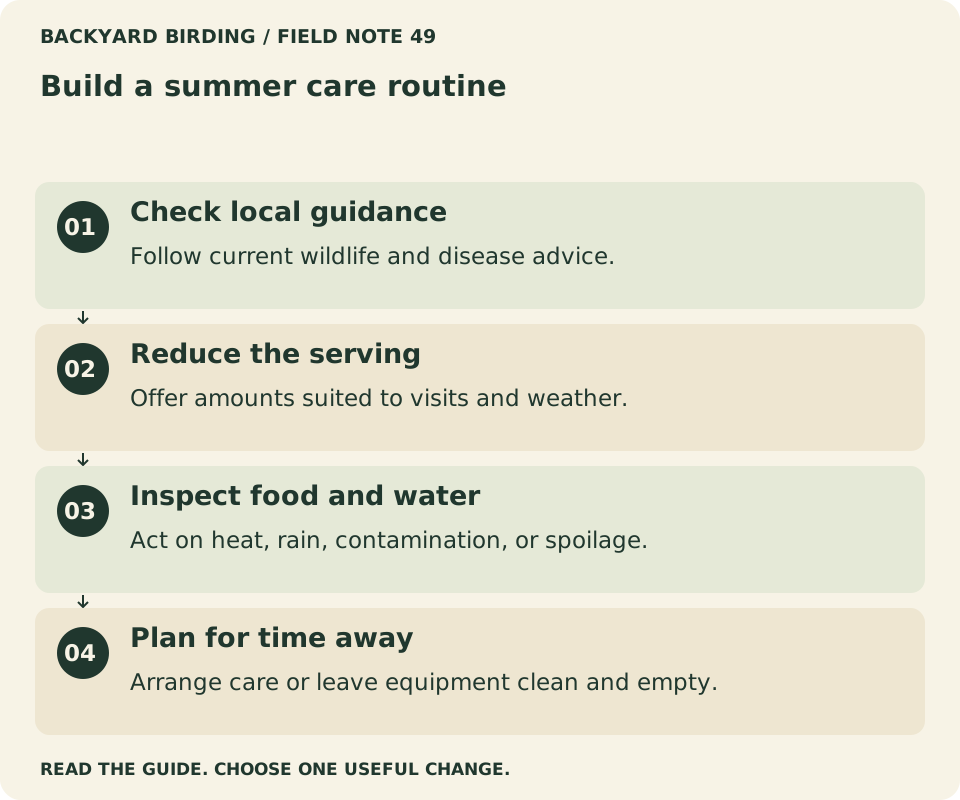
Your visual action map

Read the visual as text
- Check local guidance. Follow current wildlife and disease advice.
- Reduce the serving. Offer amounts suited to visits and weather.
- Inspect food and water. Act on heat, rain, contamination, or spoilage.
- Plan for time away. Arrange care or leave equipment clean and empty.
Reduce seed portions before changing seed brands
Cornell's summer-feeding interview with David Bonter emphasizes the problem of food sitting for long periods in warm, humid conditions. A small quantity that moves through the feeder promptly is easier to inspect than a large reservoir repeatedly topped up.
Start by lowering the fill level. Watch how quickly the birds use the food and whether old material remains at the bottom. A feeder's capacity is a maximum holding volume, not a recommendation to fill it to the top every time.
Do not add fresh seed over clumped or questionable food. Empty the equipment, clean it, and allow appropriate drying before refilling. Mixing new and old material makes it harder to see the condition of either and can spread a localized problem through the whole supply.
Measure the portion consistently for a few days using a dedicated scoop. You do not need a precise nutritional calculation; you need to learn whether a manageable serving is being consumed without persistent residue. If the feeder is repeatedly empty very quickly and remains clean, you can adjust gradually. If food lingers, reduce it further or pause while checking the design and location.
Keep moisture from becoming a hidden problem
Rain is obvious, but humidity and water trapped in corners can be less visible. Inspect the lowest part of the reservoir and any joints where food rests. A dry-looking upper layer does not prove the whole feeder is dry.
Check drainage openings after storms. Small holes can clog with husks and fine fragments. A roof helps reduce direct rainfall, yet wind-driven rain may still reach the food. Treat weather protection and drainage as complementary features, not interchangeable promises.
If seed becomes moldy, discard it. Do not dry it in the sun, rinse it, or mix it into a larger clean batch. You cannot determine safety by whether a bird is willing to eat it. Clean the container and the surrounding feeding surface before restarting.
The same inspection applies to storage. Keep bags closed in a dry secure place, and avoid storing a season's supply in a hot damp outbuilding without checking conditions. Our seed-storage guide explains batch rotation and container care. Smaller purchases can be sensible when your summer visitors use less food than the winter flock did.
Compare summer food types by their care demands
Different foods create different tasks. Choose the ones that fit both local birds and the time you can give them. More variety is not automatically a better station.
| Food | Useful role | Summer concern | Practical response |
|---|---|---|---|
| Dry seed | Supplemental food for seed-eating birds | Moisture and accumulated waste | Use modest fills and inspect the bottom |
| Hummingbird nectar | Energy for visiting hummingbirds | Rapid spoilage and dirty ports | Use small batches and frequent replacement |
| Suet products | Food for suitable visiting species | Softening, contamination, and heat exposure | Follow product directions or suspend use |
| Fruit | Occasional offering for fruit-eating birds | Fast deterioration and insects | Offer small attended portions |
| Mealworms | Supplemental invertebrate food | Wet leftovers and storage needs | Serve a little and remove unused food |
Cornell's summer food overview describes the range of possibilities. Use it to choose selectively rather than treating the list as a requirement.
A good starting station might have one seed feeder and a clean water source. A household interested mainly in hummingbirds might maintain flowers and one nectar feeder instead. The appropriate combination is the one that meets a real purpose without leaving food or water unattended beyond a reasonable care interval.
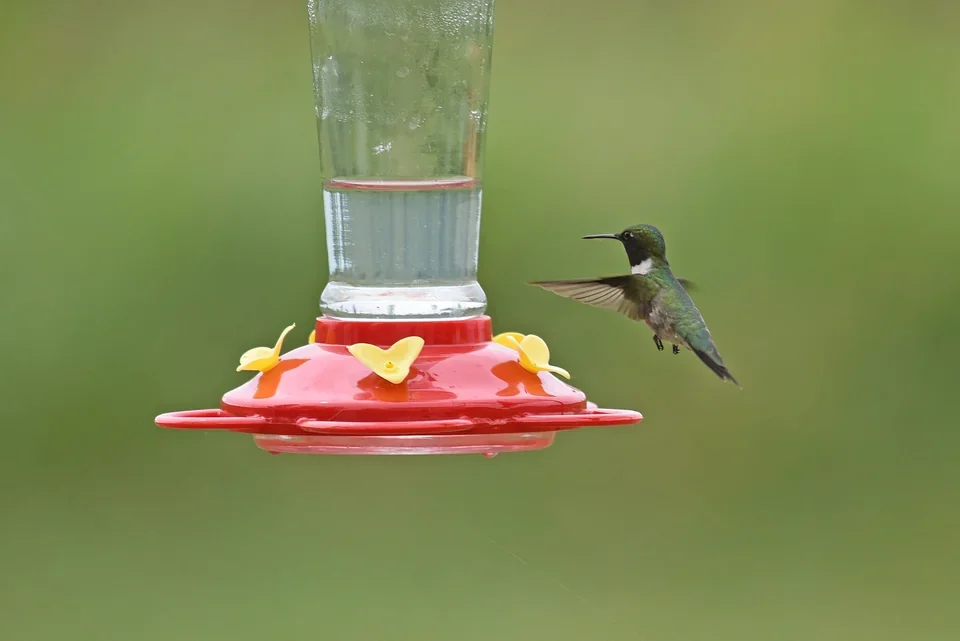
Photo: U.S. Fish and Wildlife Service - Midwest Region · Ruby-throated hummingbird (50036597378).jpg · Public domain. Resized from the credited adaptation.
Make nectar freshness a separate daily decision
Hummingbird nectar needs its own routine. Use plain white granulated sugar and water in the standard one-part-sugar to four-parts-water ratio. Do not add dye, honey, artificial sweeteners, or other substitutes. Our nectar recipe guide explains measurement and small-batch preparation.
In mild conditions, replacement every two to three days is a practical baseline; very hot weather calls for daily replacement, and contamination means acting sooner. Inspect the feeder rather than waiting for a calendar deadline. Cloudiness, visible growth, insects inside, or dirty ports require immediate attention.
Use a fill size that matches visits. A large reservoir partly emptied by one hummingbird can keep old nectar outdoors unnecessarily. Shade can reduce heat exposure, but it does not make nectar last indefinitely or replace washing.
Take the feeder apart so you can reach the ports and seams. A fresh refill poured into a dirty base is not a clean serving. Cornell's hummingbird-feeding guidance and our cleaning guide explain the care questions. If you cannot keep the routine during a heat wave or trip, remove and clean the feeder until you can.
Treat warm-weather suet claims carefully
A product labeled for warm weather may resist softening better than raw fat, but the label does not remove the need to inspect it. Follow the specific product's temperature and storage directions, place it appropriately, and remove it when its condition becomes questionable.
Look at both the food and the cage. Residue can coat wires or collect where a bird grips. A firm-looking center does not tell you whether the surface or support is clean. If the food becomes greasy, rancid-smelling, moldy, or otherwise unsuitable, discard it and clean the equipment.
Use a smaller portion if the birds take it slowly. A large cake that remains for a long period may be poorly matched to the summer visitor pattern. You can also suspend suet during the hottest part of the season and concentrate on other resources.
Our suet guide compares food, feeder, and maintenance choices. Do not substitute bacon grease, salty cooking scraps, or improvised mixtures merely because commercial food seems expensive. The relevant question is whether you can offer an appropriate product in good condition, not how many household leftovers can be placed in a cage.
Keep fruit and jelly offerings modest
Fresh fruit can attract suitable species, but warm conditions make it a short-lived offering. Use a small portion in a holder you can remove and wash. Inspect the fruit and the surface beneath it, where juice and fragments can remain after the visible piece is gone.
Jelly is optional. If used, keep the amount very small in a shallow removable container and avoid deep sticky pools. Cornell's other bird foods guide notes the concentrated sugar and the danger of birds becoming trapped in larger amounts.
Do not extend the life of old fruit by covering it with jelly or adding fresh fruit to a deteriorating layer. Empty and clean the holder. If you repeatedly discard most of the serving, reduce it or stop the offering.
For orioles, habitat and seasonal presence matter more than a permanent orange display. Our oriole guide explains species, timing, and natural food. An untouched orange in midsummer may simply be an unsuitable offering for the birds currently using your yard. There is no need to make the station increasingly elaborate to force a visit.
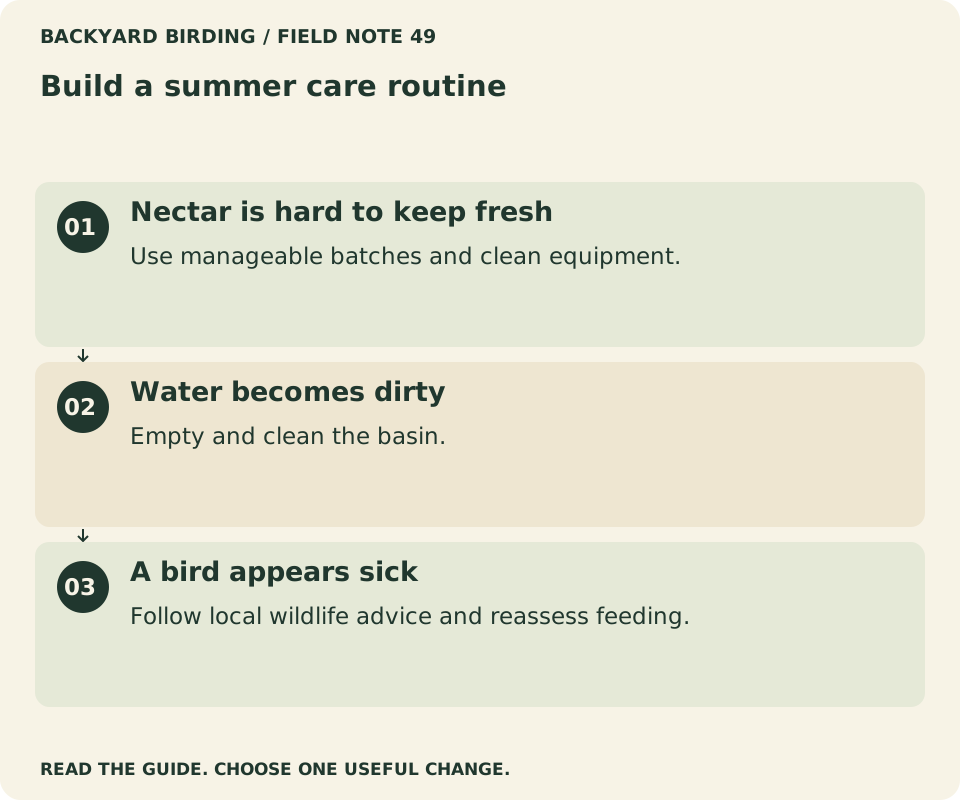
Find your situation

Read the visual as text
- Nectar is hard to keep fresh. Use manageable batches and clean equipment.
- Water becomes dirty. Empty and clean the basin.
- A bird appears sick. Follow local wildlife advice and reassess feeding.
Use mealworms as an attended supplement
Mealworms can be useful for birds that take invertebrate food, but they should remain a small supplement. Choose live or dried products intended for animal feeding and follow their storage directions. A bird carrying one away does not establish that your dish supplies its entire nesting diet.
Serve a modest portion in a removable dish. Watch who actually uses it and remove leftovers. If dried mealworms are moistened, treat them as perishable food and prepare only a small amount for prompt use.
Avoid placing a food dish beside an active nest to make photography easier. Adults need to approach and leave without repeated disturbance. Native plants and natural foraging remain important even when supplied food is accepted readily.
The mealworm guide covers storage, containment, soaking, and cleanup in more detail. If the routine becomes inconvenient during summer travel or heat, stop and clean the dish. Do not leave a large serving outside to compensate for several missed days, and do not use feeder mealworms as an improvised diet for a found chick.
Give clean water as much attention as food
A shallow water source can be useful in summer, but a warm dirty basin is not improved by simply topping it up. Empty, scrub, rinse, and refill as conditions require. Check more often when birds use it heavily, leaves fall in, or heat lowers the water level quickly.
Choose a basin you can lift or drain without straining. Water depth, footing, and a clear exit matter as much as appearance. Our birdbath-depth guide explains the physical setup, while the cleaning guide covers the routine.
A fountain circulates water; it does not disinfect the basin. Pumps and filters collect material and need care too. Keep a quiet shallow access area and inspect splash loss, especially when wind pushes water outside the bowl.
Check other water-holding objects nearby, including saucers and buckets. The CDC recommends regular emptying and scrubbing of containers that can support mosquitoes. Its weekly mosquito-prevention interval is not a reason to leave a visibly dirty birdbath unchanged for a week. Bird use and water condition may require much more frequent attention.
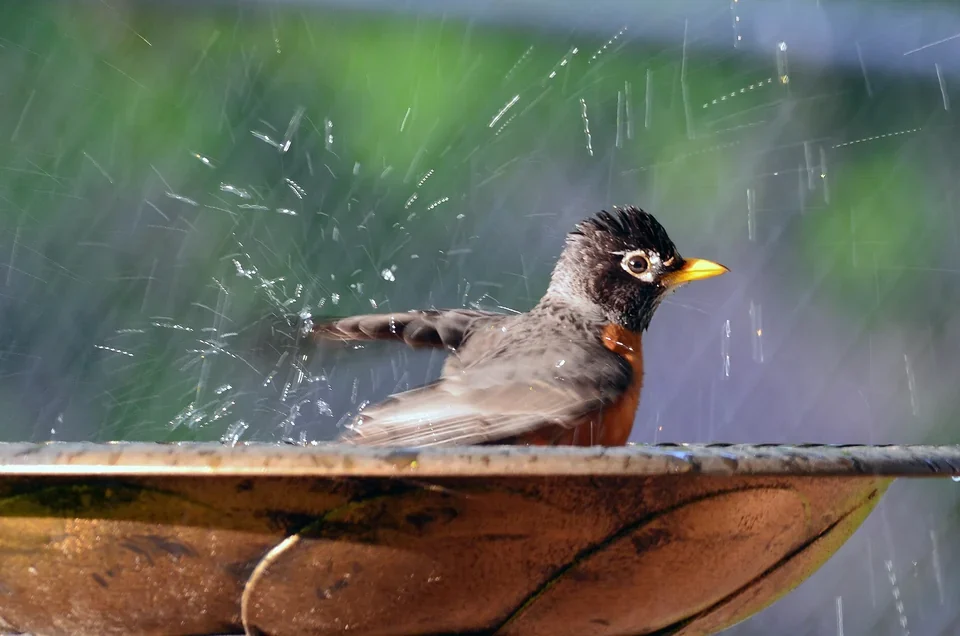
Photo: U.S. Fish and Wildlife Service - Midwest Region · American Robin (42253318841).jpg · Public domain. Resized from the credited adaptation.
Review shade, cover, and glass together
Shade can reduce direct sun on food and water, but moving a station beneath dense vegetation can introduce other problems. Look at drainage, access for cleaning, falling debris, and concealed approaches by cats. A cooler location should still be easy to inspect.
Review the flight route rather than one distance measurement. Birds may move from a feeder to a shrub, bath, fence, or tree, crossing several panes of glass along the way. Reflections change with sun angle and foliage, so a window that looks dark from inside may appear like habitat outside.
Use a suitable exterior pattern or barrier across hazardous glass, following the American Bird Conservancy's home guidance. A single decal does not make the rest of a large pane visible. Our collision-prevention guide covers the practical choices.
Keep the food reachable from stable ground. In hot weather, a difficult servicing route can make quick inspections less likely. The most useful summer placement balances bird access, reduced exposure, and a routine you can sustain. It does not need to be the prettiest corner in a photograph if that corner makes care awkward.
Recognize normal changes in summer visits
Feeder activity changes for many reasons. Natural food availability, breeding behavior, local movement, weather, and your own observation times can all alter what you see. A quiet week does not by itself establish a food shortage or a problem with the feeder.
Watch beyond the feeding station. Birds may be collecting insects in foliage, visiting fruit, or spending time with young in cover. Listen as well as look. A bird can be present without entering the camera's field of view.
Keep a few comparable observations before making a major change. Note time, duration, weather, and the species actually seen. Do not compare an hour on a weekend with a quick glance during a workday as though they measure the same thing.
Our quiet-feeder troubleshooting guide offers a sequence for checking food, equipment, and placement. Use it before buying a new feeder or adding a richer mix. Sometimes the correct response is a smaller fill while the birds make use of abundant natural resources elsewhere.
Know when signs call for a pause
Several birds appearing unwell at a shared station, obvious contamination, or a current local advisory are reasons to stop and seek guidance. Do not keep feeding simply because a few apparently healthy birds still arrive. Shared surfaces deserve attention when the situation changes.
Describe the signs rather than diagnosing. Persistent lethargy, abnormal movement, visible injury, or multiple deaths are information to report to the appropriate wildlife agency or rehabilitator. Keep people and pets away from affected birds and follow current handling advice.
Remove food and clean the station as directed. Include trays, supports, and the ground where waste has accumulated. Restart according to the applicable local recommendation and the condition of the site, not because a fixed number of days in an unrelated article has passed.
Our sick-bird response guide explains what information to gather. A photograph from a distance, date, location, number of birds, and known incidents can help a professional assess the situation. A social-media disease label should not determine your response or replace official advice.
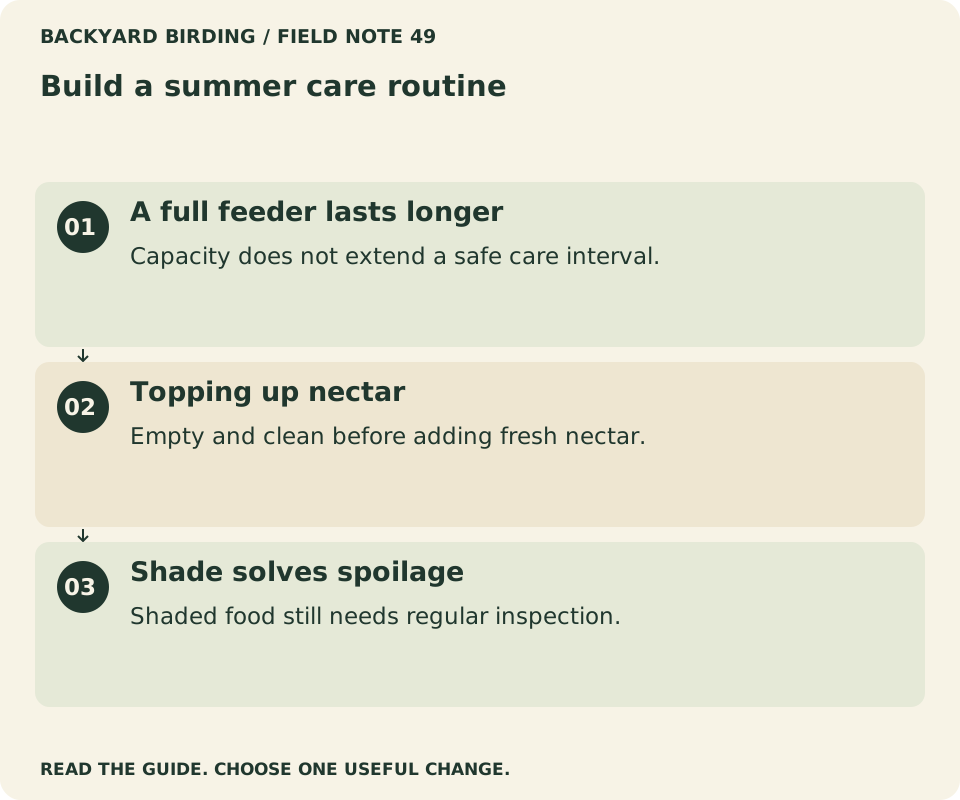
Small mistakes. Better moves.

Read the visual as text
- A full feeder lasts longer. Capacity does not extend a safe care interval.
- Topping up nectar. Empty and clean before adding fresh nectar.
- Shade solves spoilage. Shaded food still needs regular inspection.
Keep wildlife conflicts from growing with the station
Food that attracts birds can also attract mammals and insects. Begin with prevention: secure storage, modest portions, prompt removal of leftovers, and clean ground. Identify the actual visitor before deciding what needs to change.
In areas with bears, follow the wildlife agency's feeding guidance, which may call for seasonal removal of feeders. Do not assume a high mount or a claimed squirrel-resistant design addresses bear access. The relevant local advice takes priority over a desire to keep the feeder active.
For rodents, inspect spill and storage before adding devices. A persistent food source near a building can keep the problem going even when the visible feeder appears tidy. Stop feeding while resolving a conflict you cannot manage safely.
Avoid poisons, sticky coatings, loose entangling lines, and improvised traps around the bird station. Our humane squirrel guide focuses on access routes and suitable placement. A summer setup should remain simple enough that you can see what it attracts and remove the attraction when necessary.
Make room for fledglings without taking over care
Young birds can appear awkward, fluffy, and unsure of their movements. A feathered fledgling outside the nest may still be receiving normal parental care. Keep pets back and observe from a distance rather than assuming the youngster needs a meal from you.
Do not place a found bird on a feeder to “show it the food.” Species and developmental stage matter, and a feeder can expose a vulnerable bird to other visitors. A sparsely feathered nestling, an injured bird, or any known cat contact requires prompt advice from a licensed rehabilitator.
The baby-bird guide gives a practical first-response sequence. Avoid forced water, milk, bread, or improvised hand-feeding. Reducing disturbance and getting the right advice are more useful than testing foods while you wait.
For normal fledgling activity, adjust household routines temporarily. A dog can use another part of the yard, a mower can wait where safe and practical, and children can watch through a window. These modest changes often help more than adding another food source beside the young birds.
Plan for heat waves and days away
Before a forecast period of extreme heat, simplify the station. Reduce portions, inspect water access, and decide which perishable foods you can maintain. Do not leave several demanding offerings active merely because they were manageable during cooler weather.
For travel, either arrange a caretaker who understands the actual routine or remove food and clean the equipment. A large reservoir is not a substitute for nectar replacement, sanitation, or checking wet seed. Written instructions should specify what to discard and when to stop, not only when to refill.
Prepare tools together: dedicated brush, waste container, clean replacement dish, and the correct food supply. Making the task easy reduces the chance that another person will top up a dirty feeder because disassembly feels unclear.
When you return, inspect before restarting. Rainwater, debris, or insects may have collected in empty equipment. Clean, dry as appropriate, and begin with a small fill. The birds using the yard may have changed during your absence, so use current observations rather than restoring the previous quantity automatically.
Use a short morning and evening check
A practical routine can be brief if the station is modest. In the morning, inspect food condition, water cleanliness, and obvious damage or contamination. Refill only after the relevant cleaning task is complete. In the evening, remove perishable leftovers and check whether excess seed remains where it can attract other animals.
Add an extra check after heavy rain, unusual heat, or a concerning bird observation. These events matter more than a rigid schedule. The routine should respond to conditions rather than provide reassurance because a box was ticked earlier in the day.
| Check | What to look for | If something is wrong |
|---|---|---|
| Food | Freshness, moisture, and unused layers | Remove and clean before refilling |
| Water | Debris, droppings, film, and low level | Empty, scrub, rinse, and replace |
| Hardware | Loose mounts and inaccessible residue | Repair or take the item out of use |
| Ground | Whole seed, waste, and unwanted visitors | Clean and reduce the serving |
| Birds | Visible injury or several unwell visitors | Pause and seek current wildlife advice |
Keep a simple record only when it helps solve a recurring problem. A note that the tray wets after every easterly storm can lead to a useful placement change. Recording every ordinary refill is unnecessary if the routine is already clear and reliable.
Work through a hot, humid week
Imagine a station with a large seed hopper, a nectar feeder, a suet cage, and a bath. Birds are visiting, but a week of heat and afternoon storms leaves food damp and the bath dirty sooner than usual. The first useful response is to reduce the workload, not to refill everything more often without inspection.
Empty and inspect the hopper. If food at the bottom is clumped or questionable, discard it and clean the feeder. Once dry and ready for use, add a smaller portion. Check whether that amount moves through promptly before increasing it again. A partly filled hopper is functioning normally; unused capacity is not a problem.
For nectar, use a small fresh fill and daily replacement during very hot conditions, with immediate cleaning if contamination appears. Remove the suet if its condition or product directions make continued use unsuitable. That leaves fewer foods to manage while you learn what the weather is doing to the station.
Give the bath a separate reset. Emptying it removes the contaminated water; scrubbing addresses material on the surface. Refill only after the basin is clean, and inspect splash loss and debris later. A shaded position may help with exposure, but it must still allow safe bird access and convenient care.
At the end of the week, keep the reduced arrangement if it works better. You do not need to restore every feeder just because the weather moderates. A smaller station can provide useful observations with less waste and a clearer routine. The lesson is specific to your setup: choose the amount and variety you can maintain under the conditions you actually have.
Share the routine without relying on memory
When more than one person feeds the birds, unclear responsibility can produce both overfilling and missed cleaning. One person sees an empty feeder and adds food, unaware that another person intended to wash it. A simple handover prevents that confusion.
Use a visible note or agreed location for equipment awaiting cleaning. Keep the dedicated scoop with the correct food, and make the ordinary portion easy to recognize. A mark on a serving container can be helpful as a household convention, provided everyone understands that conditions may call for less or no food.
List the reasons to stop and ask: wet or moldy food, a loose mount, several birds appearing unwell, an unwanted animal conflict, or uncertainty about nectar condition. A caretaker should not feel obliged to keep every feeder full when something seems wrong.
For a short absence, walk through the routine once together. Show how the base opens, where waste goes, and which tools are used. Explain that topping up does not replace cleaning. If the work is more than the caretaker can reasonably do, remove the demanding offering before leaving.
After returning, ask what was observed rather than only whether the feeders were filled. A report that the tray stayed wet or that little food was used can improve the ongoing setup. Shared care works best when the goal is fresh, manageable resources, not an unbroken record of full containers.
Summer feeding questions
Will feeding stop birds from finding natural food?
Free-living birds use multiple resources. Keep supplied food supplemental and maintain habitat rather than treating the feeder as the whole food system. A particular bird's dependence cannot be inferred from how often it appears at your window.
Should I remove feeders every summer?
Follow local wildlife guidance and your ability to maintain the station. Some households can feed responsibly through summer; others are better served by a seasonal pause. The condition of food and water matters more than keeping equipment active on principle.
Is a shaded feeder safe to leave longer?
Shade can reduce direct heat exposure, but it does not prevent contamination or eliminate cleaning. Inspect the actual food and follow the appropriate replacement routine, especially for nectar and wet offerings.
Do fewer visits mean I should add more food?
Usually, inspect and observe first. Natural food and seasonal behavior may explain the change. More food can create waste without increasing meaningful visits. Reduce unused portions while checking the broader yard.
What is the best summer improvement?
Choose the task you can sustain: a smaller clean feeder, a shallow fresh bath, safer glass, or a locally appropriate planting. Keep the improvement specific and manageable. Summer birding works well when the routine leaves enough time to watch the birds themselves.
Watch it. Then try it.
Review the steps and common mistakes in two short, silent animations. Each has a complete text transcript below.
Your four-step action map
Read the complete video transcript
Build a summer care routine.
- Check local guidance. Follow current wildlife and disease advice.
- Reduce the serving. Offer amounts suited to visits and weather.
- Inspect food and water. Act on heat, rain, contamination, or spoilage.
- Plan for time away. Arrange care or leave equipment clean and empty.
Try the steps, then note any problem that still needs attention.
Three mistakes to avoid
Read the complete video transcript
Build a summer care routine.
- A full feeder lasts longer. Capacity does not extend a safe care interval.
- Topping up nectar. Empty and clean before adding fresh nectar.
- Shade solves spoilage. Shaded food still needs regular inspection.
Try the steps, then note any problem that still needs attention.
Both animations use this real photograph by Michele Dorsey Walfred. Photo source · CC BY 2.0. The photo is adapted into original educational animations, not recordings of a field test.
At a glance
| First check | Useful response |
|---|---|
| Check local guidance | Follow current wildlife and disease advice. |
| Reduce the serving | Offer amounts suited to visits and weather. |
| Inspect food and water | Act on heat, rain, contamination, or spoilage. |
| Plan for time away | Arrange care or leave equipment clean and empty. |
Sources & evidence
- avian-influenza and feeder guidance
- USDA APHIS guidance on separating poultry from wildlife
- summer-feeding interview with David Bonter
- summer food overview
- hummingbird-feeding guidance
- other bird foods guide
- CDC recommends regular emptying and scrubbing of containers that can support mosquitoes
- American Bird Conservancy's home guidance
Our standard: real evidence before ratings. Corrections follow our editorial process.
Our verdict & your next actions
Choose the row that describes your setup, then follow the suggested check or adjustment.
| Your situation | Our verdict | Your next action |
|---|---|---|
| Nectar is hard to keep fresh | Use manageable batches and clean equipment. | Review the nectar recipe |
| Water becomes dirty | Empty and clean the basin. | Review bird bath care |
| A bird appears sick | Follow local wildlife advice and reassess feeding. | Respond to a sick bird |
Your pocket field checklist
Tick off the steps as you go.
0 of 4 steps completed
Keep building your knowledge in bird seed, or search the full backyard library.