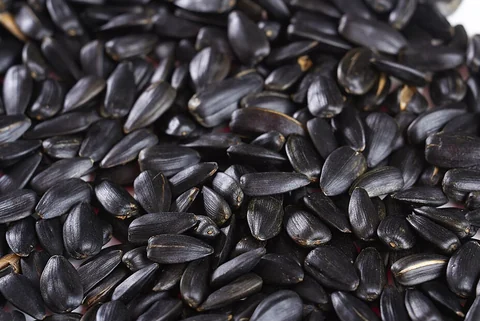
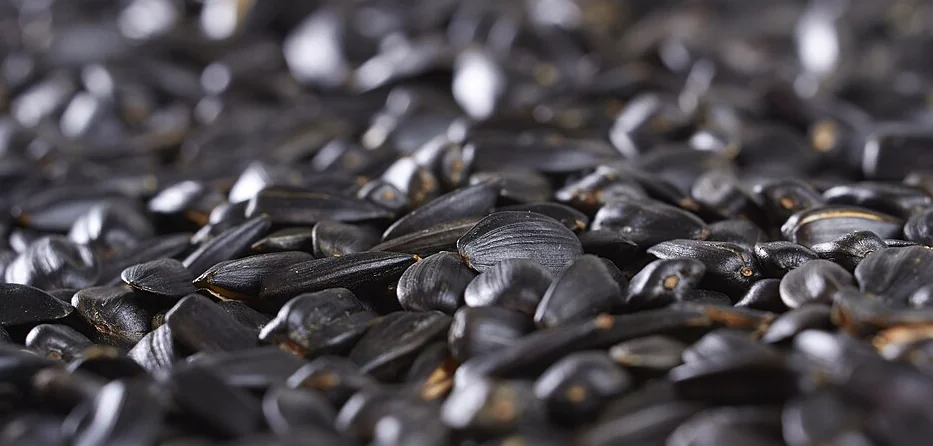
Photo: Dmitry Makeev · Sunflower seeds. img 001.jpg · CC BY-SA 4.0. Cropped, gently adjusted, and resized for this guide.
The short answer
Sunflower hearts remove the shell from the purchase; in-shell seed leaves you with hull cleanup. Compare usable food, the surface underneath the feeder, and how you will keep the supply fresh.
The difference is what you buy and what you clean up
Black-oil sunflower seed is sold inside its shell. Sunflower hearts are the edible kernels with the shell removed; chips are smaller kernel pieces. Both can belong in a backyard feeding routine, but the packaging weight represents different things. With in-shell seed, part of the bag becomes discarded hulls. With hearts, you are buying a prepared kernel rather than paying for that shell weight.
That distinction explains much of the decision. Hearts can reduce visible shell debris on a patio, while in-shell seed may have an attractive purchase price. Neither eliminates the need to inspect food, clean the feeder, and maintain the area below. Choose between them by examining the entire routine rather than treating either as a universally superior food.
Read the label before comparing bags
Look for the actual ingredient description. Black-oil sunflower, striped sunflower, whole hearts, and chips are different products, even when the bags use similar photographs. A mixture may include sunflower alongside other ingredients, making its total weight an unsuitable comparison with a bag containing only kernels.
Check the quantity, packaging condition, date information provided, and recommended storage. If you are comparing online listings, make sure the selected bag size matches the displayed price. Product pages often combine several sizes or formulations. Record the exact item, not simply the brand name, so your comparison can be repeated when you next shop.
Compare cost per usable quantity carefully
The price per pound on an in-shell bag includes the shells birds leave behind. To compare it with hearts, you would need to know how much of that weight is edible. Without a measured yield for the bag, an edible-weight calculation is an estimate. Label the assumption so a small difference in the result does not look more certain than it is.
Use a transparent calculation when you have a defensible estimate. Divide the purchase price by the estimated edible weight. For example, imagine a hypothetical ten-pound bag costing twenty dollars with an assumed edible fraction of seventy percent. Its estimated seven edible pounds would cost about $2.86 each. A hypothetical five-pound bag of hearts costing fifteen dollars would be $3 per pound. These are arithmetic examples, not current prices, measured product yields, or a claim that the assumed percentage fits your seed.
The lesson is the method: compare equivalent usable quantities and keep assumptions visible. Then add the practical cost of cleaning and food you discard. If you cannot estimate edible yield responsibly, compare actual spending and cleanup over several small purchases instead of displaying a deceptively precise savings figure.
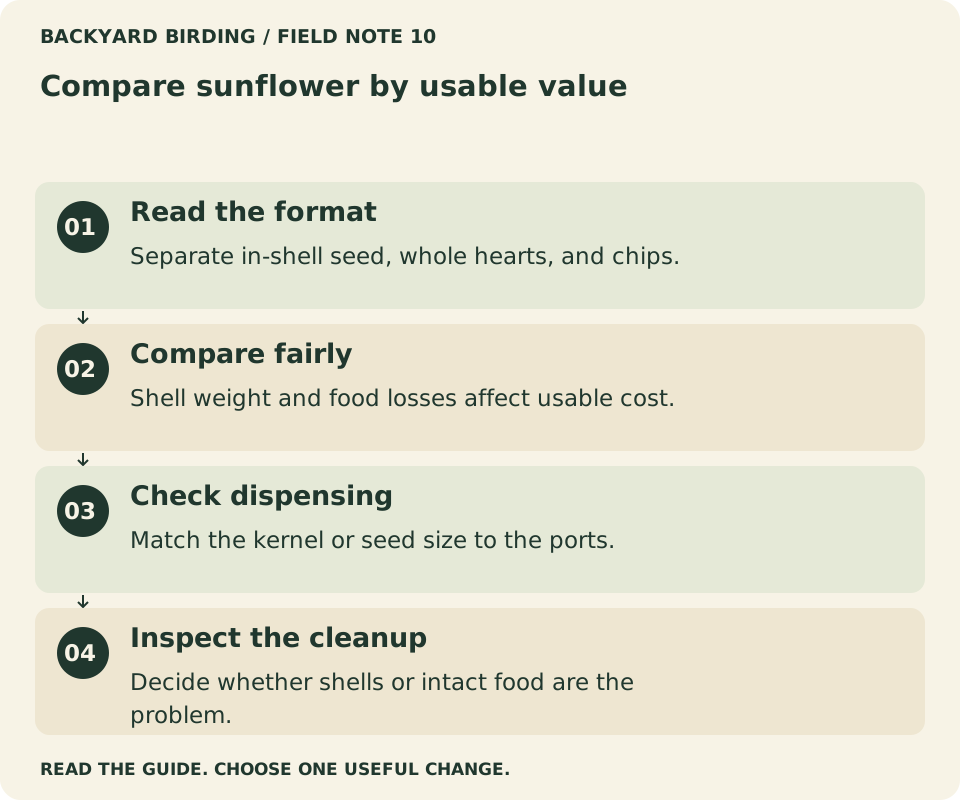
Your visual action map

Read the visual as text
- Read the format. Separate in-shell seed, whole hearts, and chips.
- Compare fairly. Shell weight and food losses affect usable cost.
- Check dispensing. Match the kernel or seed size to the ports.
- Inspect the cleanup. Decide whether shells or intact food are the problem.
Match the food to the feeder's openings
Check the manufacturer's recommended foods. Whole in-shell seeds, intact kernels, and fine chips flow differently through openings. Small fragments can spill from a port intended for larger pieces, while a poorly matched opening can impede larger food. A feeder that worked well with one sunflower product may need reassessment after you switch.
Start with a modest fill and watch the feeding action. Look underneath after several visits. If whole edible pieces collect, examine port size, movement, and assembly before deciding that birds dislike the food. A tray may catch material, but it introduces another surface to maintain and does not repair an incompatible dispensing arrangement.
| Decision point | Black-oil sunflower in shell | Sunflower hearts or chips |
|---|---|---|
| What the bag contains | Kernels plus shells | Edible kernels or pieces |
| Typical visible debris | Discarded hulls as well as any dropped food | Fewer hulls, but kernels can still fall |
| Price comparison | Account for shell weight if estimating value | Compare whole kernels and chips accurately |
| Feeder check | Openings must pass the seed | Small pieces may spill through large ports |
| Care requirement | Inspect food and remove hull accumulation | Inspect exposed kernels and remove dropped food |
| Best practical reason to choose | A workable total cost and manageable cleanup | Reducing shell debris where cleanup matters |
Decide how much shell debris your location can handle
A lawn, gravel border, wooden deck, and apartment balcony present different cleanup problems. Hulls can be easy to see on a hard surface but difficult to remove from narrow gaps. Under a feeder over soil, accumulated material may be less obvious without being maintenance-free. Inspect the actual area rather than assuming that debris disappears outdoors.
Hearts can be particularly useful when the shell itself is the main annoyance. They do not remove droppings, dust, or dropped food. If your concern is a buildup of wet edible seed, changing to hearts may leave the underlying issue unresolved. Identify the material first, then select the adjustment that addresses it.
Keep freshness separate from the shell decision
A shell is not a storage guarantee, and the phrase no mess does not mean that a kernel can remain outside indefinitely. Keep either food dry, protected from pests, and in a quantity you can use sensibly. Inspect for moisture, clumping, mold, unusual odor, or signs of infestation before it reaches the feeder.
Do not mix questionable food into a fresh bag to avoid wasting it. Discard spoiled material and clean the affected container. If food repeatedly deteriorates, look at storage and turnover before switching formats. Buying smaller quantities can be the more useful change, even when a larger bag offers a lower advertised unit price.
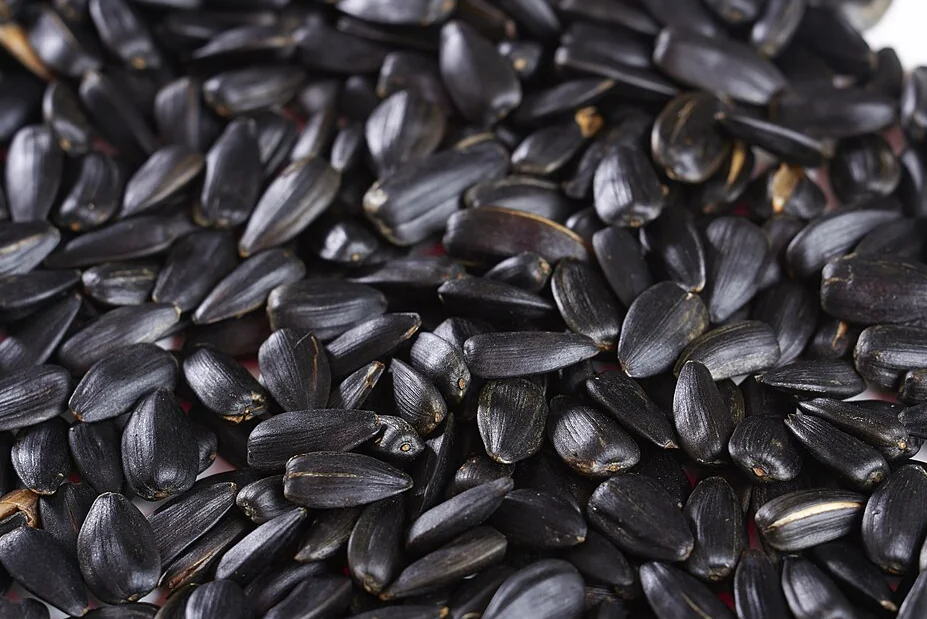
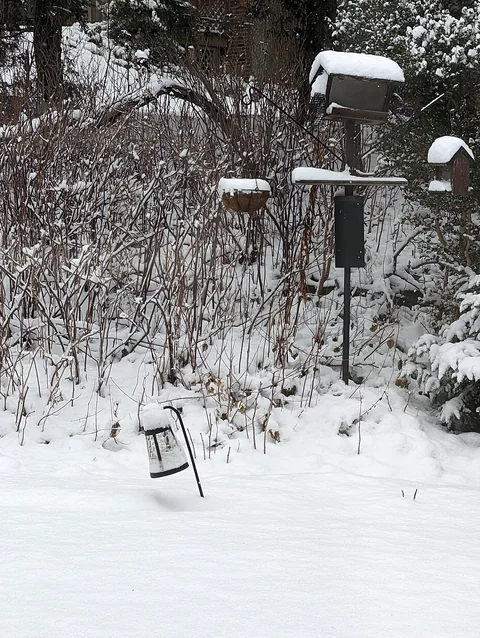
Photo: Dmitry Makeev · Sunflower seeds. img 005.jpg · CC BY-SA 4.0. Cropped, gently adjusted, and resized for this guide.
Run a comparison that answers your own question
Decide what you want to learn before opening the second bag. If the question is cleanup, track the material collected below the same feeder. If the question is spending, record purchase quantities, prices, and discarded food. If the question is bird use, note the visitors and observation periods rather than treating every missing ounce as eaten.
Keep the feeder and location consistent while comparing food, unless a compatibility issue requires a change. Record any such change because it affects interpretation. You do not need a formal experiment to make a sensible household decision, but you do need to avoid attributing every difference to the ingredient when weather, equipment, and observation time also changed.
A patio example: solve the problem you actually have
Imagine a feeder above a paved seating area where the main complaint is shells tracked indoors. Start by confirming that most debris is empty hulls. If so, a compatible hulled sunflower product is a reasonable option to try. Buy a small amount, inspect dispensing, and compare the cleanup workload over similar periods.
Now imagine the same patio covered in whole kernels after each refill. That suggests a different question: how is food escaping? Check the feeder's openings and any loose tray before spending more on a different food format. Changing from shells to expensive kernels while retaining an oversized port may simply make each spill more costly.
These examples illustrate why a problem description matters. Less visible waste, lower purchase price, fewer refill trips, and more bird visits are different goals. A single change may improve one while leaving another unchanged. Choose the measure that matches your reason for considering a switch.
What about finches, cardinals, and mixed visitors?
Sunflower is a widely used feeder food, but individual visits depend on more than its format. The birds present in your region, their access to the feeding surface, and the wider food supply all matter. Consult a species resource for your intended visitors rather than assuming that a marketing label describes a universal preference.
If a bird lands but cannot reach the food, changing from in-shell seed to hearts may not resolve the landing problem. If the feeder works and birds are using it, there may be no need to change simply because another yard uses a different product. A stable, clean routine is a valid outcome even when it does not match the most enthusiastic online recommendation.
Find your situation

Read the visual as text
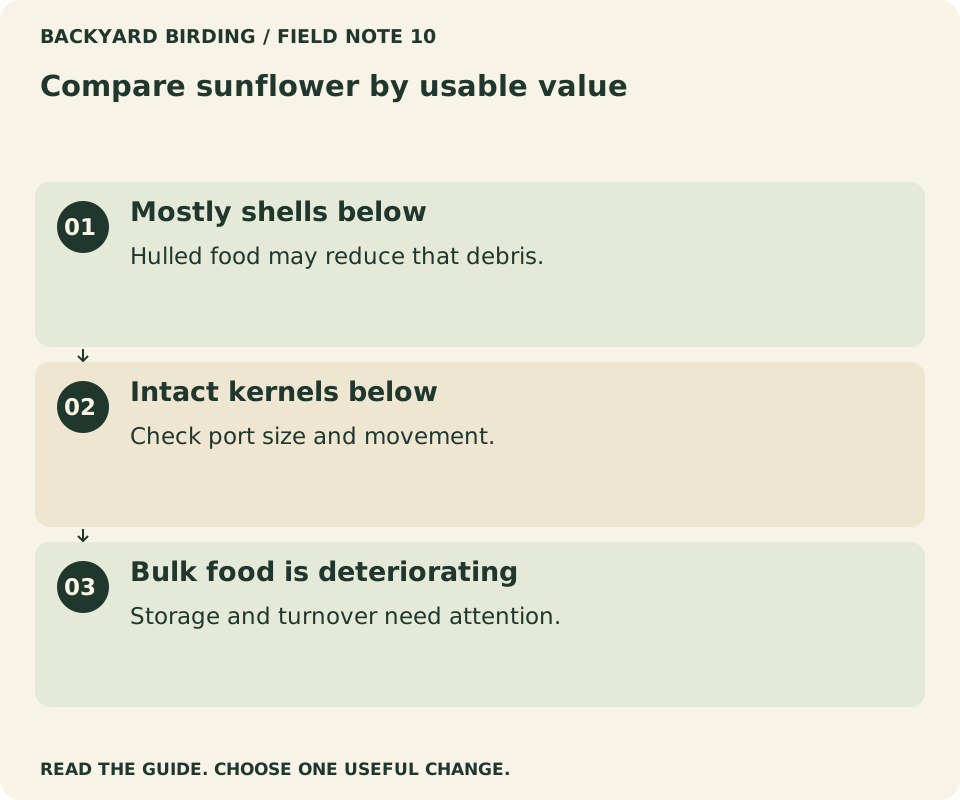
- Mostly shells below. Hulled food may reduce that debris.
- Intact kernels below. Check port size and movement.
- Bulk food is deteriorating. Storage and turnover need attention.
Store a small comparison supply without mixing batches
Keep each product in a clean, dry, securely closed container or its protected original packaging. Retain the label and purchase date. Do not pour the new supply on top of old residue and then lose track of which batch you are evaluating. Use a clean, dry scoop dedicated to bird food.
Choose a storage location away from rain, leaks, and strong temperature swings where possible. Check the bottom of the container, not just the upper layer. A lid can keep new moisture out while trapping moisture already inside, so sealing a damp container is not a solution. Dry the container fully before refilling it.
A useful purchasing checklist
- Identify whether the product is in-shell seed, whole hearts, chips, or a mixture.
- Compare the exact bag size and total price rather than the smallest price shown in a combined listing.
- Verify compatibility with your feeder's recommended food and openings.
- Decide whether you are trying to reduce shells, spending, discarded food, or maintenance time.
- Buy an initial quantity that fits your storage and lets you assess the result without a large commitment.
- Keep the label, record the purchase, and inspect both the feeder and the surface below.
Before buying in bulk, check how much remains in your current bag and how long it has been open. Include any food you had to discard when estimating the next purchase. If the supply has deteriorated before you could use it, a smaller bag is worth comparing even when its price per pound is higher.
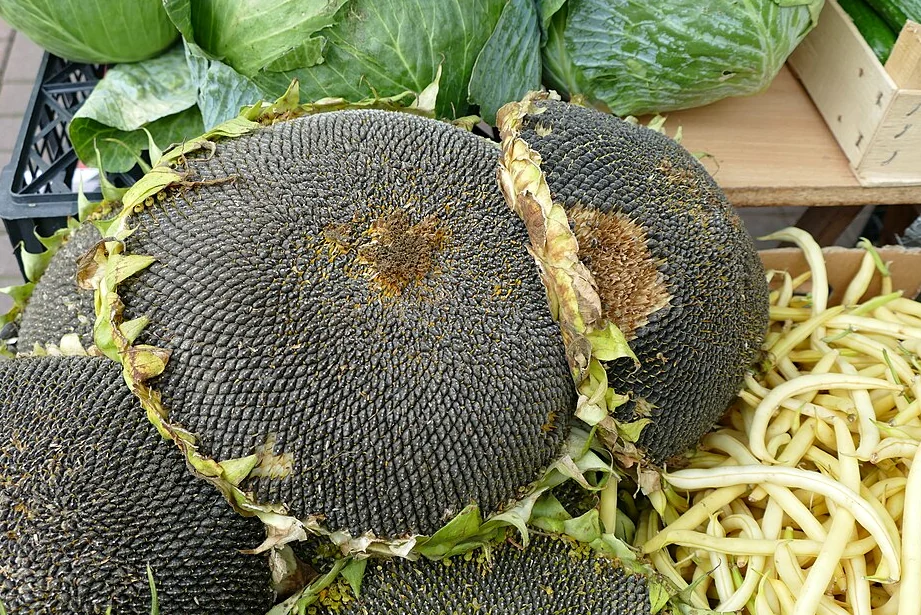
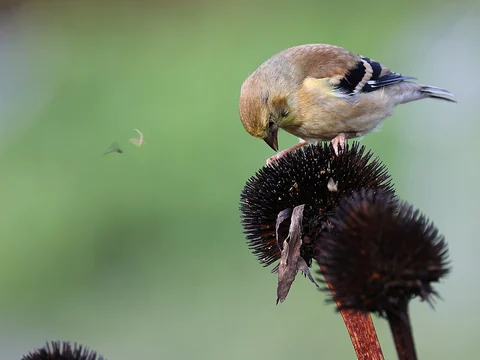
Photo: Kritzolina · Sunflower with seeds 01.jpg · CC BY-SA 4.0. Cropped, gently adjusted, and resized for this guide.
Compare packaging quantities without creating false savings
Keep the comparison in a small table of your own: total price paid, bag weight, food format, and any delivery charge that changes the actual purchase cost. If a discount requires buying several bags, include the storage commitment in the decision. A promotional unit price is not the same as a useful quantity for your household.
When you estimate an edible fraction for in-shell food, label the assumption clearly and consider a range rather than one apparently exact value. If the conclusion reverses when the assumption changes slightly, the price comparison is not decisive. Let the practical differences in cleanup and storage help settle the choice instead of pretending the arithmetic has proved a winner.
Keep the first trial small enough to change course
Choose a quantity you can use and inspect without feeling committed to months of feeding. Confirm that the feeder accepts the new format, then watch both the ports and the ground. Keep the old and new labels so you know exactly what changed; two sunflower-heart products can differ in the amount of broken material they contain.
If the new food creates a different problem, describe it specifically. Fewer hulls but more small pieces falling is a mixed result, not necessarily a failure. You may need a compatible port arrangement, a different kernel size, or simply to keep the former product because its cleanup was more manageable overall. The trial should make the choice clearer, not obligate you to defend the first purchase.
Consider accessibility as part of the cleanup decision
For a caretaker who finds bending, sweeping, or carrying equipment difficult, shell reduction may matter more than a small difference in bag price. Conversely, an accessible outdoor cleanup area may make in-shell seed perfectly manageable. The same products can be sensible choices for different households.
Evaluate the full physical routine: moving the bag, scooping, carrying the feeder, and clearing the surface below. A large economical bag that is hard to handle may be less useful than smaller packages. You do not need to justify that preference with a universal claim about bird nutrition or product superiority. Suitability includes the person maintaining the station.
Small mistakes. Better moves.

Read the visual as text
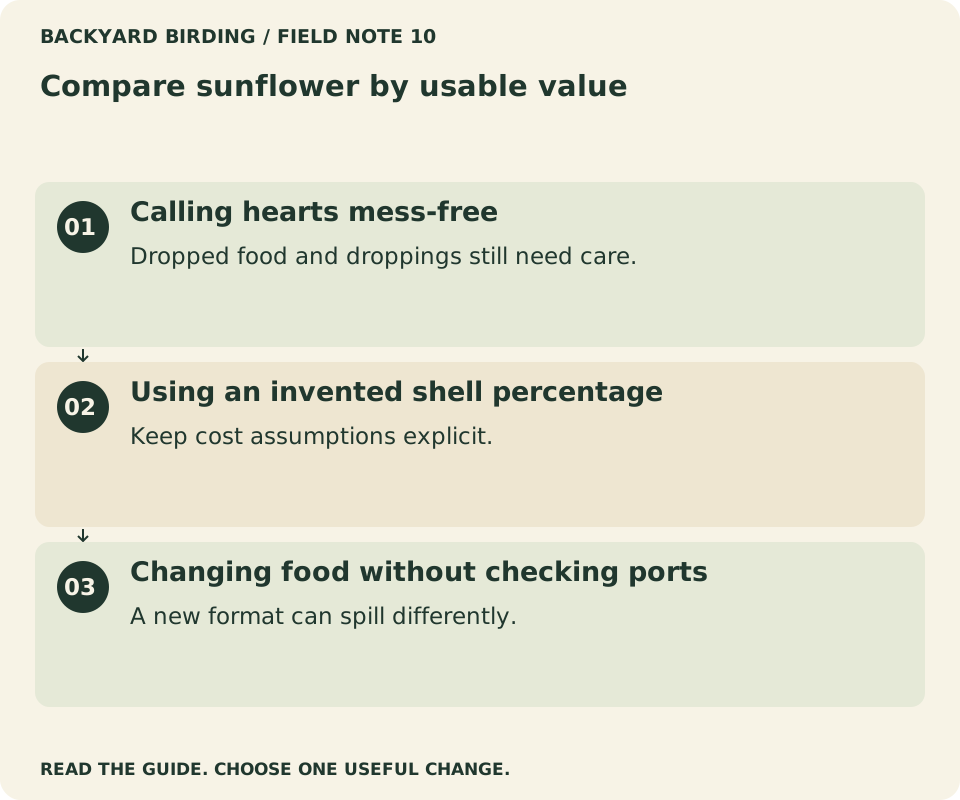
- Calling hearts mess-free. Dropped food and droppings still need care.
- Using an invented shell percentage. Keep cost assumptions explicit.
- Changing food without checking ports. A new format can spill differently.
Make a decision you can revisit
Record why you chose the current format and what would prompt reconsideration. A move to a balcony, a new feeder, or a change in storage can alter the practical balance. Revisit the decision when those conditions change rather than repeating the same calculation every time a bag design changes.
Keep the original bag label or a photograph of it with your note. If the package changes, you can compare the ingredient description and kernel size with the food already working in your feeder. Check the selected weight too, since similar-looking bags may hold different amounts.
Frequently asked questions
Are hearts genuinely mess-free?
They remove the shell from the feeding process, which can substantially reduce that type of debris. They do not prevent dropped kernels, droppings, or other waste. Treat no mess as a description of reduced hull cleanup, not a promise that the feeding area needs no attention.
Can I mix the two?
Only if the feeder is compatible with both and the combination serves a useful purpose. Mixing makes it harder to compare preferences, dispensing, or spending. If you are troubleshooting, evaluate one appropriate product at a time before creating a mixture.
Should I buy whole hearts or chips?
Check port compatibility and the intended food presentation. Smaller pieces may behave differently at the opening and in the tray. Compare the actual products and your observed spillage rather than assuming that smaller or larger pieces are always better.
Is the cheaper bag the economical choice?
Not necessarily. Shell weight, discarded food, incompatible dispensing, and storage losses affect usable value. Use transparent arithmetic when you have reliable inputs, and avoid pretending that a universal percentage predicts your exact cost.
When should I keep using what already works?
When the food is appropriate, birds can access it, waste is manageable, and storage is reliable, there may be no problem to solve. A switch should answer a practical need. It does not need to become an ongoing search for a perfect seed that removes every aspect of feeder care.
For the next part of your setup, read Feeding Birds in Winter: Food, Water, and a Storm-Ready Routine.
Watch it. Then try it.
Review the steps and common mistakes in two short, silent animations. Each has a complete text transcript below.
Your four-step action map
Read the complete video transcript
Compare sunflower by usable value.
- Read the format. Separate in-shell seed, whole hearts, and chips.
- Compare fairly. Shell weight and food losses affect usable cost.
- Check dispensing. Match the kernel or seed size to the ports.
- Inspect the cleanup. Decide whether shells or intact food are the problem.
Try the steps, then note any problem that still needs attention.
Three mistakes to avoid
Read the complete video transcript
Compare sunflower by usable value.
- Calling hearts mess-free. Dropped food and droppings still need care.
- Using an invented shell percentage. Keep cost assumptions explicit.
- Changing food without checking ports. A new format can spill differently.
Try the steps, then note any problem that still needs attention.
Both animations use this real photograph by Dmitry Makeev. Photo source · CC BY-SA 4.0. The photo is adapted into original educational animations, not recordings of a field test.
At a glance
| Choice | Practical consideration |
|---|---|
| In-shell sunflower | Plan to remove discarded hulls |
| Sunflower hearts | Compare cost per usable quantity |
| Either format | Keep food dry and inspect condition |
| Bulk purchase | Match quantity to storage and turnover |
Sources & evidence
Our standard: real evidence before ratings. Corrections follow our editorial process.
Our verdict & your next actions
Choose the row that describes your setup, then follow the suggested check or adjustment.
| Your situation | Our verdict | Your next action |
|---|---|---|
| Mostly shells below | Hulled food may reduce that debris. | Review the waste checklist. |
| Intact kernels below | Check port size and movement. | Compare feeder designs. |
| Bulk food is deteriorating | Storage and turnover need attention. | Improve seed storage. |
Your pocket field checklist
Tick off the steps as you go.
0 of 4 steps completed
Keep building your knowledge in bird seed, or search the full backyard library.