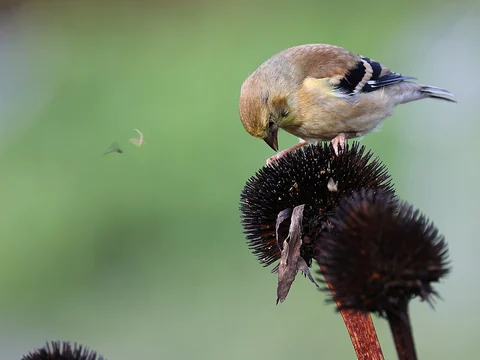
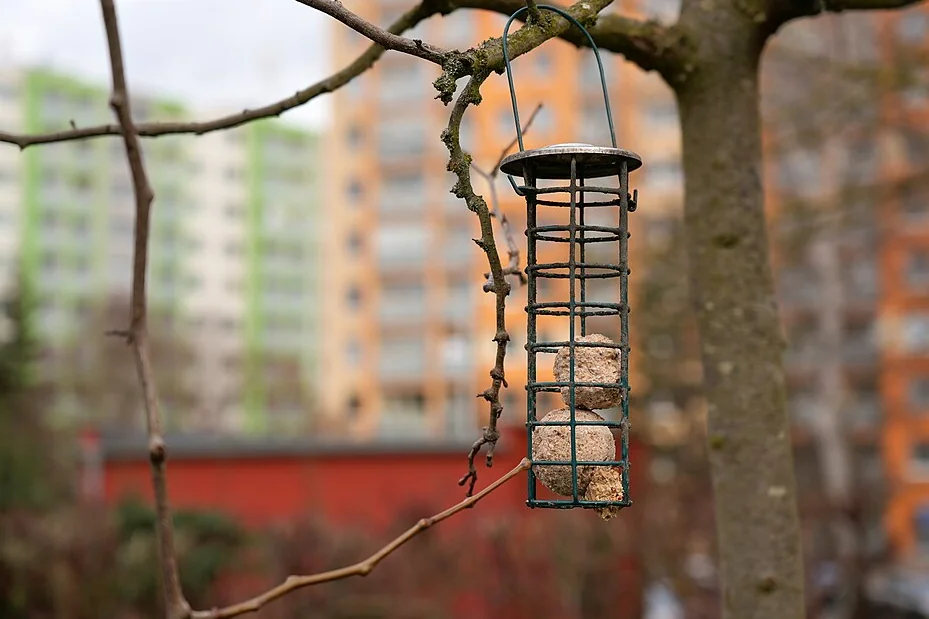
Photo: AVDLCZ · Bird feeder with two suet cakes.jpg · CC0. Cropped, gently adjusted, and resized for this guide.
The short answer
Choose labeled bird food that fits a secure, cleanable holder and suits the actual weather. Start small, inspect condition regularly, and remove unsuitable food before refilling.
Choose suet by condition, feeder fit, and purpose
Suet is a concentrated fat-based food commonly offered to birds such as woodpeckers, nuthatches, and chickadees. In retail bird feeding, the word can describe several kinds of cakes and blends, so the label and the actual product matter. A cake's suitability depends on its ingredients, storage directions, weather exposure, and whether your feeder holds it securely. Buying a familiar flavor is only one small part of the decision.
Start by deciding why you want to offer it. Perhaps local woodpeckers investigate trees but rarely use your seed tube, or you want a separate clinging surface during colder weather. A clear purpose helps you choose one manageable holder and observe the result. This guide explains the practical differences between food forms, how to maintain them, and what to change when a cake softens, goes unused, or attracts a wider group of visitors than expected.
Understand what the label means
Traditional suet is hard animal fat, while commercial bird cakes may combine fat with seeds, grains, or other ingredients. Products sold under similar names can therefore behave differently. Read the ingredient list, storage guidance, and temperature instructions instead of assuming every square cake has the same properties. Keep the wrapper until the food has been used so you can identify the batch if a question arises.
A label describing a target bird is not a guarantee that only that bird will eat the food. Nor does a premium-looking package establish that a formula suits your weather better. Compare practical information you can use: cake size, intended holder, unopened and opened storage, and any limits on warm-weather use. If the instructions are unclear, choose a product whose care requirements you understand. A food you can manage confidently is a better starting point than one bought on a promise you cannot evaluate.
Distinguish raw fat from prepared bird cakes
Cornell's food guidance distinguishes raw suet from rendered fat and warns that raw fat deteriorates quickly in warmer conditions. Rendering changes how a product keeps, but it does not make all prepared cakes immune to softening or spoilage. A winter habit should therefore be reassessed when conditions change, even if the same food worked well during a cold period.
For a straightforward first setup, use a product made for wild-bird feeding with clear handling instructions rather than improvising from household cooking leftovers. Bacon drippings and seasoned fats are not substitutes for a considered suet offering. If you choose to make food yourself, obtain a reliable recipe and understand ingredient and temperature limitations; do not assume a social-media mixture is suitable because birds appear to eat it. This guide concentrates on selecting and maintaining labeled products so the routine remains clear and repeatable.
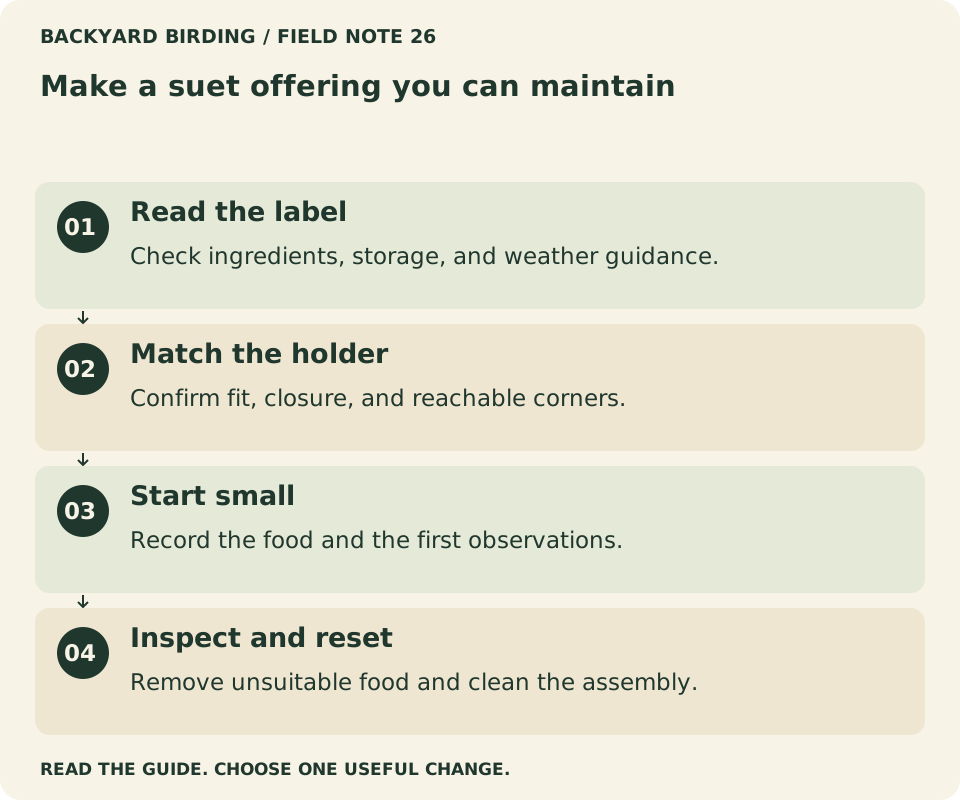
Your visual action map

Read the visual as text
- Read the label. Check ingredients, storage, and weather guidance.
- Match the holder. Confirm fit, closure, and reachable corners.
- Start small. Record the food and the first observations.
- Inspect and reset. Remove unsuitable food and clean the assembly.
Match the holder to the food's physical form
A cake should fit the holder without being forced through the mesh or sitting so loosely that it can fall out. Check the door, latch, and hanging attachment while the feeder is empty. A cage that closes neatly with no food inside may behave differently when a thick cake presses against it. Measure the usable interior, not just the dimensions printed on the outside packaging.
Pellets, plugs, and cakes may require different dispensers. Do not assume you can cut or wedge every food into any available holder safely. Avoid loose mesh bags, fraying cords, and sharp improvised wire closures. A purpose-built feeder with reachable corners is easier to clean and inspect. If the manufacturer provides a tail-support feature or a specific mounting orientation, follow those instructions. Food compatibility includes the way the bird clings and reaches the surface, not merely whether the package can be squeezed inside.
Compare common feeder layouts
Simple side-access cages, holders with tail supports, and underside-access designs present food differently. An underside arrangement may change which birds find access easy, but it is not a guaranteed species filter. Look at the actual geometry and consider the birds present locally. A complicated design is worthwhile only if it serves a function you need and remains manageable to clean.
| Layout | What to inspect | Trade-off to consider |
|---|---|---|
| Simple cage | Latch, mesh edges, cake fit | Easy to inspect; many visitors may use it |
| Tail-support holder | Stable support and reachable food | Extra structure also needs cleaning |
| Underside access | Correct orientation and approach | Changes access without guaranteeing exclusivity |
| Multi-cake station | Independent access to each chamber | More food and surfaces to maintain |
Use the comparison before buying, ideally with the feeder in your hands. Rehearse removal and opening. A small practical detail such as a secure latch can matter more during daily care than a long list of advertised visitor species.
Choose a location that keeps inspection easy
Place the feeder where you can see the food surface, reach it from level ground, and remove it without dragging it through branches. Assess surrounding glass from outside and address reflections before feeding. Nearby trees may provide a useful approach, but dense vegetation pressed against the holder can make inspection and cleaning awkward. The location must work for both the bird and the caretaker.
Consider sun and weather at different times of day. A shaded morning position may receive direct afternoon heat. An eave may protect from vertical rain while leaving the cage exposed to wind-driven moisture. Watch the actual conditions rather than treating the word “sheltered” as a complete description. Our placement guide helps compare two candidate locations. Suet adds a food-specific condition check to the usual requirements for secure mounting, safe glass, and accessible cleanup.
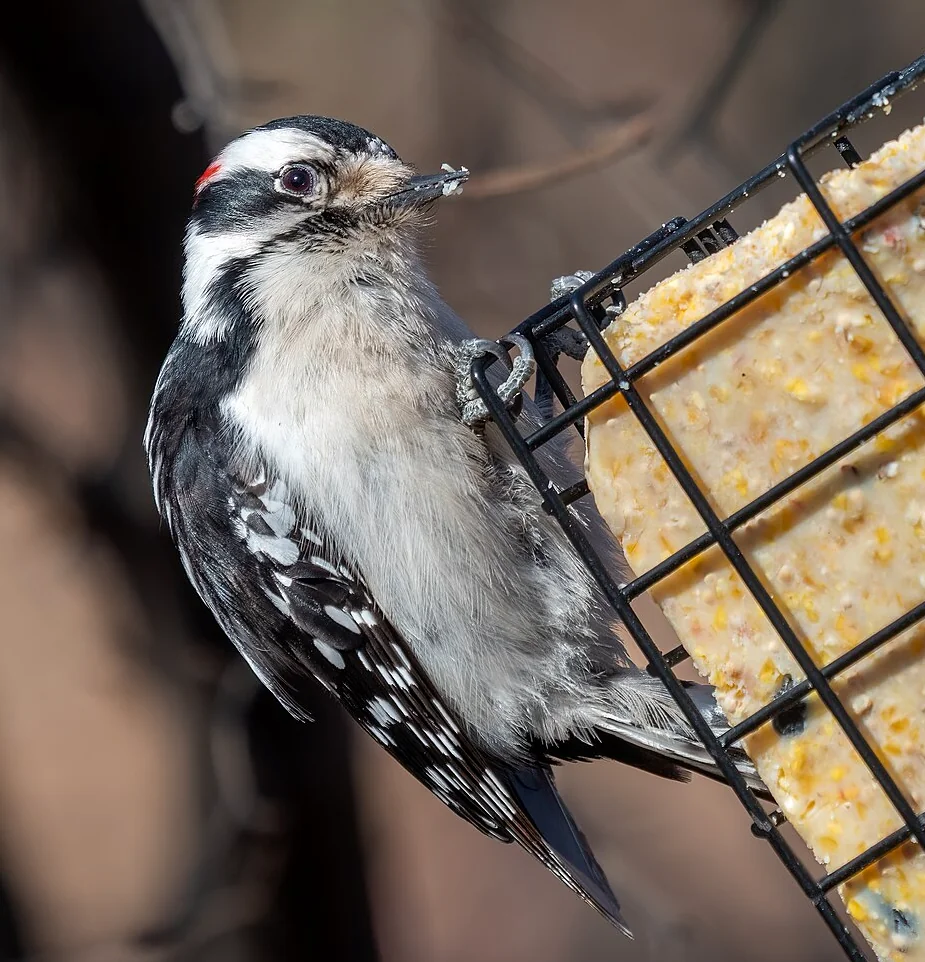
Photo: Rhododendrites · Downy woodpecker at a suet feeder (84724).jpg · CC BY-SA 4.0. Cropped, gently adjusted, and resized for this guide.
“Food condition, holder fit, and cleaning belong in the same decision.”
Backyard Birding — editorial takeaway
Start with a small, observable trial
Offer one manageable portion in a clean holder and note the date. Record the product, position, and weather alongside any visits. You do not need to film every minute. A few deliberate watches and regular condition checks are enough to establish whether the food is being used and whether the setup stays sound. Keep the rest of the supply stored according to its label.
Avoid adding several flavors at once unless you have a clear reason and can maintain the extra equipment. Otherwise, the first trial becomes difficult to interpret. If a cake disappears quickly, confirm which animals used it before deciding that a target species loved it. If it remains untouched, check access and freshness before replacing the entire station. A modest start limits waste and makes the first adjustment specific, rather than turning a quiet feeder into a cycle of increasingly elaborate purchases.
Inspect softening as a condition, not a calendar event
Look at the surface and the way the cake holds together. Excessive softness, oily smearing, leakage, or loss of structure can make a food unsuitable for its current setting. Cornell warns that softened fat can contaminate feathers. Do not rely on a fixed season name or a marketing phrase as proof that the food will remain appropriate in direct sun.
Follow the product's temperature instructions and remove compromised food. If warm conditions repeatedly create problems, pause that offering or choose a properly labeled alternative suitable for the conditions you can maintain. Moving to shade may help exposure, but it does not reverse food that has already deteriorated. Check the holder for residue as well. A fresh cake placed into a greasy, dirty cage is not a complete reset. Food condition and equipment cleanliness need to be considered together at every replacement.
Recognize spoilage and avoid the top-up habit
Inspect for visible mold, unusual deterioration, contamination, and an unexpected odor while handling the feeder safely. Do not scrape away a suspect patch and assume the remainder is sound. Remove unsuitable food and clean the holder before starting again. Keep discarded material away from wildlife and pets rather than dropping it beneath the station.
Avoid pressing new pieces onto old residue to make the cage look full. That hides how long the remaining food has been exposed and can make cleaning more difficult. If the product allows portioning, use a manageable amount that fits securely and store the rest correctly. Keep a simple opened-date note on the package. You are not trying to calculate an invented universal shelf life; you are preserving the information needed to follow the actual product instructions and evaluate the food in front of you.
Find your situation

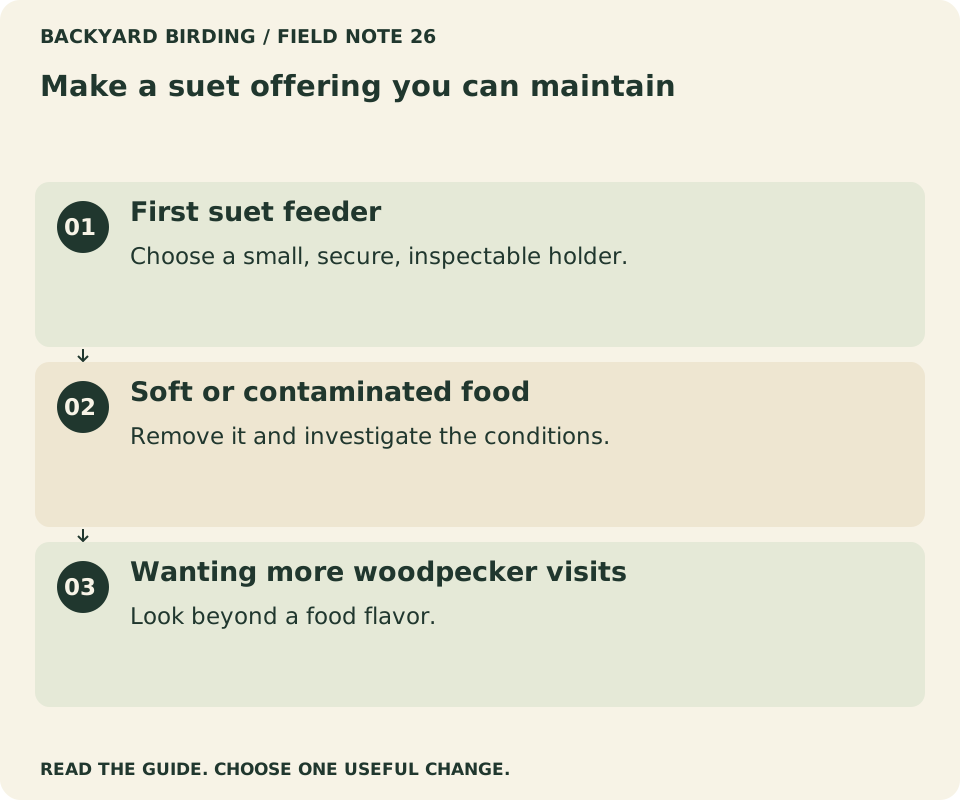
Read the visual as text
- First suet feeder. Choose a small, secure, inspectable holder.
- Soft or contaminated food. Remove it and investigate the conditions.
- Wanting more woodpecker visits. Look beyond a food flavor.
Wash the holder as part of replacement
Remove the food and disassemble the holder as intended. Clear loose debris, wash the reachable surfaces, and use a sanitation method compatible with the materials and product instructions. Rinse thoroughly and let the feeder dry before adding food. Hinges, corners, and the underside of a tail-support panel deserve attention because residue can remain there after the obvious cage surface looks clean.
Use dedicated tools separate from household food preparation. If a part cannot be cleaned adequately or develops a sharp edge, replace it rather than covering the problem with a new cake. Our feeder cleaning guide explains the complete workflow and how to make it repeatable. A small holder is often manageable precisely because it has few hidden surfaces. Preserve that advantage by cleaning the entire assembly, not just the side most visible from your observation window.
Expect a community of visitors
Suet can interest several species, including birds you did not have in mind when you bought it. A nuthatch or chickadee using the food is not evidence that the woodpecker plan failed. Watch how the station is shared over time. A brief crowded moment and continuous exclusion are different situations, and they should not trigger the same response.
If one visitor dominates, consider whether feeder access, location, or a separate appropriate surface could help. Be realistic about the limits of selective designs. You cannot guarantee a woodpecker-only feeder simply by changing the cage orientation. Also watch for mammals and food falling to the ground. The aim is a sound feeding system with manageable use, not an escalating attempt to control every animal attracted to a rich food source. Sometimes reducing the amount offered is more useful than adding another deterrent.
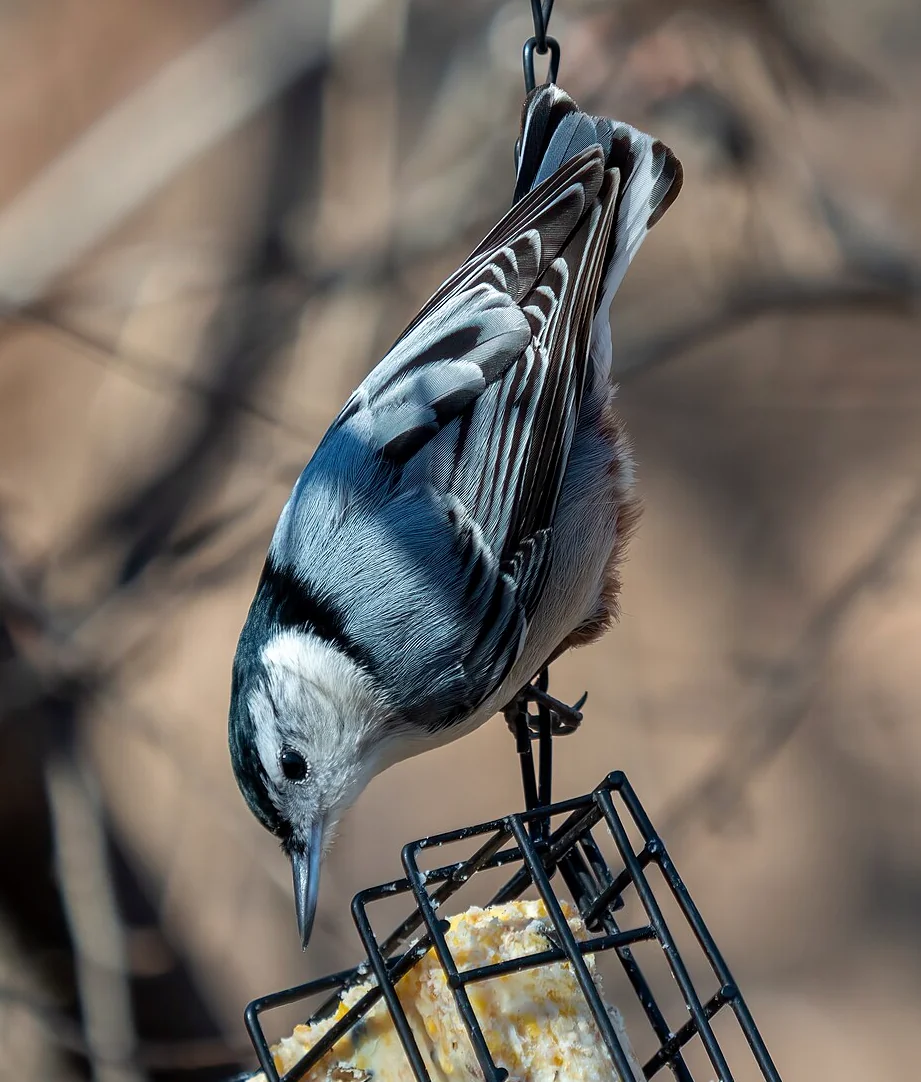
Photo: Rhododendrites · White-breasted nuthatch at a suet feeder (84756).jpg · CC BY-SA 4.0. Cropped, gently adjusted, and resized for this guide.
Keep squirrels and mounting problems separate
A missing cake can result from a squirrel, a failed latch, a poorly fitted portion, or ordinary bird use. Look for evidence before assigning a cause. Inspect the support, cage closure, and food fit first. A camera or a deliberate watch may reveal the route, but neither substitutes for checking whether the equipment itself is secure.
If squirrels are accessing the holder, use humane, purpose-built support and baffle strategies appropriate to the installation. Do not grease poles or add sticky coatings. Avoid improvised arrangements that can entangle wildlife or make the feeder difficult to take down. Our squirrel guide explains how to trace approach routes. Keep waste below the station under control as well, because preventing access to the cage does not remove food that falls to the ground. Solve the observed problem before changing the food formula.
Store supplies so the oldest package stays visible
Choose a storage location that meets the product's directions and protects the food from pests and unsuitable temperatures. Keep opened packages clearly separated from unopened ones, with labels intact. A bin can organize supplies, but it should not conceal a damaged wrapper or make it impossible to see which package was opened first.
Buy an amount you can realistically use. Bulk pricing is not automatically economical when the station is quiet or conditions require frequent pauses. Record the product that worked well and the circumstances under which you used it; a successful cold-weather trial does not establish year-round suitability. If you change brands or formulas, read the new instructions rather than carrying over assumptions from the old package. Storage is part of feeding quality because the condition of the food begins changing before it reaches the outdoor holder.
Use a troubleshooting table before buying another flavor
A food change can be reasonable, but first identify what is actually going wrong. The table helps separate availability, condition, and access. Several problems can occur together, so inspect the whole station rather than stopping at the first plausible explanation.
| Symptom | First question | Useful response |
|---|---|---|
| Cake remains untouched | Are suitable local birds present and able to reach it? | Check access, condition, and observation timing |
| Food becomes oily | What heat and sun does it receive? | Remove unsuitable food; reassess product and exposure |
| Cake falls out | Does it fit and does the latch hold? | Correct the hardware before refilling |
| Surface stays dirty | Can every part be washed? | Clean fully or replace an unsuitable holder |
| Food vanishes overnight | What evidence identifies the visitor? | Observe the route and manage it humanely |
Record the adjustment and check the same spot or symptom at the next refill. If it returns, work through the next possible cause before buying a different food.
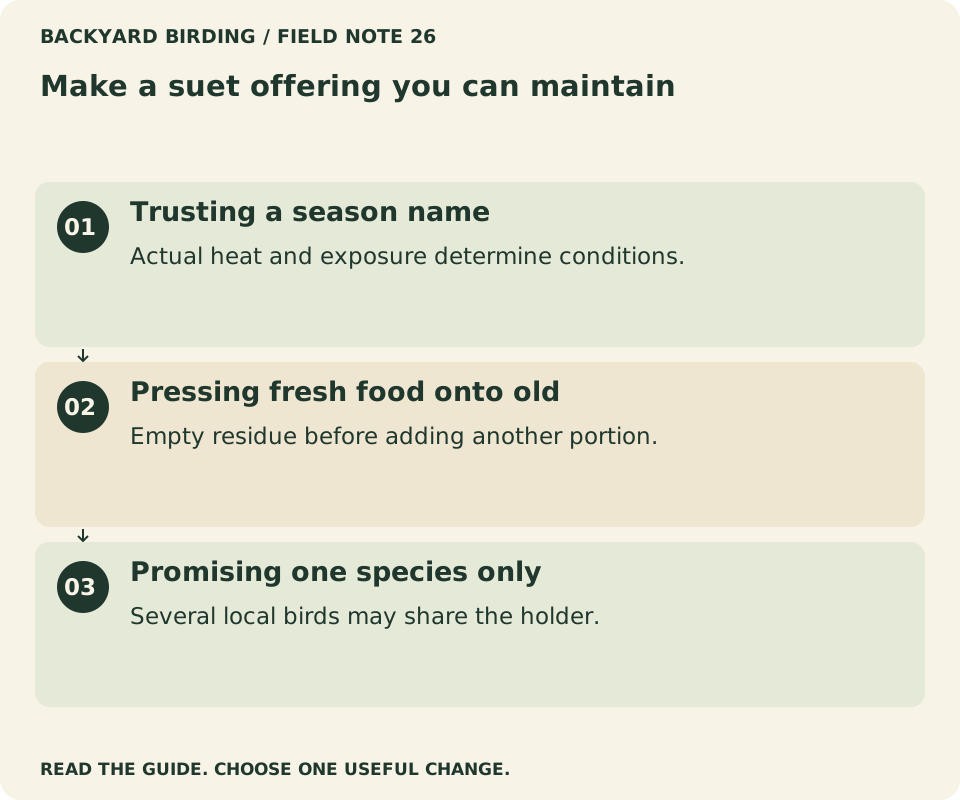
Small mistakes. Better moves.

Read the visual as text
- Trusting a season name. Actual heat and exposure determine conditions.
- Pressing fresh food onto old. Empty residue before adding another portion.
- Promising one species only. Several local birds may share the holder.
Build a seasonal decision point
Review the offering when weather patterns change, not only when a package runs out. A warm spell, prolonged rain, or a shift in visitors can make the current portion and location less suitable. Check local wildlife advisories too; a feeding pause may be appropriate for reasons unrelated to the food's appearance. Follow the relevant current guidance if a disease concern arises.
Ask three questions: is the food sound, is the holder clean and secure, and can I maintain this routine over the next period? If one answer is no, adjust or pause before refilling. This simple decision point prevents a winter habit from continuing automatically into very different conditions. A feeder is optional equipment. Keeping it empty while you solve a problem is a responsible part of ownership, not a failure to maintain an uninterrupted display.
Leave with a repeatable suet routine
A workable routine is straightforward: choose an appropriate labeled food, fit it securely into a clean holder, place it where you can inspect and service it, and monitor both condition and use. Remove compromised food promptly, clean the whole assembly, and store the remaining supply as directed. Keep the first trial small enough that these steps remain easy to repeat.
Before adding another holder, review the one already in use. Check which birds have visited, how much food remains between inspections, whether the latch still closes firmly, and whether residue comes off during washing. Keep the current portion if it works, reduce it if too much remains, and pause the offering if the food or equipment cannot be maintained. That review is especially worthwhile when cold weather gives way to warm afternoons.
Watch it. Then try it.
Review the steps and common mistakes in two short, silent animations. Each has a complete text transcript below.
Your four-step action map
Read the complete video transcript
Make a suet offering you can maintain.
- Read the label. Check ingredients, storage, and weather guidance.
- Match the holder. Confirm fit, closure, and reachable corners.
- Start small. Record the food and the first observations.
- Inspect and reset. Remove unsuitable food and clean the assembly.
Try the steps, then note any problem that still needs attention.
Three mistakes to avoid
Read the complete video transcript
Make a suet offering you can maintain.
- Trusting a season name. Actual heat and exposure determine conditions.
- Pressing fresh food onto old. Empty residue before adding another portion.
- Promising one species only. Several local birds may share the holder.
Try the steps, then note any problem that still needs attention.
Both animations use this real photograph by AVDLCZ. Photo source · CC0. The photo is adapted into original educational animations, not recordings of a field test.
At a glance
| Before your next step | Your practical check |
|---|---|
| First suet feeder | Choose a small, secure, inspectable holder. |
| Soft or contaminated food | Remove it and investigate the conditions. |
| Wanting more woodpecker visits | Look beyond a food flavor. |
Sources & evidence
- Cornell Lab: Suet and other bird foods
- Cornell Lab: How to clean your bird feeder
- Cornell Lab: Downy Woodpecker overview
- Audubon: How to feed birds safely in winter
Our standard: real evidence before ratings. Corrections follow our editorial process.
Our verdict & your next actions
Choose the row that describes your setup, then follow the suggested check or adjustment.
| Your situation | Our verdict | Your next action |
|---|---|---|
| First suet feeder | Choose a small, secure, inspectable holder. | Use the selection checklist. |
| Soft or contaminated food | Remove it and investigate the conditions. | Reset the feeding surface. |
| Wanting more woodpecker visits | Look beyond a food flavor. | Review habitat and observation. |
Your pocket field checklist
Tick off the steps as you go.
0 of 4 steps completed
Keep building your knowledge in bird seed, or search the full backyard library.