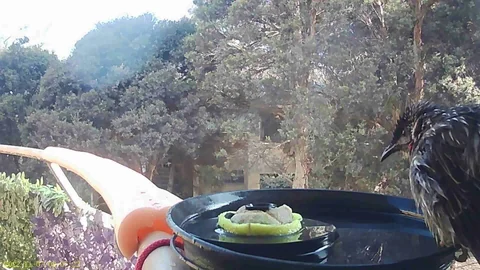
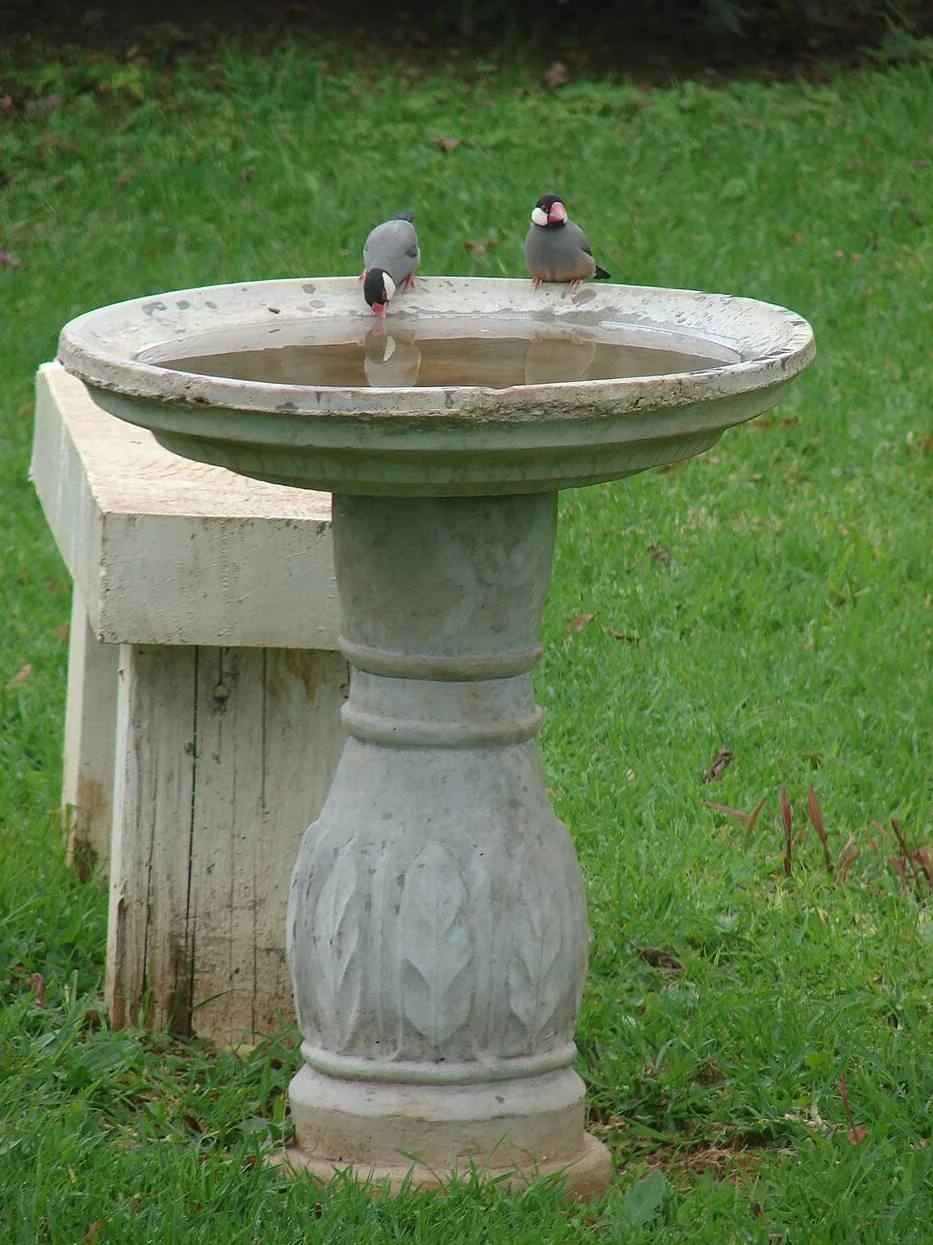
Photo: Forest & Kim Starr · Starr 080215-2865 Lonchura oryzivora.jpg · CC BY 3.0. Cropped, gently adjusted, and resized for this guide.
The short answer
Remove old water and debris, clean the basin according to its material and care instructions, rinse well, and refill with fresh water. Inspect often enough to catch contamination early.
Fresh water requires an empty-and-clean routine
A birdbath can look inviting from a window while holding debris or slippery residue you notice only at close range. Topping up the water may restore the level without removing what has accumulated. Effective care starts with inspecting the basin, removing old water, cleaning the relevant surfaces, rinsing, and refilling.
Build the routine around the bath you own. A lightweight removable bowl, a heavy stone basin, and a powered fountain have different handling requirements. Read the product's care instructions before choosing cleaning tools or chemicals. The general workflow stays simple, but the method must suit the material and any equipment attached to it.
Set up a small dedicated cleaning kit
Keep a brush suitable for the basin, gloves, a container or other safe means of removing water, and the manufacturer's instructions together. Use tools reserved for outdoor bird equipment rather than mixing them with utensils used for preparing food. Store cleaning products separately from bird food and fresh-water supplies.
Choose a place for the job where splashes and waste water can be handled appropriately. Do not lift a heavy, full basin simply because tipping it seems quickest. Empty it safely first, or use a method that avoids unnecessary strain. A routine that depends on awkward lifting is unlikely to remain consistent.
Empty the old water and remove debris
Check the basin before you begin. Note leaves, seed, droppings, algae, and any objects that make the bottom difficult to reach. Remove old water rather than diluting it with a fresh fill. Take out removable stones and other appropriate components so the surfaces underneath can be inspected.
Dispose of the water sensibly for the location, keeping it away from food-preparation areas and avoiding splashes onto people or pets. If there are signs of illness among visiting birds, consult current wildlife guidance for the feeding and watering station rather than assuming the ordinary routine is sufficient for that situation.
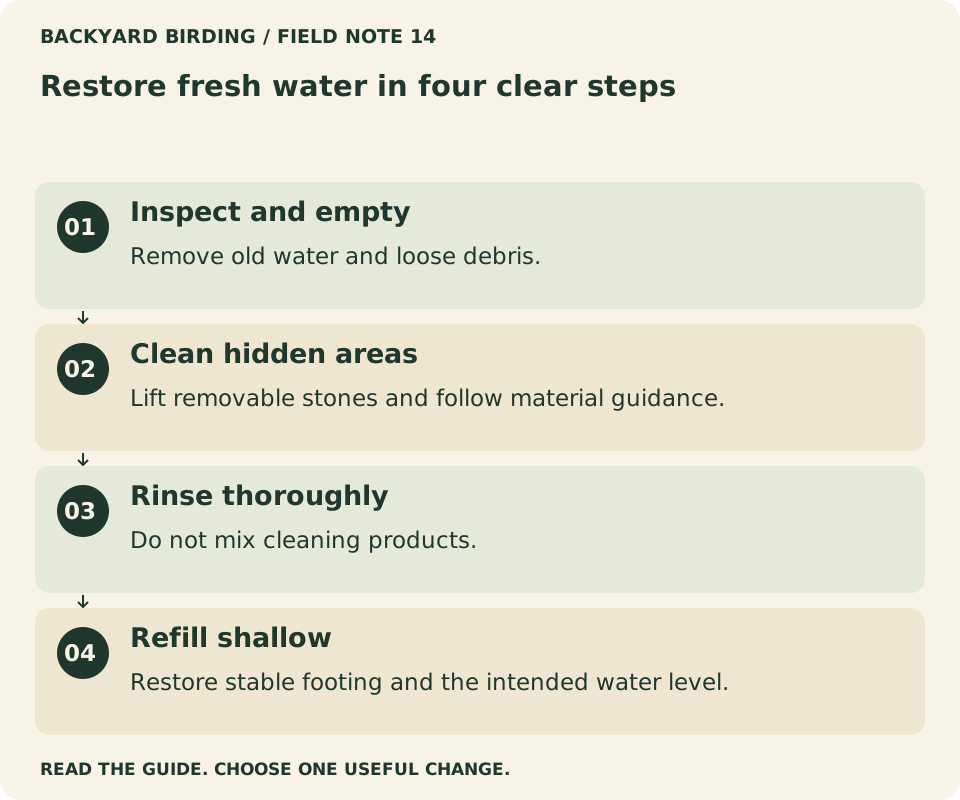
Your visual action map

Read the visual as text
- Inspect and empty. Remove old water and loose debris.
- Clean hidden areas. Lift removable stones and follow material guidance.
- Rinse thoroughly. Do not mix cleaning products.
- Refill shallow. Restore stable footing and the intended water level.
Scrub the basin with a suitable method
Audubon's routine birdbath guidance recommends scrubbing and rinsing with a mixture of nine parts water to one part vinegar. Confirm that this is compatible with your basin's material and finish. A practical small batch would use nine measured portions of water and one of vinegar; the unit can be cups or another consistent measure.
Work across the rim, sides, bottom, and any textured areas. Pay attention to the waterline and the places beneath stones or fittings. Scrubbing removes attached residue that a quick pour-and-rinse may leave behind. If the finish has special care requirements, follow the manufacturer's compatible method instead of applying a household recipe indiscriminately.
Never combine cleaning products
Do not mix vinegar with bleach, and do not combine cleaning products to make an improvised stronger solution. Chemical labels and product instructions matter. If a specific contamination problem calls for disinfection, use an appropriate documented procedure rather than adding another substance to the routine wash.
Keep the ordinary cleaning task distinct from disease-response instructions. A household vinegar wash should not be presented as a universal treatment for every pathogen. If birds appear ill or local authorities issue guidance, follow that advice for whether to remove the bath and how to clean the equipment before returning it to use.
| Stage | What completion looks like | Common shortcut to avoid |
|---|---|---|
| Inspect | You have checked water, surfaces, and fittings | Judging only from a distant window |
| Empty | Old water and loose debris are removed | Adding fresh water to the old supply |
| Scrub | Accessible surfaces and hidden contact areas are cleaned | Swirling cleaner through the bowl without brushing |
| Rinse | Cleaning residue has been thoroughly removed | Refilling immediately after a chemical wash |
| Reassemble | Stones and equipment are stable and correctly placed | Returning objects without cleaning underneath |
| Refill | Fresh water at the intended shallow depth | Filling automatically to the rim |
Rinse thoroughly and restore the shallow setup
After cleaning, rinse the basin and removable objects thoroughly. Inspect again in good light. If a slippery layer or obvious residue remains, repeat the appropriate cleaning step rather than hiding it beneath fresh water. Place any stones back securely, with the same attention to footing used during the original setup.
Refill to a shallow, usable level. Check the support for movement and make sure the basin is still level. A cleaning session is a good opportunity to catch a loose pedestal or shifted stone before it becomes part of the next visit. Return powered components only as their instructions require.
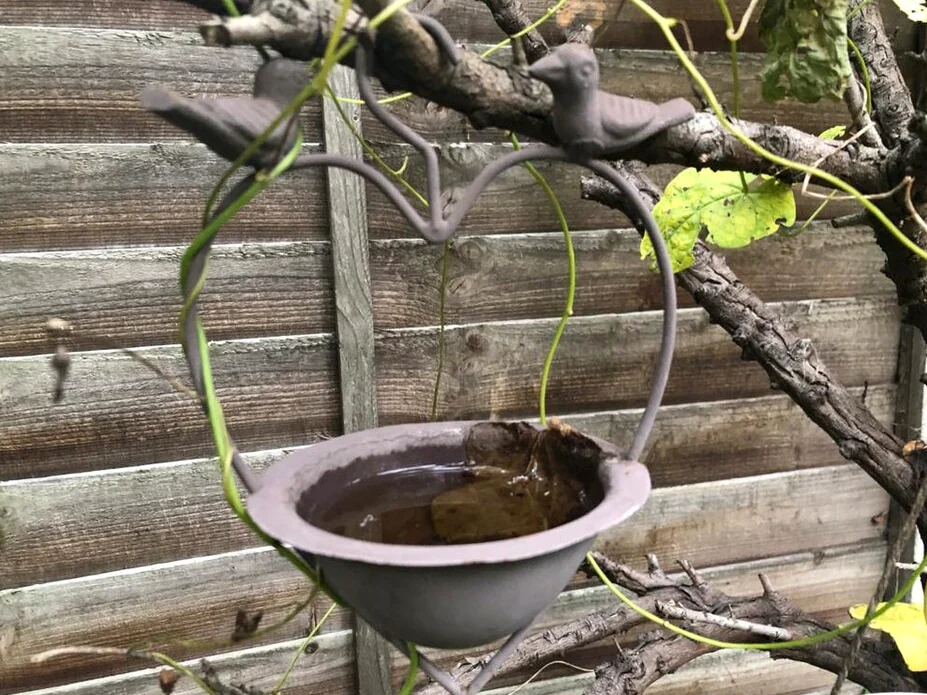
Photo: Roger Bellver · Bird hanging feeder 001.jpg · CC BY-SA 4.0. Cropped, gently adjusted, and resized for this guide.
“Refill the water every other day to keep it from bugging up.”
Audubon
How often should you check and clean?
Inspect the bath daily. Audubon's general guidance advises replacing the water every other day, but visible contamination, heavy use, heat, or falling debris can require attention sooner. A schedule is a reminder, not a reason to leave obviously dirty water until the next planned day.
Separate the tasks in your mind: checking, replacing water, and thoroughly scrubbing are related but not identical. A fresh-looking refill does not establish that the surfaces are clean. Use the actual condition of the basin to decide when it needs a full wash, while maintaining a regular routine that prevents neglect.
Reduce the sources of repeated contamination
Look above the bath. A feeder directly overhead can add food fragments, while a branch shedding debris may make the bowl harder to maintain. Consider moving the bath or the source of debris when a specific placement problem is clear. You do not need to eliminate nearby vegetation to avoid placing the bowl directly beneath the messiest point.
Also inspect the ground and support. Soil splashed into a low bowl may call for a more stable setting. A basin that tilts and retains dirty water in one pocket may need leveling. Cleaning more aggressively will not repair every location or installation problem; sometimes a small physical adjustment is the useful fix.
Handle stones, pumps, and accessories separately
Lift out stable access stones during cleaning and inspect their undersides. They are not permanent decorations exempt from the routine. If there are so many pieces that cleaning becomes a lengthy sorting task, simplify the arrangement while preserving suitable footing.
For pumps, heaters, and fountain parts, disconnect and follow the manufacturer's procedure. Do not submerge electrical components that are not designed for it, and do not scrub delicate parts with an unsuitable brush. Keep the equipment's requirements compatible with the bath's shallow water level. If maintenance instructions are unclear, resolve that before operating the system again.
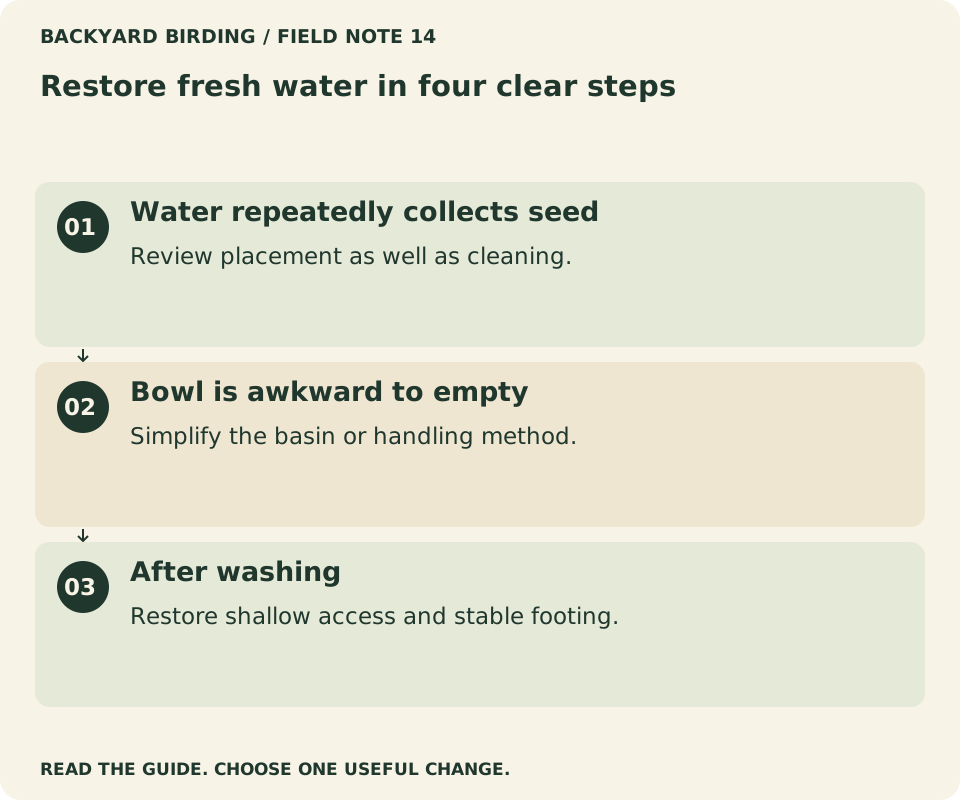
Find your situation

Read the visual as text
- Water repeatedly collects seed. Review placement as well as cleaning.
- Bowl is awkward to empty. Simplify the basin or handling method.
- After washing. Restore shallow access and stable footing.
A moving-water feature is not a cleaning system
Movement can make a birdbath visually appealing, but it does not remove droppings, food, or attached residue. A fountain may introduce additional tubing or pump surfaces that need care. Judge the full maintenance workload rather than assuming circulation makes the water self-cleaning.
Inspect the components when flow changes. A reduced stream can signal that something needs attention, but follow the manual rather than guessing at a repair. Do not add pond chemicals or other treatments without clear suitability for the particular birdbath and equipment. The simplest option may be an ordinary basin you can maintain reliably.
Keep a short care record when several people help
A note with the last water change, last full cleaning, and any problem found is enough. It prevents one person from assuming that a newly filled bowl was also scrubbed. Include the intended fill level and where the dedicated brush is stored.
If you leave instructions for a caretaker, demonstrate how the basin empties safely and how any accessories disconnect. Explain what should prompt an immediate clean. A photograph of the correct shallow setup can be more helpful than telling someone merely to keep the bath full, which may encourage an unnecessarily deep refill.
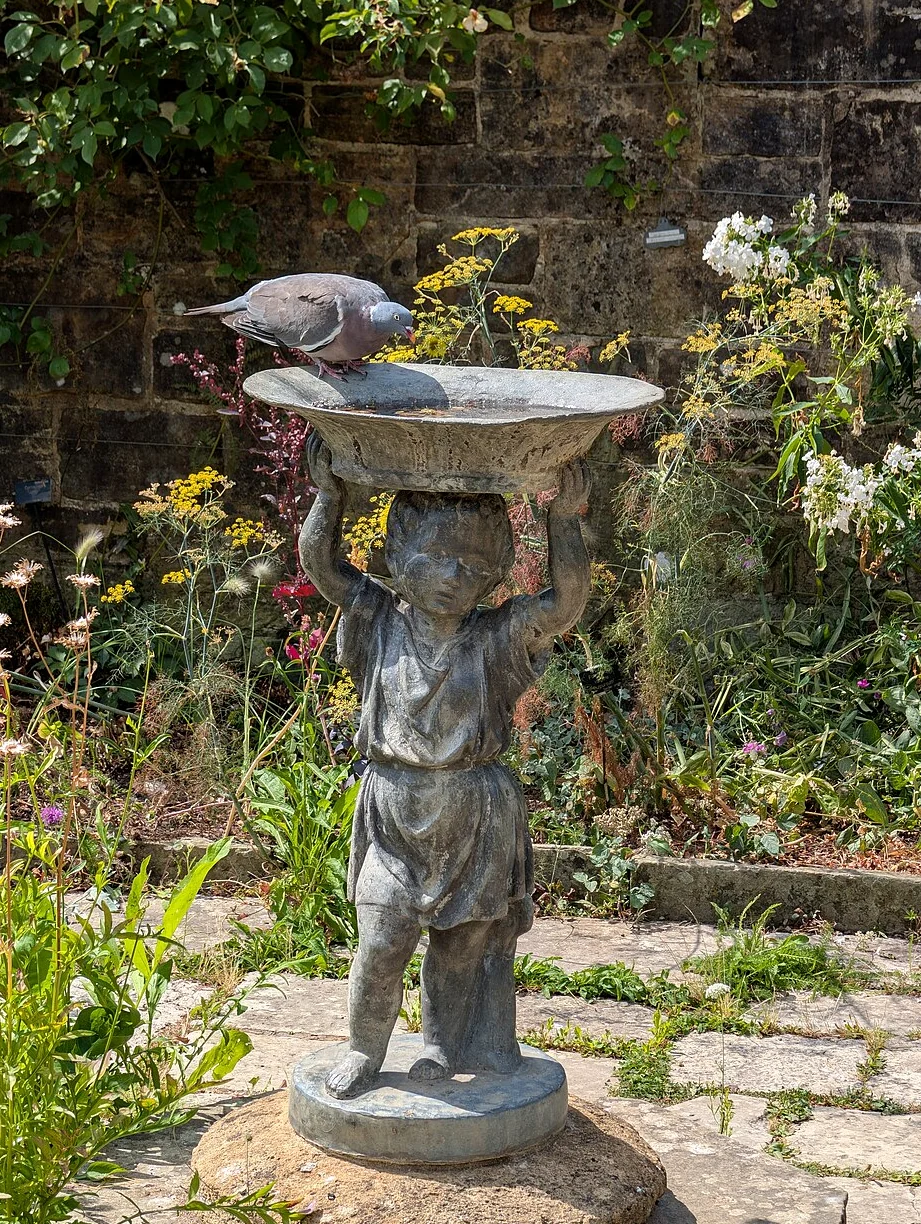
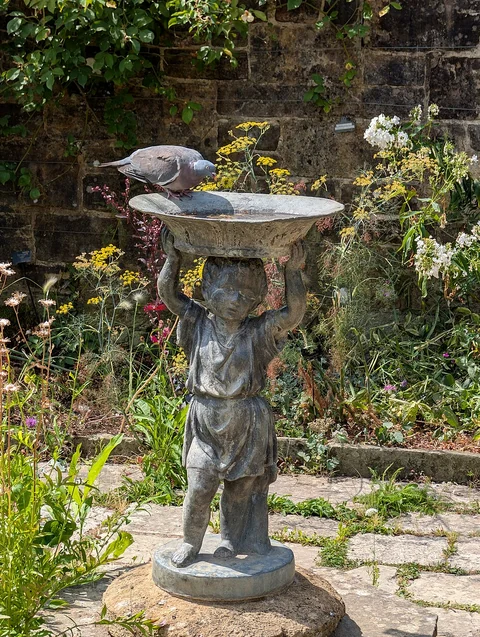
Photo: Andy Li · Wood pigeon drinking from a bird bath - Nymans 2026-07-31.jpg · CC0. Cropped, gently adjusted, and resized for this guide.
Troubleshoot persistent green or slippery residue
Review the location, water-change pattern, and thoroughness of scrubbing. Check whether hidden surfaces beneath stones or equipment are being missed. Repeatedly cleaning only the visible center may leave the same neglected areas to contaminate the next fill.
Do not respond by increasing chemical strength without guidance. Confirm the material-compatible method and whether the basin's condition allows effective cleaning. If its surface is badly damaged, inaccessible, or persistently difficult to maintain, replacing or simplifying the setup may be more sensible than escalating the cleaning products.
A practical weekly review
In addition to daily inspection, occasionally step back and assess the system. Is the brush wearing out? Has the support shifted? Are you consistently avoiding a difficult part of the job? Does the placement create unnecessary debris? These questions reveal whether the care routine remains realistic.
Adjust the system before it becomes burdensome. A smaller removable basin may be easier than a heavy fixed bowl. Fewer accessories may improve cleaning access. The right design is one you can keep fresh through ordinary busy days, not only when you have time for a complete garden project.
An example: a bath that becomes dirty after every refill
Suppose a bowl looks good immediately after cleaning but quickly fills with seed fragments. Look above it before changing the cleaning product. If a feeder is directly overhead, the location may be introducing the same material repeatedly. Repositioning one element can make the routine easier without changing the basin itself.
After the move, check the support, depth, and surrounding approach again. A location improvement should not create unstable footing or difficult access for the caretaker. Observe whether the debris pattern changes and retain the ordinary cleaning routine. Fewer fragments are helpful, but they do not prove that the water can be left indefinitely.
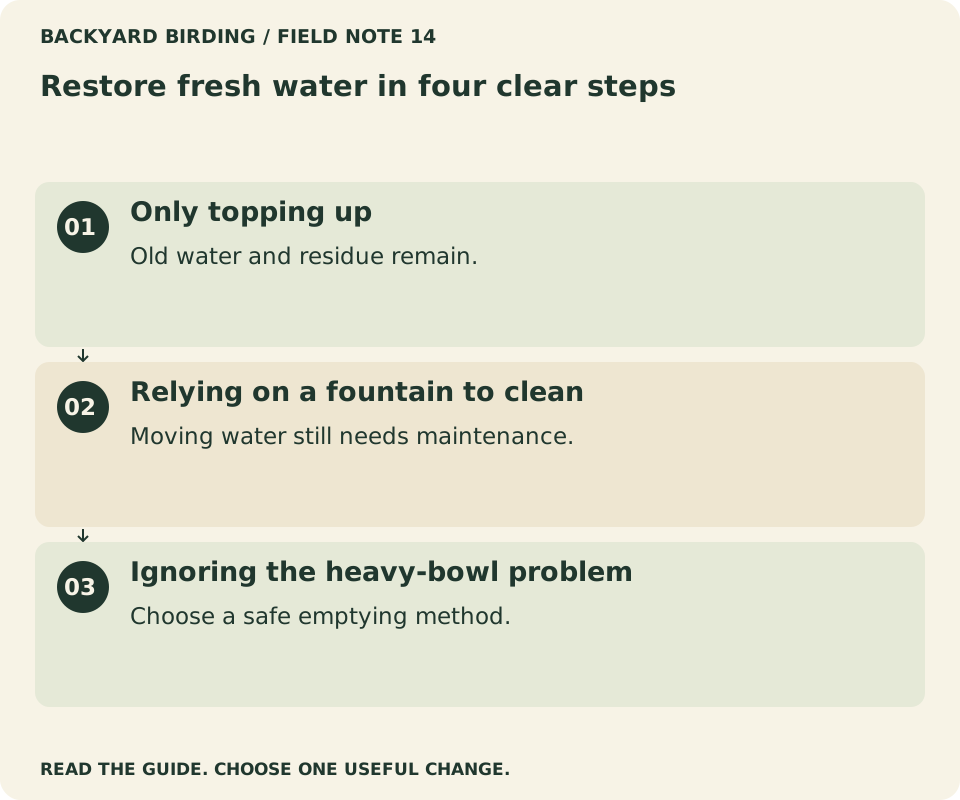
Small mistakes. Better moves.

Read the visual as text
- Only topping up. Old water and residue remain.
- Relying on a fountain to clean. Moving water still needs maintenance.
- Ignoring the heavy-bowl problem. Choose a safe emptying method.
An example: a heavy basin that is rarely emptied
If a bowl is so heavy that you avoid tipping it, design a safe way to remove the water or reconsider the equipment. Do not rely on repeatedly adding a hoseful of fresh water while the old residue remains. The problem is access to the complete cleaning process.
A smaller removable bowl may be a practical improvement even if it looks less substantial. Compare the full job: emptying, scrubbing, rinsing, and restoring the shallow fill. A maintenance method that fits the caretaker is more reliable than an impressive feature whose awkward handling encourages shortcuts.
Keep a separate note for unusual events
Record a storm that filled the bath with debris, a damaged pump, or a wildlife-health concern separately from the ordinary cleaning date. That makes it clear why the routine changed and what must be checked before normal use resumes.
Do not let the next fresh refill erase the unresolved issue. If a part is damaged, repair or replace it appropriately. If local wildlife guidance calls for a pause, follow that guidance. A notebook is useful when it preserves the status of the equipment rather than merely recording that water was added.
Make the cleaning kit easy to maintain too
Rinse and store brushes appropriately after use, inspect worn bristles, and keep the kit separate from fresh-food utensils. A dirty or damaged tool can make the next job less effective. Replace a brush that no longer reaches the textured surface well rather than pressing harder and risking damage.
Keep cleaning-product labels readable and never transfer chemicals into an unmarked food container. If another person helps, they should be able to identify the method and the supplies without guessing. Clear organization supports safe, repeatable care and prevents improvisation during a routine garden task.
Decide whether an accessory earns its maintenance
A fountain, decorative stone arrangement, or additional bowl may be enjoyable, but each adds surfaces and handling. Review whether it serves a useful purpose and whether you can clean it fully. Remove unnecessary complexity if it repeatedly causes the basic task to be postponed.
The goal is a fresh, usable water source. A simple basin that receives consistent attention can meet that goal well. Evaluate additions by whether they improve the experience without making ordinary care unrealistic for the person responsible.
Frequently asked questions
Is topping up enough if the water looks clear?
No. Topping up restores volume but leaves existing contamination and residue. Empty and replace the water as part of a regular routine, and inspect the surfaces when deciding whether a full scrub is needed.
Can I use dish soap?
This guide follows Audubon's routine approach, which advises avoiding soaps and synthetic cleansers for birdbath care. Check the basin's instructions and use a compatible method with thorough rinsing. Do not invent a stronger mixed solution.
Will a fountain stop every water-quality problem?
No. Moving water still needs inspection, replacement, and cleaning, and the equipment adds surfaces to maintain. Keep the basic care routine even when a pump runs normally.
What if I cannot clean it while away?
Arrange a caretaker who understands the routine or temporarily empty and remove the bath from use. Leaving a large volume of standing water is not a substitute for care. Make the decision before traveling rather than hoping the setup remains clean unattended.
When should I seek specific advice?
If birds appear ill, a local wildlife authority issues a notice, or a powered component has a safety problem, use the appropriate specialist guidance. Routine garden cleaning advice should not be stretched into a diagnosis or an electrical repair procedure.
For the next part of your setup, read How to Clean Bird Feeders: Seed, Trays, and Hidden Corners.
For a related next step, read Winter Birdbaths: Clean Water, Safe Heat, and an Easy Cold-Weather Routine.
Watch it. Then try it.
Review the steps and common mistakes in two short, silent animations. Each has a complete text transcript below.
Your four-step action map
Read the complete video transcript
Restore fresh water in four clear steps.
- Inspect and empty. Remove old water and loose debris.
- Clean hidden areas. Lift removable stones and follow material guidance.
- Rinse thoroughly. Do not mix cleaning products.
- Refill shallow. Restore stable footing and the intended water level.
Try the steps, then note any problem that still needs attention.
Three mistakes to avoid
Read the complete video transcript
Restore fresh water in four clear steps.
- Only topping up. Old water and residue remain.
- Relying on a fountain to clean. Moving water still needs maintenance.
- Ignoring the heavy-bowl problem. Choose a safe emptying method.
Try the steps, then note any problem that still needs attention.
Both animations use this real photograph by Forest & Kim Starr. Photo source · CC BY 3.0. The photo is adapted into original educational animations, not recordings of a field test.
At a glance
| Task | Done when |
|---|---|
| Inspect | Debris and water condition checked |
| Empty | Old water removed safely |
| Clean | Material-appropriate instructions followed |
| Rinse and refill | Residue removed; fresh water added |
Sources & evidence
Our standard: real evidence before ratings. Corrections follow our editorial process.
Our verdict & your next actions
Choose the row that describes your setup, then follow the suggested check or adjustment.
| Your situation | Our verdict | Your next action |
|---|---|---|
| Water repeatedly collects seed | Review placement as well as cleaning. | Plan the surrounding habitat. |
| Bowl is awkward to empty | Simplify the basin or handling method. | Compare manageable setup choices. |
| After washing | Restore shallow access and stable footing. | Check bath depth. |
Your pocket field checklist
Tick off the steps as you go.
0 of 4 steps completed
Keep building your knowledge in bird baths, or search the full backyard library.