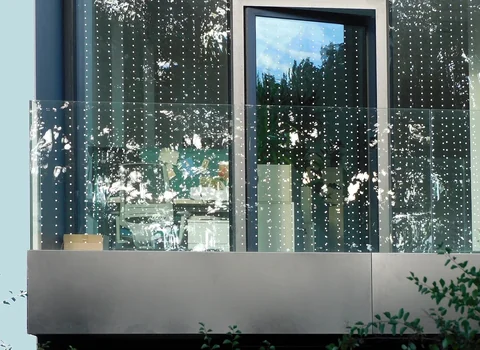
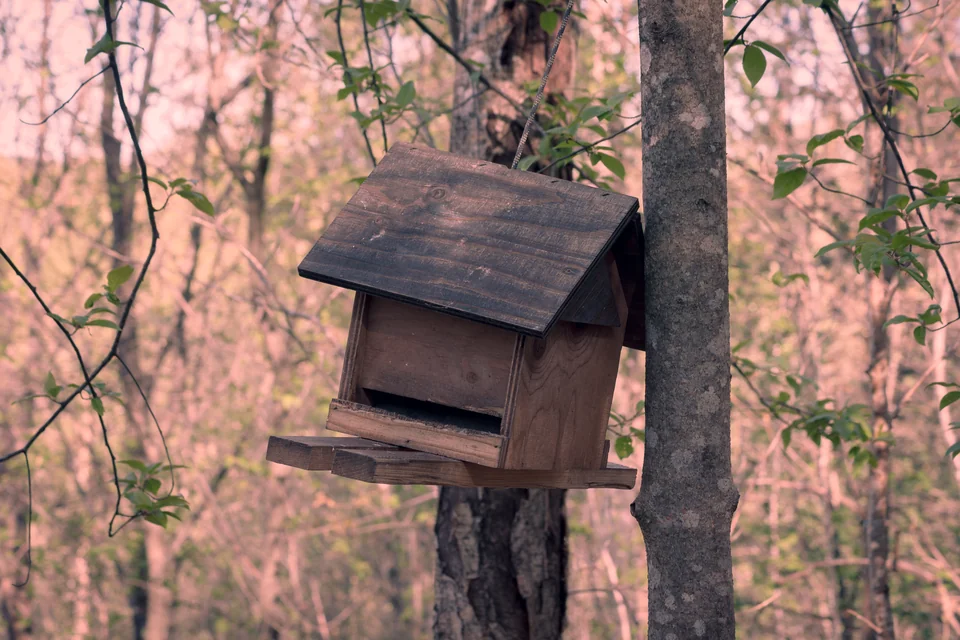
Photo: Sanzzu · Bird feeder in a forest.jpg · CC BY-SA 4.0. Cropped, gently adjusted, and resized for this guide.
The short answer
Choose an accessible location with a clear approach, manageable waste, and properly treated nearby glass. Compare two positions before installing; no distance rule makes untreated windows safe.
Start with a safe route, not a pretty view
The best place for a bird feeder is a location you can maintain, where birds have a clear approach and nearby shelter, and where surrounding glass has been assessed. The spot that looks perfect from the sofa may fail one of those tests. A feeder beside an inaccessible flower bed is difficult to service; one facing a reflective picture window can create a collision hazard. Begin outside, with the feeder still empty, and examine the whole setting before choosing a hook.
Draw a simple plan showing windows, doors, paths, trees, fences, and the place where you will store seed. Mark two possible positions instead of committing to the first. This gives you something practical to compare. You are looking for a workable feeding station, not a universal measurement that can make every yard safe.
Treat the glass before relying on distance
Birds may perceive reflected vegetation or a view through opposing windows as open flight space. Cornell's current collision guidance emphasizes making nearby windows bird friendly rather than relying on older feeder-distance rules. Treat the glass itself as the problem to solve. Birds can approach from several directions, and a feeder adjustment may leave other panes hazardous.
Inspect the outside of the house at the times you expect to feed. Identify reflected trees, bright passageways, and glass corners. Use an effective exterior window treatment following the product's spacing instructions and current bird-collision guidance. One decorative silhouette does not cover a large reflective surface. If a bird strikes, suspend use of that feeding position while you address the hazard. Moving the feeder a little farther away is not a complete window-safety plan.
Compare two candidate locations on paper
A small decision table makes hidden compromises visible. Give each location a plain-language assessment rather than inventing a precise safety score. A serious unresolved problem should rule out a site even when several other features look convenient.
| Question | Candidate beside the patio | Candidate beside the border |
|---|---|---|
| Can I treat nearby glass? | Check the large sliding door | Check the kitchen reflection |
| Can I remove the feeder from level ground? | Usually straightforward | Depends on bed access |
| What catches spilled food? | Sweepable paving | Mulch needs regular inspection |
| Is there an approach from nearby cover? | Map the route | Check dense ground cover |
These are example prompts, not a recommendation for either position. Add your own constraints, such as a dog run or a shared walkway. The useful outcome is a short explanation of why one location is easier to manage and which improvements it still needs.
Your visual action map

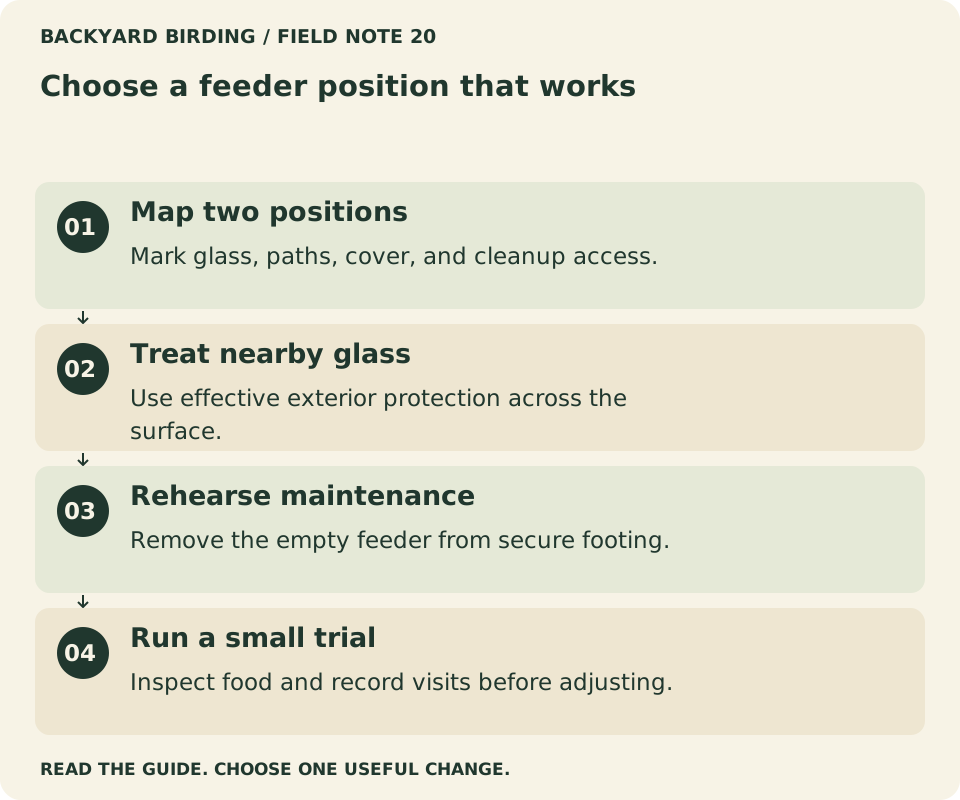
Read the visual as text
- Map two positions. Mark glass, paths, cover, and cleanup access.
- Treat nearby glass. Use effective exterior protection across the surface.
- Rehearse maintenance. Remove the empty feeder from secure footing.
- Run a small trial. Inspect food and record visits before adjusting.
Separate useful shelter from ambush cover
A tree or shrub can provide a staging place where birds pause before reaching food. But dense vegetation immediately below a feeder can also hide a stalking animal. Think in three dimensions: an elevated branch offering a view is different from a low thicket pressed against the feeding surface. Evaluate the actual sightlines and approach routes rather than treating a fixed distance from vegetation as a protective boundary.
Look from the birds' likely landing points toward the food and then down toward the ground. Can you see the base of the station? Is a free-roaming cat already using the route? Keeping pet cats indoors or in an enclosed outdoor space is more dependable than trying to engineer a feeder that makes roaming cats irrelevant. If you cannot resolve an active predation problem, pause feeding in that spot.
Choose a height you can actually service
There is no single ideal height for every feeder and bird. The mounting must suit the equipment, the intended visitors, the surrounding obstacles, and your own reach. Start with the manufacturer's installation requirements. Then rehearse lifting an empty feeder off its support while standing securely on level ground. Repeat the movement with the approximate weight of a normal fill in mind.
A feeder that requires a ladder for routine care is a poor fit for someone who cannot safely use one. Hanging it higher does not automatically solve squirrels, predators, or dirty ground. Check that the support cannot swing into glass, a wall, or another feeder. If an adjustable hanger helps, inspect the locking mechanism and attachment points. Convenient access matters because inspection and cleaning must remain possible on an ordinary busy morning.
Read the weather at feeder height
Walk outside during rain and wind before declaring a position sheltered. Roof runoff, irrigation overspray, and rain driven sideways can wet food that appears protected on a calm day. An overhanging eave may help with rainfall while introducing drips from a gutter edge. A fence can redirect gusts instead of eliminating them. Look for actual wet patches rather than assuming a roof or wall provides complete protection.
After installing the empty feeder, watch how it moves. A gentle swing is different from repeated impacts against a support. Inspect the food chamber after the first wet period, including the base below the visible seed. If food repeatedly clumps, improve the location or choose a better suited design. Increasing the fill to compensate for spoiled food only increases the amount at risk. Weather resistance is a property of the whole setup.
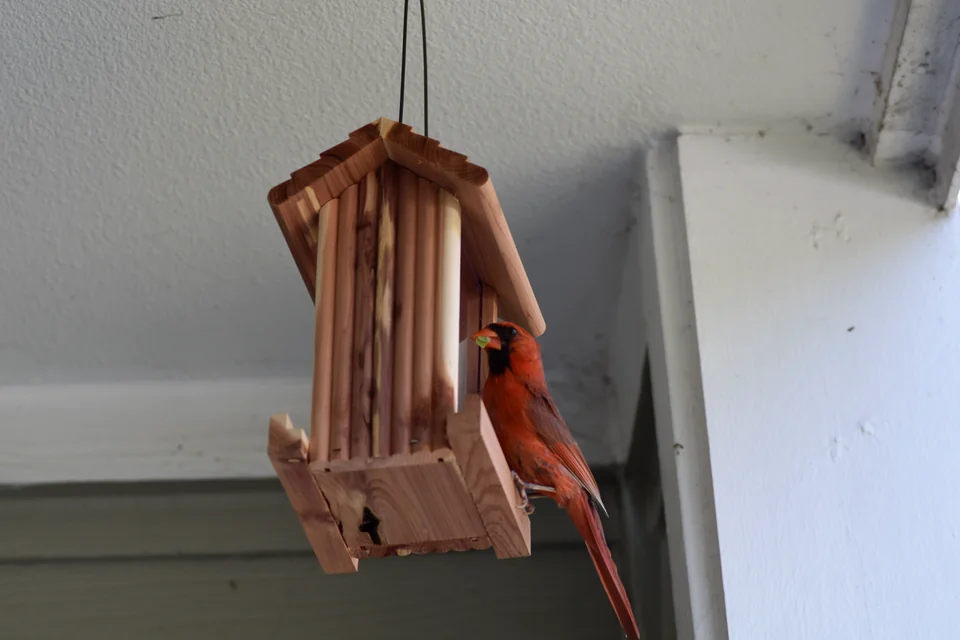
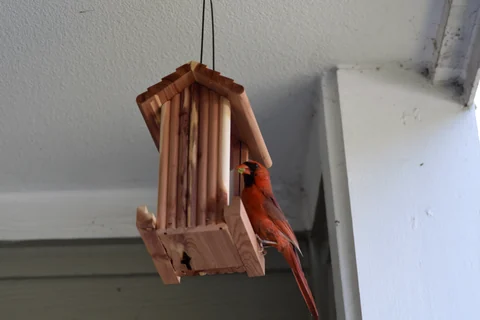
Photo: Slakshmin · A Northern Cardinal using a seed feeder. · CC BY-SA 4.0. Cropped, gently adjusted, and resized for this guide.
“A good location is one you can explain, inspect, and maintain.”
Backyard Birding — editorial takeaway
Make cleanup part of the location decision
Imagine where hulls, dropped seed, and droppings will land. On paving, you may be able to sweep them into a container. In gravel or deep mulch, separating food waste from the surface is harder. Above a deck, debris may accumulate in inaccessible gaps. None of these surfaces automatically rules out feeding, but each changes the care routine and the size of fill that is sensible.
Choose a position where you can inspect the ground without crawling under equipment or trampling plants. Keep waste away from doorways, outdoor eating areas, and places where children play. A catch tray can reduce some scattering, but it creates another surface that needs cleaning and drainage. Evaluate it as a maintenance component, not as a promise that nothing will reach the ground. A cleanable station is easier to keep useful over time.
Allow room for the bird and the equipment
Measure more than the feeder body. Include the landing tray, hanging chain, opening lid, and your hand carrying the unit away. A broad platform may fit between two posts yet leave little room for a larger bird to approach or turn. A tube feeder can hang neatly under a branch while its lid becomes impossible to lift. Small installation details can make everyday use awkward.
Look at the approach from several angles without assuming birds will follow your preferred direction. Avoid dangling loops, loose netting, and improvised restraints around the feeding area. Use purpose-built attachments appropriate to the load. If you add a second feeder, check that the two cannot collide in wind and that either can be removed independently. The goal is an open, inspectable arrangement with no hidden tangle of fittings behind the food.
Plan squirrel management before adding food
Squirrels can use branches, fences, roofs, and nearby structures as routes to a feeder. A pole in open space may be easier to protect than a hanger connected to several launch points, but no single distance guarantees exclusion. Follow the baffle and mounting manufacturer's placement instructions, then watch the actual route a squirrel uses. Adjust the route rather than guessing from the amount of missing seed.
Do not grease poles or add sticky substances. A humane setup should exclude access without coating wildlife or creating entanglement. Also check whether fallen food is drawing animals to the ground even when the feeder itself remains inaccessible. Our squirrel management guide walks through supports and baffles in more detail. Placement works best when the support, food surface, and cleanup routine are considered together.
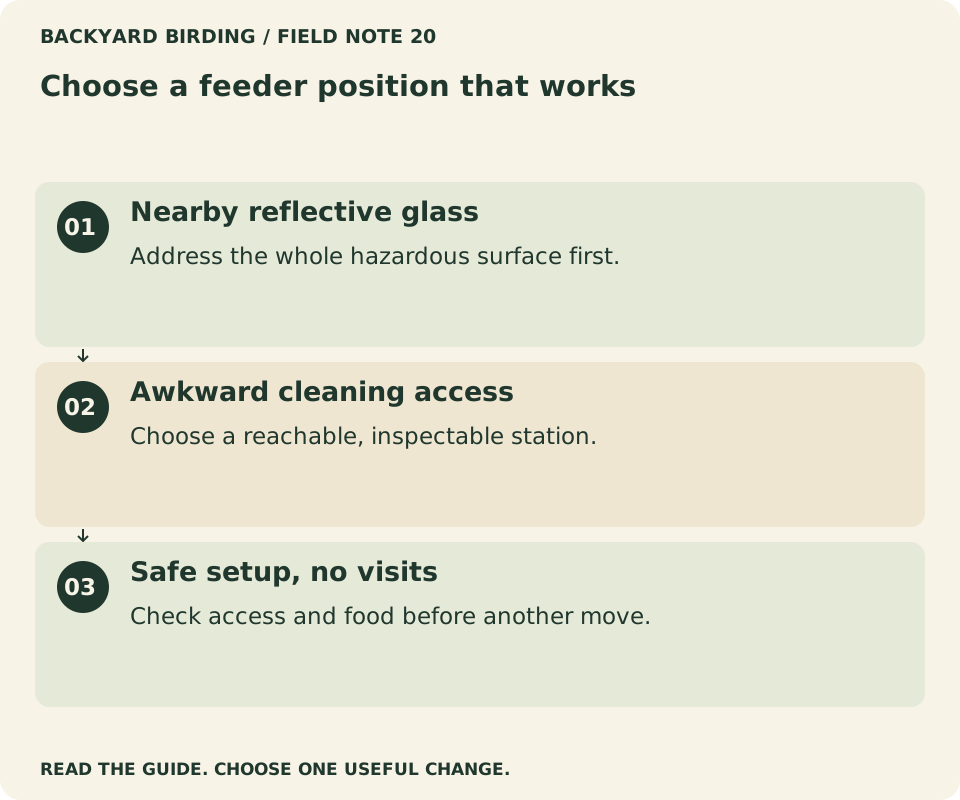
Find your situation

Read the visual as text
- Nearby reflective glass. Address the whole hazardous surface first.
- Awkward cleaning access. Choose a reachable, inspectable station.
- Safe setup, no visits. Check access and food before another move.
Give balconies their own placement checklist
A balcony is a shared-environment problem as well as a birding opportunity. Confirm building rules, secure the feeder against falling, and consider where seed and wash water will go. A railing mount must be suitable for that railing and exposure; an improvised clamp that seems firm indoors may behave differently in wind. Do not place equipment where opening a door knocks it or where people must squeeze around it.
Glass railings and balcony doors deserve the same collision assessment as windows. A transparent barrier can be difficult for birds to interpret from either side. Keep the setup modest enough that you can monitor it from inside and remove it promptly when necessary. If feeding creates persistent debris for neighbors, a container planting that supports local birds may be a more workable way to enjoy the space.
Match the position to the food system
Seed, nectar, and suet bring different maintenance needs. A seed feeder needs dry food channels and a cleanable area below. Nectar requires frequent removal and replacement, making an awkward high hanger especially inconvenient. Suet needs attention to the cake's condition and exposure; direct warmth can make some products unsuitable even when the mounting looks ideal. Follow the food and feeder instructions rather than treating all three as interchangeable accessories.
Start with one system at the chosen position. If you later add another, assess it independently. A location that works well for a small seed tube may not suit a nectar feeder that drips or attracts insects. Our feeder type comparison helps connect these differences to equipment choice. Sharing a pole can save space, but it should not force every food into the same unsuitable microclimate.
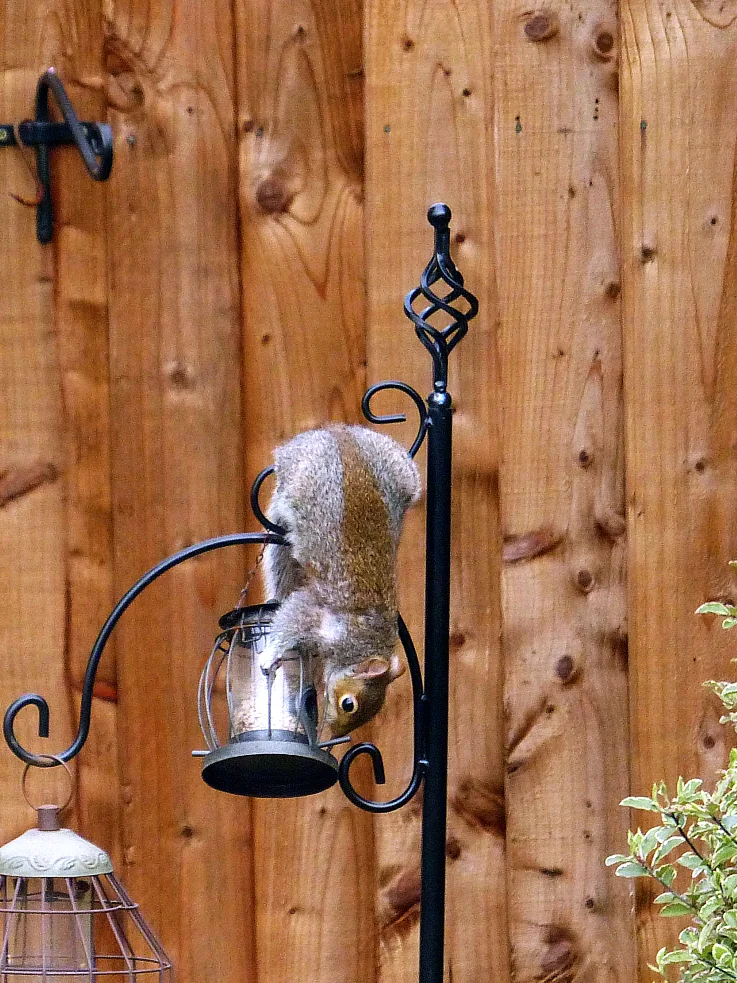
Photo: Robin Drayton · Grey Squirrel on a bird feeder - geograph.org.uk - 6438234.jpg · CC BY-SA 2.0. Cropped, gently adjusted, and resized for this guide.
Establish a viewing position that keeps you still
Good placement benefits the observer too. Choose a chair or standing point where you can see the feeding surface without repeatedly moving toward it. Check glare on the window and whether an indoor lamp reflects across your view. Binoculars can make a comfortable distance useful, so the feeder does not need to sit at the closest possible point simply to reveal feather details.
Keep routine activity predictable while birds investigate the new station. You do not need to hide permanently or create an artificial silent yard. Avoid repeatedly walking out to check whether a bird has arrived; you may be interrupting the very visits you hope to observe. Use a short, deliberate watch from the same location and record what happens. That makes a placement trial easier to evaluate than scattered glances between household tasks.
Test one position with a modest fill
Once the safety and access checks are complete, offer a small amount of suitable food. Note the date, location, weather, and first confirmed visitors. Inspect the food and ground each day. A quiet first afternoon does not establish that the position is wrong; birds must encounter the feeder, and the species present depend on the surrounding landscape and season.
Change one variable at a time when possible. If you move the feeder, replace the food, and add a new tray together, you will not know which change helped. An urgent hazard is different: correct it immediately rather than preserving an experiment. For ordinary troubleshooting, compare a few similar observation periods before acting. The useful evidence is whether birds can approach and feed, food stays in good condition, and the care routine remains manageable.
Diagnose the specific failure you can see
An empty feeder, untouched seed, wet food, and scattered hulls are different observations. Each deserves a different response. Confirm that seed is flowing through the ports before moving the whole station. If birds land nearby but repeatedly retreat, examine disturbance and approach routes. If food disappears overnight, look for signs of mammals rather than assuming a busy flock visited unseen.
| Observation | First check | Useful next move |
|---|---|---|
| Wet seed after rain | Roof runoff and blocked drainage | Empty, clean, and improve exposure |
| Birds queue but cannot feed | Port obstruction and landing room | Correct the access problem |
| Repeated glass strikes | Reflections and untreated panes | Suspend that position and treat glass |
| Debris becomes difficult to remove | Ground surface and portion size | Simplify the station and reduce fill |
Keep a note of the change and revisit the same symptom. This is more productive than moving equipment repeatedly without identifying what failed.
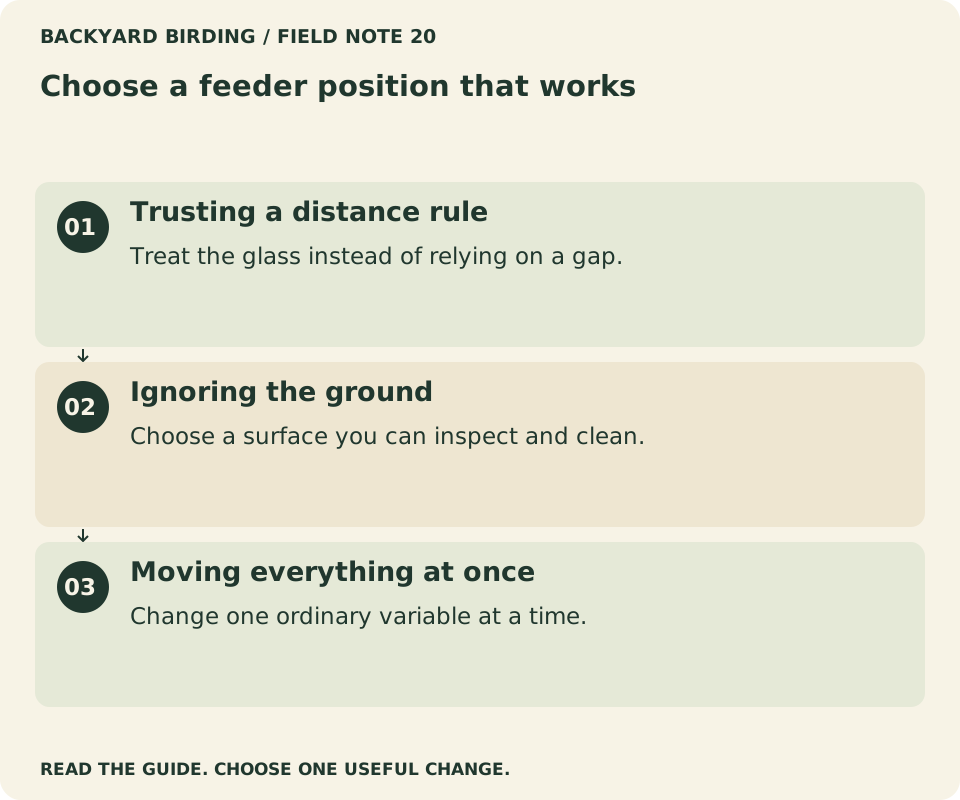
Small mistakes. Better moves.

Read the visual as text
- Trusting a distance rule. Treat the glass instead of relying on a gap.
- Ignoring the ground. Choose a surface you can inspect and clean.
- Moving everything at once. Change one ordinary variable at a time.
Reassess when the yard changes
Placement is not a decision you make once and forget. Leaf growth can close an approach route or turn a sparse shrub into dense cover. A new patio umbrella can change reflections. Winter ice can make a previously easy cleaning path unsafe. A growing tree may give squirrels a new route onto a support that worked well last year.
Schedule a quick review when seasons change and after substantial work around the house. Check mounting wear, branch movement, food condition, ground access, and glass treatments. Look for changes in how people and pets use the space as well. You may need a small adjustment, a different support, or a temporary pause. The right placement continues to meet the needs of the birds and the person caring for the station, rather than preserving an arrangement simply because it once worked.
Your first-week placement plan
Use the first week to learn the site, not to maximize visitor numbers. On the first day, sketch two locations and inspect their glass, cover, and cleanup access. Choose one only after resolving obvious hazards. Install the empty feeder, rehearse removal, and observe its movement in normal weather. Then add a modest fill and begin short watches from a consistent indoor position.
During subsequent checks, record the condition of the food alongside any birds you see. A dry, accessible feeder with few early visitors may need patience; a busy feeder with wet seed needs immediate maintenance. At the end of the week, write one sentence explaining what is working and one specific improvement, if needed. This small record gives future changes a reason. For an untouched but otherwise sound setup, continue with why birds are not visiting.
For a camera-equipped setup, read Smart Bird Feeder Wi-Fi Problems: A Step-by-Step Troubleshooting Guide.
For a related next step, read How to Prevent Bird Window Collisions at Home: Glass, Feeders, and a Safer Yard.
If you are adding a nesting structure rather than another feeder, read Birdhouse Placement and Dimensions: A Practical Nest-Box Guide.
Watch it. Then try it.
Review the steps and common mistakes in two short, silent animations. Each has a complete text transcript below.
Your four-step action map
Read the complete video transcript
Choose a feeder position that works.
- Map two positions. Mark glass, paths, cover, and cleanup access.
- Treat nearby glass. Use effective exterior protection across the surface.
- Rehearse maintenance. Remove the empty feeder from secure footing.
- Run a small trial. Inspect food and record visits before adjusting.
Try the steps, then note any problem that still needs attention.
Three mistakes to avoid
Read the complete video transcript
Choose a feeder position that works.
- Trusting a distance rule. Treat the glass instead of relying on a gap.
- Ignoring the ground. Choose a surface you can inspect and clean.
- Moving everything at once. Change one ordinary variable at a time.
Try the steps, then note any problem that still needs attention.
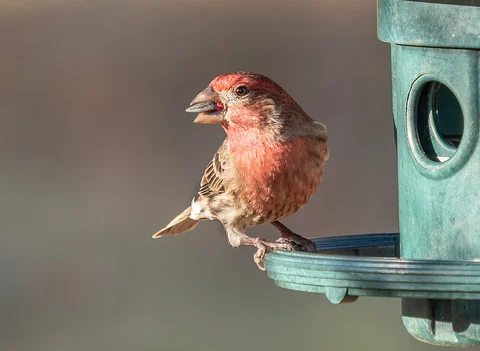
Both animations use this real photograph by Sanzzu. Photo source · CC BY-SA 4.0. The photo is adapted into original educational animations, not recordings of a field test.
At a glance
| Before your next step | Your practical check |
|---|---|
| Nearby reflective glass | Address the whole hazardous surface first. |
| Awkward cleaning access | Choose a reachable, inspectable station. |
| Safe setup, no visits | Check access and food before another move. |
Sources & evidence
- Cornell Lab: Current guidance on preventing window collisions
- Cornell Lab: Where to put your bird feeder
- Project FeederWatch: Feeder types
Our standard: real evidence before ratings. Corrections follow our editorial process.
Our verdict & your next actions
Choose the row that describes your setup, then follow the suggested check or adjustment.
| Your situation | Our verdict | Your next action |
|---|---|---|
| Nearby reflective glass | Address the whole hazardous surface first. | Review the placement checks. |
| Awkward cleaning access | Choose a reachable, inspectable station. | Build a cleaning routine. |
| Safe setup, no visits | Check access and food before another move. | Troubleshoot missing visitors. |
Your pocket field checklist
Tick off the steps as you go.
0 of 4 steps completed
Keep building your knowledge in bird feeders, or search the full backyard library.