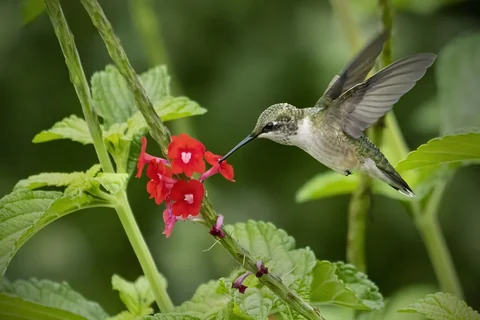
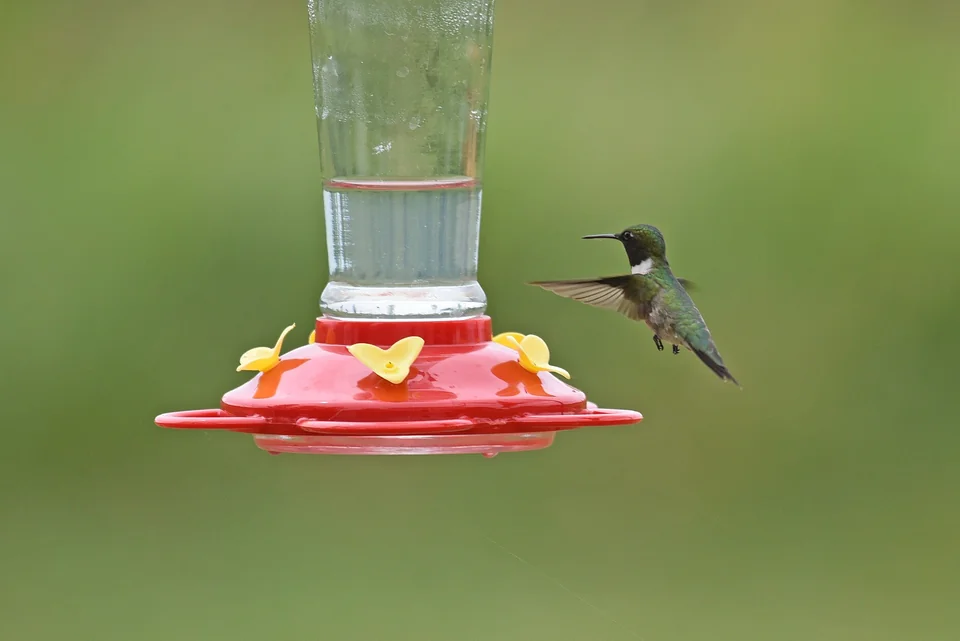
Photo: U.S. Fish and Wildlife Service - Midwest Region · Ruby-throated hummingbird (50036597378).jpg · Public domain. Cropped, gently adjusted, and resized for this guide.
The short answer
Put out a small clean feeder shortly before your local species normally arrive, using several years of regional observations. Keep it fresh through the season; in fall, a maintained feeder may stay up for weeks after the last sighting because it does not delay migration.
Put the calendar behind the bird
“When should I put out my hummingbird feeder?” sounds like a request for one date. In the United States, that date changes with region, elevation, weather, and species. Ruby-throated Hummingbirds move through much of the East, while the West includes different migration routes and some places with year-round hummingbirds. A fixed national weekend will be early for some yards and late for others. Use local seasonal records to choose a starting window, then maintain the feeder as a clean supplemental food source rather than as a migration switch.
The equally common fall question has a clear answer: leaving a feeder up does not keep hummingbirds from migrating. Cornell Lab explains that seasonal cues, especially changing day length, drive migration; a feeder can help a late traveler refuel. Its advice is to leave a clean feeder available for several weeks after the last local sighting when you can keep caring for it. That is an option, not an obligation to maintain a neglected reservoir indefinitely.
Plan around three stages: the weeks when birds usually arrive locally, the months when they visit, and the weeks after your last sighting. Before arrival, identify likely species and prepare a small clean feeder. During activity, replace nectar for the conditions. After visits stop, continue a modest fresh offering if you can maintain it, allowing for a late traveler or a different species. Local records help you decide when each stage begins.
Find your local arrival window
Start with the hummingbird species expected near your home. Cornell's Ruby-throated Hummingbird range map is useful for much of the East; western readers should inspect the maps of species likely in their county. Then compare several years of local spring sightings using eBird bar charts, a local bird club, or a well-maintained regional record. Look for the first regular arrivals, not the earliest exceptional dot on a map.
Put the cleaned feeder out shortly before that ordinary arrival period if you can maintain it. “Before” is important: a first migrant can arrive before your own flowers open. But an early feeder is not useful if its sugar water sits unchanged for weeks while you wait. A tiny fill reduces waste and makes the schedule manageable. Keep a note of when you set it out, when you refreshed it, and when you first saw a bird.
Beware of national migration maps shared without dates or species names. A reported sighting may be genuine yet irrelevant to your region. A forecast of general bird migration is not a feeder-ready timetable for hummingbirds. Your local records and the species' broad range together are more useful than a single social post from another state.
East, West, and year-round areas need different plans
The eastern United States is strongly associated with Ruby-throated Hummingbirds during breeding season. Their spring arrival and fall departure shift with latitude and year, and some birds remain along the Gulf and southern Atlantic coasts. The West is more varied: different species and elevation patterns make one “western hummingbird calendar” just as misleading as one national calendar. Parts of the Pacific Coast and Southwest can host hummingbirds throughout the year.
| Yard context | Planning question | Better source of timing |
|---|---|---|
| Eastern breeding area | When do Ruby-throated Hummingbirds usually arrive locally? | Recent county records plus species range |
| Western migration corridor | Which species pass through, and when? | Species-specific local records |
| Year-round hummingbird area | Is clean supplemental food manageable all year? | Local species and weather guidance |
| High elevation or unusual season | How does this site differ from nearby towns? | Local observations, not a state average |
Use these categories to decide what to check, not to assign a date to every state. A coastal town, mountain slope, and inland suburb can have different records even within one state. If you are new to an area, ask a local bird club which species are regularly seen and what natural nectar plants bloom during arrival. Use a range of weeks, not a promise of a particular Tuesday.
Your visual action map

Read the visual as text
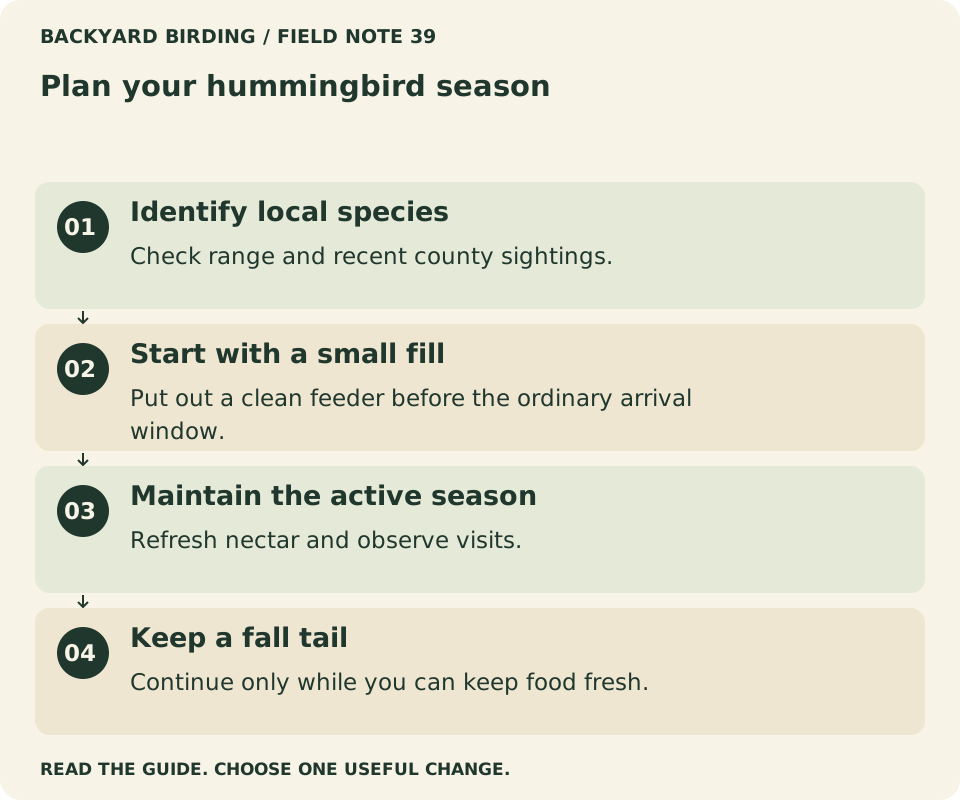
- Identify local species. Check range and recent county sightings.
- Start with a small fill. Put out a clean feeder before the ordinary arrival window.
- Maintain the active season. Refresh nectar and observe visits.
- Keep a fall tail. Continue only while you can keep food fresh.
Feeder food is supplemental, not the whole diet
Hummingbirds obtain energy from flower nectar and feed on small insects and other tiny arthropods. A sugar-water feeder can be useful, especially when flowers are sparse, but it does not replace the broader habitat. Native flowering plants, insect-supporting vegetation, and a pesticide-conscious yard provide resources beyond a red plastic port. A feeder should fit into that setting rather than become the sole measure of a hummingbird-friendly space.
For an ordinary nectar recipe, use plain white table sugar and water at the familiar one-part-sugar to four-parts-water ratio. Cornell's feeding guidance gives details and explains why red dye is unnecessary. Do not substitute honey or an improvised sweetener. Mix cleanly, cool any heated solution before filling, and use a small amount that you can replace promptly. Follow local and current guidance when unusual conditions warrant it.
The nectar-change guide covers the maintenance schedule in detail. Set the first cleaning reminder when you put the feeder out, even if no birds have visited yet. Keep the fill small during the waiting period, and empty and wash the feeder before adding a fresh batch. Early placement and continued care need to start together.
Spring setup: make the first visit safe and ordinary
Before hanging the feeder, disassemble and wash every nectar-contact part according to the manufacturer's instructions. Check for cracked ports, missing seals, and places where old solution might remain. Choose a position you can reach easily for repeated cleaning. Avoid strong direct sun that speeds spoilage and sites where wind swings a bottle and causes leakage. Survey nearby windows; a visiting hummingbird should not be drawn toward untreated reflective glass.
Use a modest fill. A large reservoir left mostly untouched at the start of the season increases the amount you discard and can tempt you to stretch the change interval. If no bird visits during the first week, keep refreshing the small fill rather than waiting for the first visitor to “use it up.” A clean empty-looking feeder is better than a full stale one.
The hummingbird-feeder cleaning guide walks through the physical job. It is worth reading before choosing a new feeder, because cleanability becomes more important than capacity during a long, warm season. A design whose ports you cannot reach with a brush is unlikely to become easier when summer heat arrives.
Arrival is not a straight line of daily visits
The first hummingbird may appear once and disappear for days. That does not mean the feeder is in the wrong place. Birds can move through, use flowering plants elsewhere, defend temporary territories, or visit at times you are not watching. Your observation window is limited. Do not repeatedly relocate a feeder based on one quiet morning; give the chosen site a fair trial while keeping the nectar fresh.
Spring activity can also change when breeding begins. Cornell describes how territorial adult males can exclude other males around a feeder, and how numbers may rise again after young birds fledge. A lower count during one phase is not proof that all hummingbirds have left the area. Watch flowers and nearby perches, and consider whether one bird is guarding the station. Several small feeders spaced out may reduce one bird's ability to dominate every port, provided you can maintain all of them.
Keep a simple notebook: first sighting, days with visits, natural blooms, and major weather changes. This gives your own yard a baseline for next year. It does not turn one season into a biological rule, but it can reveal that your usual visitors arrive later than an online state-level chart suggests.
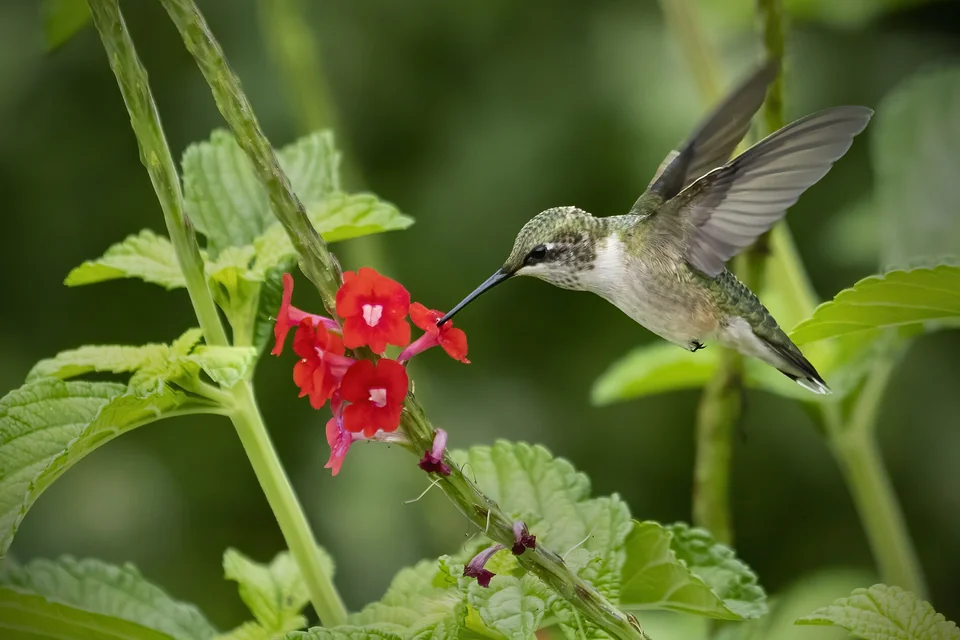
Photo: Jack Nevitt · Ruby-Throated hummingbird on red flower.jpg · CC BY-SA 4.0. Cropped, gently adjusted, and resized for this guide.
“Use a local arrival window and a realistic cleaning schedule; a clean fall feeder will not hold a hummingbird back from migration.”
Backyard Birding — editorial takeaway
Why fall sightings can outlast the local summer birds
Fall movement is staggered. Local adult males may depart before females and young birds; later, migrants from farther north can pass through. A bird at the feeder in September or October may not be one you watched all summer. In parts of the East, a late hummingbird may even belong to a western species rather than a lingering Ruby-throated Hummingbird. Cornell's discussion of late-season birds warns against assuming every fall visitor is the same individual or species.
This is why a strict “take down on the first cool night” rule is poor advice. A cold spell does not tell you that migration is over, and one empty day does not establish the last sighting. If you can keep the feeder clean, continue a small fresh fill through your local last-sighting tail. If maintenance is impossible, remove the feeder rather than leaving spoiled solution available as a symbolic gesture.
Use your notebook to record the last observed bird, with the word observed doing important work. You cannot know the last hummingbird in the area from your window. The feeder may be visited when you are away. Build a reasonable routine from regional records and your capacity to care for it, not from certainty you do not have.
A feeder does not make a hummingbird miss migration
The idea that a reliable sugar source traps hummingbirds in the north is persistent and intuitive: why leave if food remains? Migration does not work that way. Cornell's fall-feeding answer says feeders do not determine when birds begin their journey. Changing day length is a major seasonal cue, and birds can use feeders as one stop among natural resources.
The conclusion is limited but useful. You need not remove a clean feeder to “force” departure. You still must avoid offering stale nectar and should follow normal cleaning. In an area with year-round hummingbirds, the question is not when to make birds leave but whether you can provide a maintained supplemental source under winter conditions.
When explaining this to a neighbor, avoid replacing one myth with an exaggerated promise. A feeder can help some birds refuel; it does not guarantee survival, redirect migration, or substitute for habitat across a long route. The most responsible fall practice combines clean food, native plants, safe windows, and honest expectations.
Use the last-sighting tail as a maintenance decision
Cornell encourages keeping feeders up for several weeks after the last local hummingbird leaves, in case a straggler passes through. Translate that into a household plan: note the last observed visit, continue a small fresh fill for the following weeks if you can maintain it, and reassess against local species and weather records. If you live in a year-round range, the “last” visit may not be a seasonal endpoint at all.
Do not let the tail become a stale-nectar exception. Warm fall afternoons can still spoil sugar water. If you are leaving town, arrange care or take the feeder down cleanly. If a hard freeze threatens the feeder material, follow its instructions and local cold-weather guidance; do not put a cracked or leaking unit back out because the calendar says you should.
The best-feeder guide helps compare size and cleaning access. For the seasonal tail, a small easy-to-wash feeder is often more sensible than a large vessel with barely any traffic. It lowers waste while allowing the household to offer a reliable stop.
Find your situation

Read the visual as text
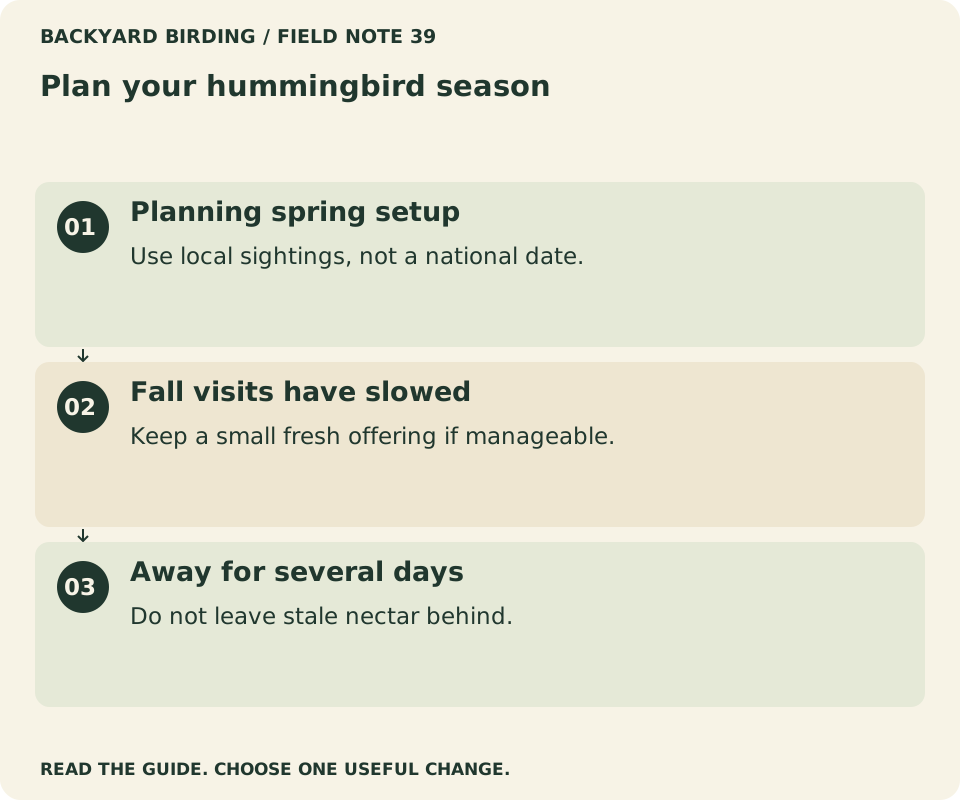
- Planning spring setup. Use local sightings, not a national date.
- Fall visits have slowed. Keep a small fresh offering if manageable.
- Away for several days. Do not leave stale nectar behind.
Cold snaps require condition checks, not a new recipe by reflex
Cold weather can change bird energy needs and the time water remains liquid, but it also creates equipment and maintenance questions. Inspect for freezing, leaking, cracked plastic or glass, and ports blocked by ice. Bring the feeder in to thaw as its instructions allow; replace with fresh solution and a sound unit. Do not wrap an unsafe heat source around it or leave an electrical improvisation outdoors.
Cornell describes a stronger sugar mixture as an option under some cold, rainy, or foggy conditions, but that is not a universal rule for every fall day. For most household use, keep the standard recipe and focus on clean, accessible food. If considering a different concentration for a specific situation, read the primary guidance and avoid internet recipes that add dye, honey, or other substances.
Observe the bird and the feeder separately. A bird that visits briefly during a cold day is not proof that it is stranded. A feeder that is frozen shut is not helping regardless of its recipe. If an individual appears injured or unable to fly, contact a licensed wildlife rehabilitator for advice rather than trying to solve a medical problem with sugar water.
Read migration maps with the right level of confidence
Range maps show broad patterns. Community sighting maps show reports from observers, not a complete census of every backyard. The first dot in a county may reflect an unusually early bird, a concentrated observer effort, or a misidentification. A missing dot may mean nobody reported a bird, not that none arrived. Use several years of local bar charts to estimate a likely window, then be ready for variation.
General BirdCast forecasts are valuable for understanding nocturnal migration and for decisions about nighttime lights, but they do not directly tell you which hummingbird will visit a particular feeder tomorrow. Species-specific records and local experience are better for that question. A date printed on a national “migration calendar” should be treated as an approximation, not a service deadline.
Include observation time in your annual first-and-last record. Note if you were home most mornings or away for two weeks, and whether you watched the feeder, nearby flowers, or both. When comparing years, check those gaps before deciding that birds arrived later or left earlier. A short note about effort can explain a difference that the sighting dates alone cannot.
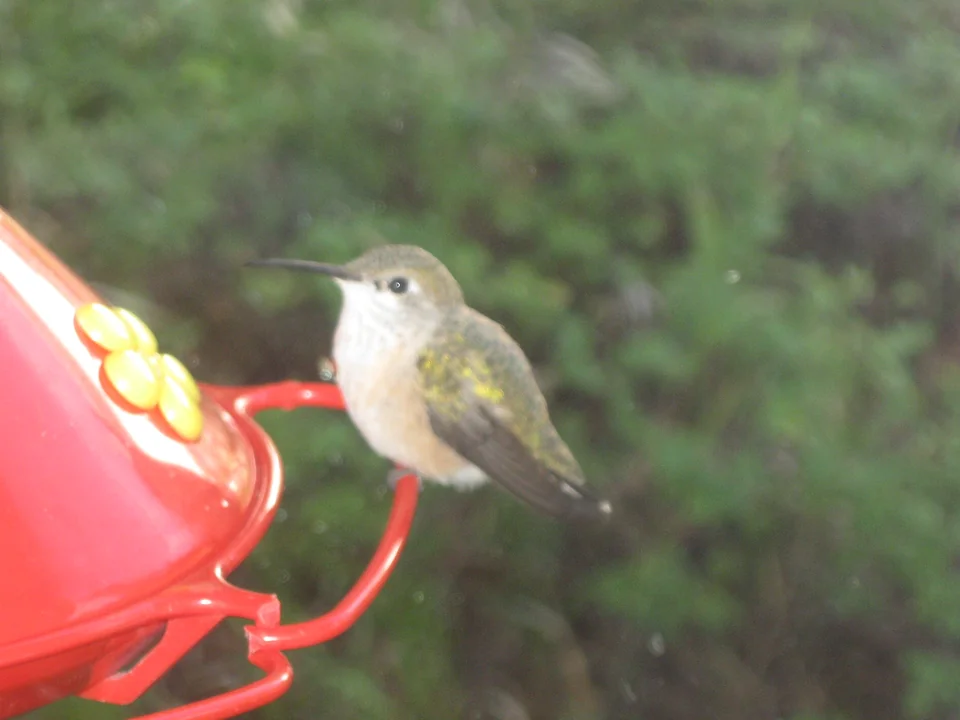
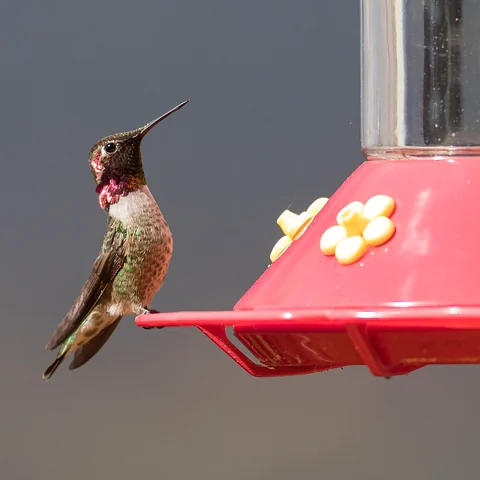
Photo: SpringWild · Juvinile Rufous Hummingbird sitting on a hummingbird feeder.jpg · CC0. Cropped, gently adjusted, and resized for this guide.
What a quiet feeder may be telling you
A quiet feeder can mean birds are feeding on flowers, defending another site, passing through at different times, or not yet present locally. It can also mean the feeder is dirty, leaking, too exposed, or hidden behind a competitor's territory. Begin with the easy checks: fresh nectar, clean ports, appropriate placement, and whether natural blooms are abundant. Do not buy several new feeders before confirming the basic one works.
Cornell's article on fewer hummingbirds at feeders describes seasonal fluctuations around nesting and migration. It is a reminder to interpret a quieter week against the broader season. If many observers in your area report a change over years, that is a different question from one feeder being quiet for three days.
Watch without forcing a conclusion. A single hummingbird may visit before you wake. A male may guard the feeder from a nearby branch. A flower patch may be more attractive for a while. Keep notes and adjust one feature at a time. If you move the feeder, preserve the cleaning schedule so the comparison is meaningful.
Build habitat that works when the feeder is down
Native flowers suited to your region can supply nectar through different parts of the season and support the insects hummingbirds also need. Select plants for local native status, bloom timing, site light, and water requirements rather than a generic national “hummingbird plant” list. A sequence of bloom periods can be more useful than one spectacular flower that lasts a week. Avoid assuming a red flower is automatically suitable; shape and local ecology matter.
The native-plant guide explains how to verify plants for your region. In a small yard, even a container or modest bed can add resources, but it will not replicate an entire migration corridor. Keep expectations proportionate. The objective is a better local stop with food, cover, and safer movement, not a claim that one yard controls migration.
This habitat also makes seasonal feeder breaks easier. If you need to travel, clean and remove the feeder rather than leaving old nectar. The surrounding plants continue to serve their own ecological role. A healthy planting plan and a well-maintained feeder complement each other; neither has to be described as a complete diet.
Keep windows and predators in the seasonal plan
A feeder may bring hummingbirds close to a house just when migration increases movement through the yard. Look at nearby glass from outside. Reflected flowers and open sky can make a window hazardous. Dense, correctly spaced exterior treatment is more reliable than a single decorative decal; our window-collision guide explains how to survey and treat panes. A feeder moved without addressing the glass may leave another flight route at risk.
Keep cats indoors and place the feeder where birds have an unobstructed approach without being funneled past a hiding place. Do not hang it so close to a walkway that people repeatedly brush past feeding birds. If you add several small feeders to reduce territorial competition, review each one's glass exposure and cleaning access. More stations multiply maintenance and potential hazards as well as opportunities to watch birds.
Seasonal timing is therefore not only a date. It is the moment to inspect the whole setup: food, ports, approach, windows, plants, and the schedule for care. A clean feeder near dangerous glass is not a finished hummingbird-friendly yard.
Small mistakes. Better moves.

Read the visual as text
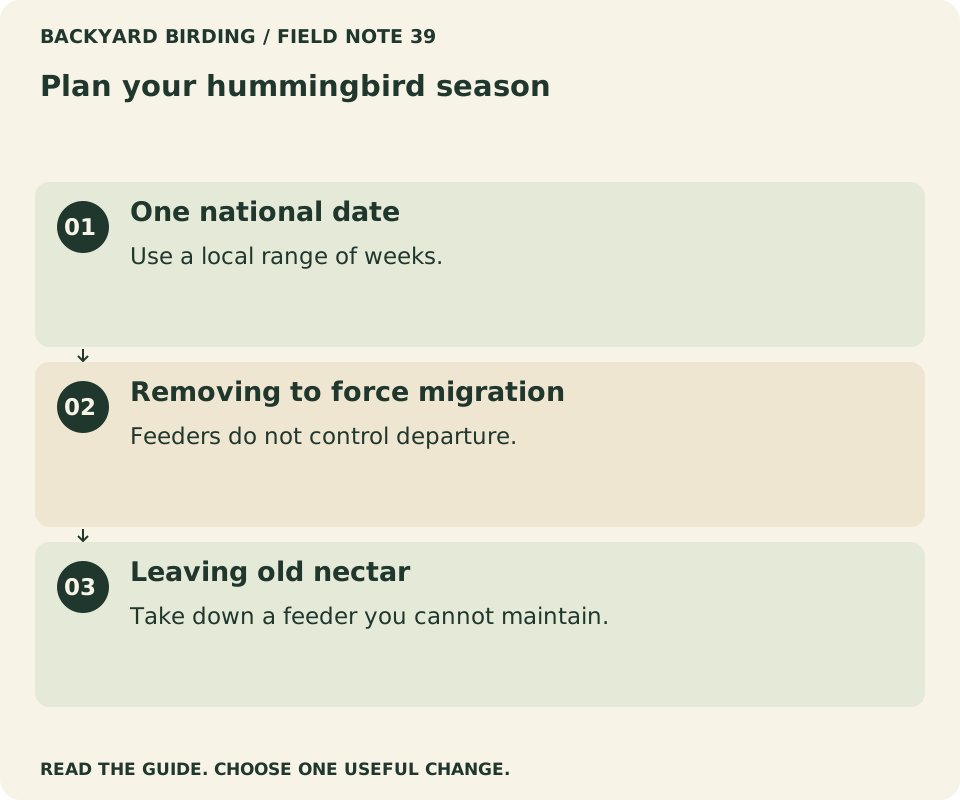
- One national date. Use a local range of weeks.
- Removing to force migration. Feeders do not control departure.
- Leaving old nectar. Take down a feeder you cannot maintain.
What to do when your first sighting is late
If local hummingbirds usually appear before you see one, check the basics without treating absence as proof of a population problem. Is the feeder clean, visible from an ordinary approach, and filled with fresh solution? Have regional observers reported the species this year? Have natural flowers offered a more attractive food source? One backyard's first sighting depends partly on when someone watched, so compare notes with care.
Do not compensate for a quiet feeder by leaving a large reservoir out longer or adding dye. Maintain a small clean fill while the local window is still plausible. If the season has clearly passed and you have no visitors, clean and store the feeder until the next appropriate period. Keep your date and effort notes; next year they may show that the yard's pattern simply differs from a national chart. The absence of a visit is information, but it is not a diagnosis of the cause.
A simple seasonal card for your own region
Write down four things: likely local species, the usual arrival window from recent records, the date you will begin small clean fills, and how you will handle the fall tail. Leave room for first and last observed visits and the natural blooms that coincide with them. Review the card each year; do not assume last year's weather or your vacation schedule will repeat.
The most important line is the care rule: refresh nectar on a schedule suitable for temperature and use, clean all contact surfaces, and take the feeder down when you cannot maintain it. A second line can record the local wildlife and rehabilitator contacts for unusual birds or injuries. This makes the card operational rather than a decorative migration chart.
If you are starting today, find your county's usual sightings and clean one small feeder. If you are in the fall tail, keep it up only while you can offer fresh food. You will not delay migration by doing so. Your best contribution is a safe, clean, well-observed stop along a route the bird chooses for itself.
Watch it. Then try it.
Review the steps and common mistakes in two short, silent animations. Each has a complete text transcript below.
Your four-step action map
Read the complete video transcript
Plan your hummingbird season.
- Identify local species. Check range and recent county sightings.
- Start with a small fill. Put out a clean feeder before the ordinary arrival window.
- Maintain the active season. Refresh nectar and observe visits.
- Keep a fall tail. Continue only while you can keep food fresh.
Try the steps, then note any problem that still needs attention.
Three mistakes to avoid
Read the complete video transcript
Plan your hummingbird season.
- One national date. Use a local range of weeks.
- Removing to force migration. Feeders do not control departure.
- Leaving old nectar. Take down a feeder you cannot maintain.
Try the steps, then note any problem that still needs attention.
Both animations use this real photograph by U.S. Fish and Wildlife Service - Midwest Region. Photo source · Public domain. The photo is adapted into original educational animations, not recordings of a field test.
At a glance
| Your situation | Our conclusion | Your next action |
|---|---|---|
| Planning spring setup | Use local sightings, not a national date. | Clean a small feeder. |
| Fall visits have slowed | Keep a small fresh offering if manageable. | Check the nectar schedule. |
| Away for several days | Do not leave stale nectar behind. | Clean and store the feeder. |
Sources & evidence
- Cornell Lab: Should I stop feeding in fall?
- Cornell Lab: Feeding hummingbirds
- Cornell Lab: Ruby-throated Hummingbird range
- Cornell Lab: Fewer hummingbirds at the feeder
Our standard: real evidence before ratings. Corrections follow our editorial process.
Our verdict & your next actions
Choose the row that describes your setup, then follow the suggested check or adjustment.
| Your situation | Our verdict | Your next action |
|---|---|---|
| Planning spring setup | Use local sightings, not a national date. | Clean a small feeder. |
| Fall visits have slowed | Keep a small fresh offering if manageable. | Check the nectar schedule. |
| Away for several days | Do not leave stale nectar behind. | Clean and store the feeder. |
Your pocket field checklist
Tick off the steps as you go.
0 of 4 steps completed
Keep building your knowledge in hummingbirds, or search the full backyard library.