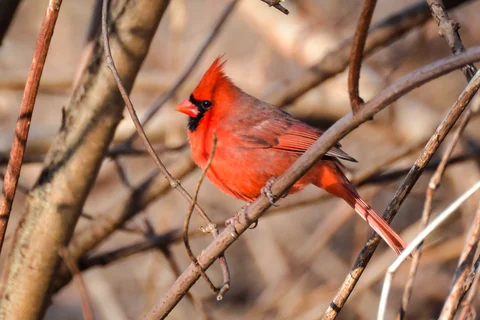
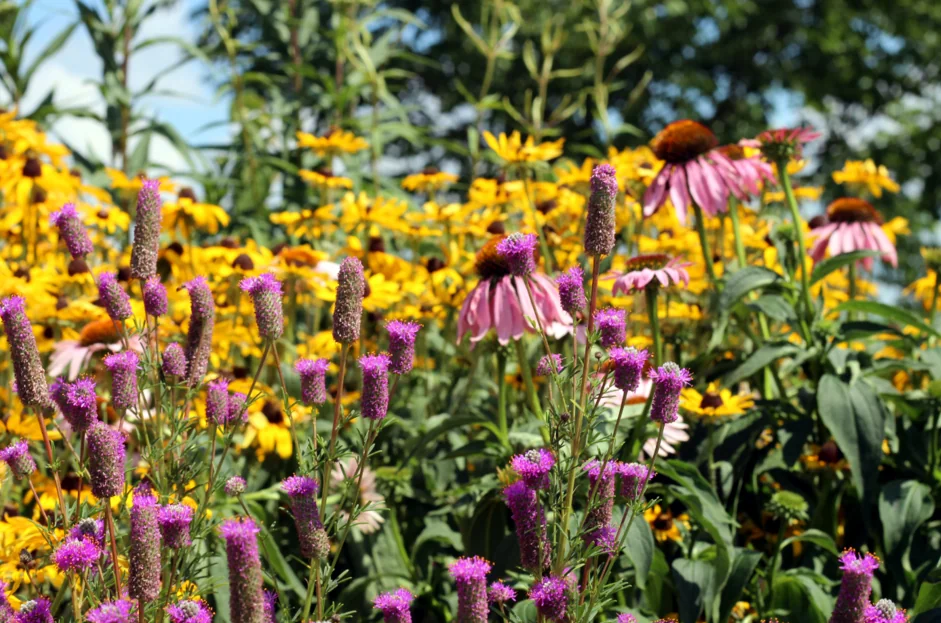
Photo: Courtney Celley/USFWS · Horicon NWR native pollinator garden.png · Public domain. Cropped, gently adjusted, and resized for this guide.
The short answer
Start with regional native status and your site conditions, then choose a small planting with a clear habitat role. Plan mature spacing and establishment care before buying.
Start with your region and your actual site
The best native plants for backyard birds are plants native to your area that also fit the light, soil, moisture, and space you can provide. A species can be native somewhere in North America and still be the wrong choice for your yard. Begin with regional information, then narrow the list using the conditions of the planting location. That order saves money and makes the resulting habitat easier to maintain.
Audubon's native-plant resources provide a useful starting point for connecting regional plants and birds. Pair that information with a local extension service, native-plant society, or knowledgeable nursery. This guide is a planning method rather than a universal shopping list. It helps you choose a manageable first project, preserve useful existing features, and build seasonal resources without promising that a particular flower will bring a specific bird to your window on demand.
Define a small, useful first project
Choose one area you can prepare and care for properly. It might be a sunny strip beside a path, a shrub gap near a fence, or a few suitable containers on a patio. Measure the available space and write down why you chose it. A clear first project is easier to evaluate than a scattered collection of plants bought because each looked attractive in the nursery.
Set a practical outcome: establish a locally appropriate shrub, create a small seed-bearing planting, or replace one difficult patch of lawn with a suitable bed. Avoid defining success only as an immediate increase in bird numbers. Plants need time to establish, and birds use a wider landscape. A small project that survives and fits your routine is a stronger beginning than a large redesign whose watering, weeding, and spacing requirements become overwhelming during the first season.
Map light before reading plant labels
Observe the location at several times of day and, when possible, across the growing season. A bed that is bright in early spring may become shaded when nearby trees leaf out. Reflected heat from paving or a wall can also change the experience of a plant in a small space. Write down the pattern rather than describing the whole yard as sunny or shady.
Use the light requirements of candidate plants as a filter, not a challenge to overcome with hope. If a plant needs conditions you cannot provide, choose another that serves a similar habitat role. This is especially useful in narrow urban yards where one side of a fence may differ substantially from the other. A simple sketch showing morning sun, afternoon shade, and hot reflective surfaces gives a nursery specialist much better information than a photograph taken on one cloudy day.
Your visual action map

Read the visual as text
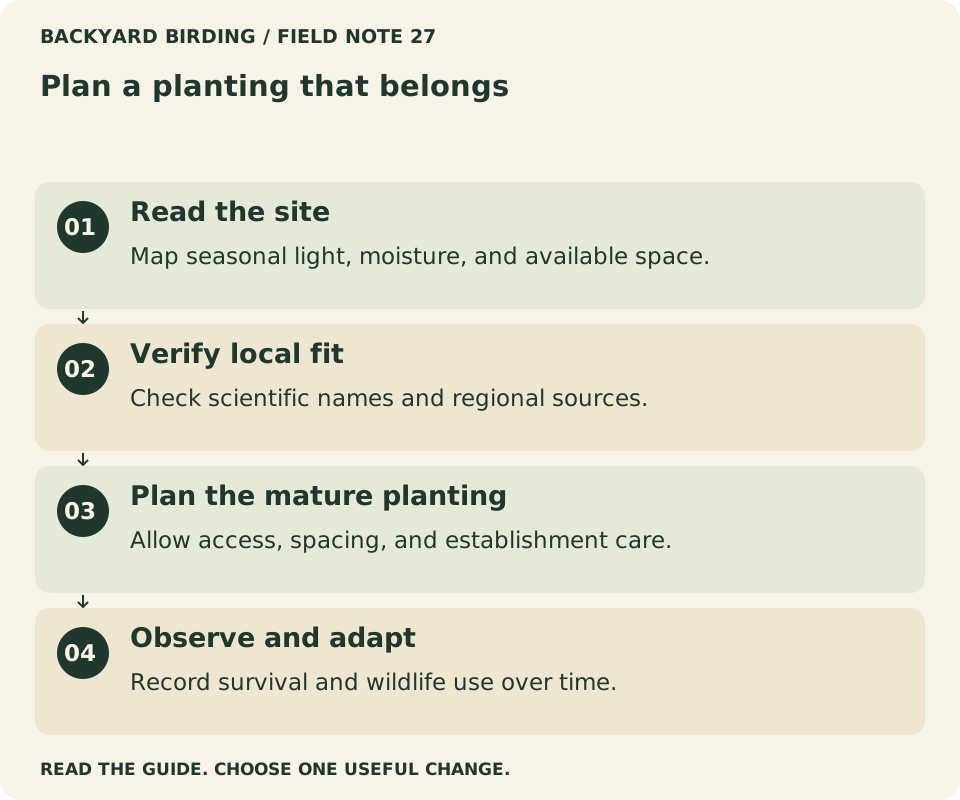
- Read the site. Map seasonal light, moisture, and available space.
- Verify local fit. Check scientific names and regional sources.
- Plan the mature planting. Allow access, spacing, and establishment care.
- Observe and adapt. Record survival and wildlife use over time.
Understand soil and drainage without guessing
Notice whether water pools after rain, drains quickly, or leaves different parts of the bed with different moisture conditions. Soil texture, compaction, and previous use can affect what will grow well. A soil test through an appropriate local service can answer specific questions before you add amendments. Do not assume that every native plant wants poor, dry soil or that every new bed needs fertilizer.
Record what you know and what remains uncertain. If runoff enters from a roof or neighboring surface, account for it in the plant choice and layout. Avoid altering drainage in a way that creates a problem for buildings or adjacent property. The goal is to match plants to a workable site, not to force the site to support a species chosen first. When the conditions are unusual, local horticultural advice can prevent a series of expensive replacements.
Check regional native status precisely
Use the scientific name to confirm a plant's identity and regional distribution. Common names can refer to different species, and broad retail labels may not describe local nativity. Audubon's database draws on regional plant distribution information; local botanical and extension resources can help refine the choice further. Keep the name and source of that information in your planting notes.
Ask the nursery whether the plant is the species you researched or a named cultivar. Cultivars can differ in features relevant to insects, flowers, fruits, and maintenance, so evaluate the actual selection rather than assuming all forms are equivalent. You do not need to turn shopping into a taxonomy examination. A short written list with scientific names, site requirements, and alternatives is usually enough to keep the purchase aligned with the plan you made at home.
Plan several habitat roles instead of one flower color
Think about structure and resources across the planting, not only its appearance during peak bloom. Depending on local suitability, a combination of trees, shrubs, flowering plants, grasses, and retained stems can provide different kinds of opportunities. Food may include seeds, fruits, and insects associated with vegetation; cover and perches also matter. The exact mix depends on the size and setting of the yard.
For a small project, choose one primary role and one complementary role. A shrub might provide structure while nearby herbaceous plants add seasonal variety. This is easier to maintain than trying to include every category immediately. Our woodpecker habitat guide shows why trees and appropriate retained wood deserve attention alongside feeders. A bird-friendly planting is a living part of the landscape, not a decorative backdrop selected solely to frame a feeder photograph.
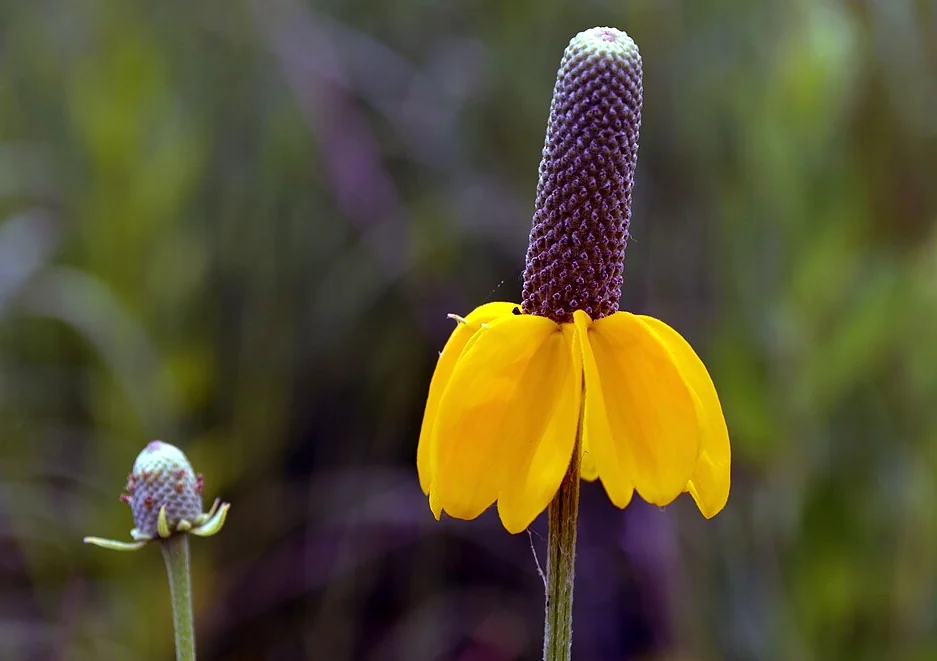
Photo: USFWSmidwest · Prairie coneflowers are in the sunflower tribe of the daisy family. A great native to add to your garden! (19477986051).jpg · Public domain. Cropped, gently adjusted, and resized for this guide.
“The right plant belongs in the region and fits the place you can provide.”
Backyard Birding — editorial takeaway
Make a seasonal resource calendar
Create four columns for the broad seasons in your region and list what each candidate contributes when established. Use local information for bloom, fruit, and seed timing rather than copying dates from a distant climate. Include structure and cover as well as food. A planting that looks quiet after flowering may still have useful stems or seed heads.
| Candidate role | Spring question | Summer question | Fall and winter question |
|---|---|---|---|
| Locally suitable shrub | What growth and insect activity occur? | Does it fit paths and viewing space? | Does it retain useful fruit or cover? |
| Flowering perennial | Is establishment care manageable? | Does bloom suit the site? | Can seed heads remain appropriately? |
| Native grass or sedge | Is it suited to moisture and light? | Will its mature spread fit? | Can standing structure remain safely? |
The table is a planning worksheet, not a claim that every plant provides every benefit. Use it to identify gaps and ask better questions before buying.
Respect mature size and the maintenance route
Draw the expected mature spread of each plant on your plan. A small nursery pot can become a shrub that blocks a window treatment, hides the base of a feeder, or narrows a path. Keep room to wash a bird bath, remove a feeder, and inspect the ground. Habitat and maintenance should support one another rather than compete for the same inaccessible corner.
Check underground and overhead utilities before digging or planting trees, using the appropriate local process. Consider roots, building clearances, and future pruning needs with qualified advice where necessary. Do not plant a large species in a constrained space on the assumption that constant trimming will keep it small indefinitely. A plant that fits at maturity is more likely to remain a useful long-term feature. Good spacing also lets you enjoy its natural form without turning every season into corrective maintenance.
Preserve useful existing plants and features
A new planting plan does not require removing everything already present. Inventory existing trees, shrubs, and established vegetation first. Identify them accurately, assess their condition, and consider what birds already use. A mature, suitable tree may provide structure that several newly purchased plants cannot replace quickly. Retention can be an active habitat decision, not merely a lack of redesign.
Where a plant is invasive locally, unsafe, or unsuitable, obtain appropriate removal and replacement guidance. Avoid clearing the whole site at once without a practical establishment plan for what follows. Also consider nesting activity before discretionary pruning or removal. The useful question is which changes improve the yard over time while preserving valuable functions. A phased project gives you space to observe, learn, and adjust instead of replacing an established landscape with a large area of bare soil and optimistic labels.
Find your situation

Read the visual as text
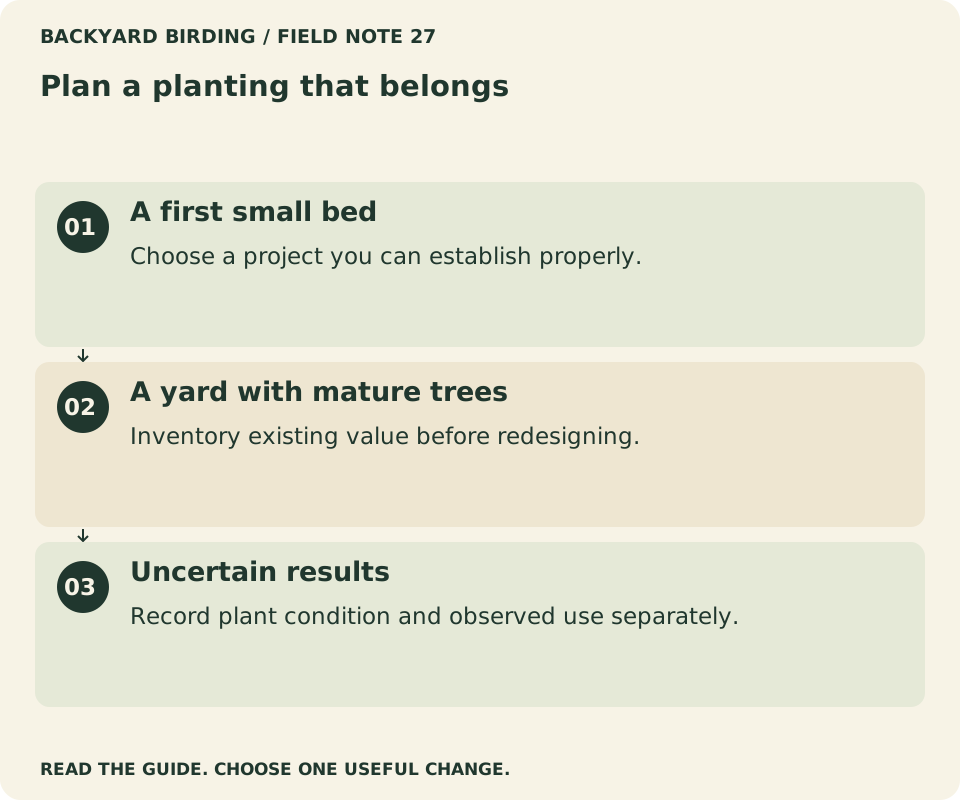
- A first small bed. Choose a project you can establish properly.
- A yard with mature trees. Inventory existing value before redesigning.
- Uncertain results. Record plant condition and observed use separately.
Ask useful questions at the nursery
Bring your site notes and scientific-name shortlist. Ask about regional suitability, mature dimensions, establishment watering, and whether the stock has been treated with pesticides relevant to your goals. If a plant is unavailable, request an alternative that matches both the site and the intended habitat role. A substitute chosen only for similar flower color may have very different needs.
Inspect the plant's condition and root system as appropriate, and keep the label and receipt. Avoid buying more than you can plant and care for promptly. A small number of healthy, well-chosen plants is easier to establish than a car full of impulse purchases that wait in pots through a hot week. Write down any nursery advice while it is fresh. Those notes become part of the planting record and help distinguish a site problem from an instruction you simply forgot after checkout.
Build establishment care into the budget
Native does not mean a newly planted specimen requires no care. The transition from a nursery container to your soil may involve watering, weed management, and protection appropriate to the plant and location. Follow reliable local guidance for planting depth, spacing, and establishment. Avoid piling mulch against stems or adding amendments automatically without a reason.
Budget time as well as money. Decide who will water during a dry spell, how you will inspect the bed, and what happens if you travel soon after planting. A hose that cannot reach the site is a practical problem worth solving before the first plant goes in. Record the planting date and conditions so you can review performance accurately. A surviving, established plant is the intended outcome; the number of pots purchased is not a useful measure of habitat progress.
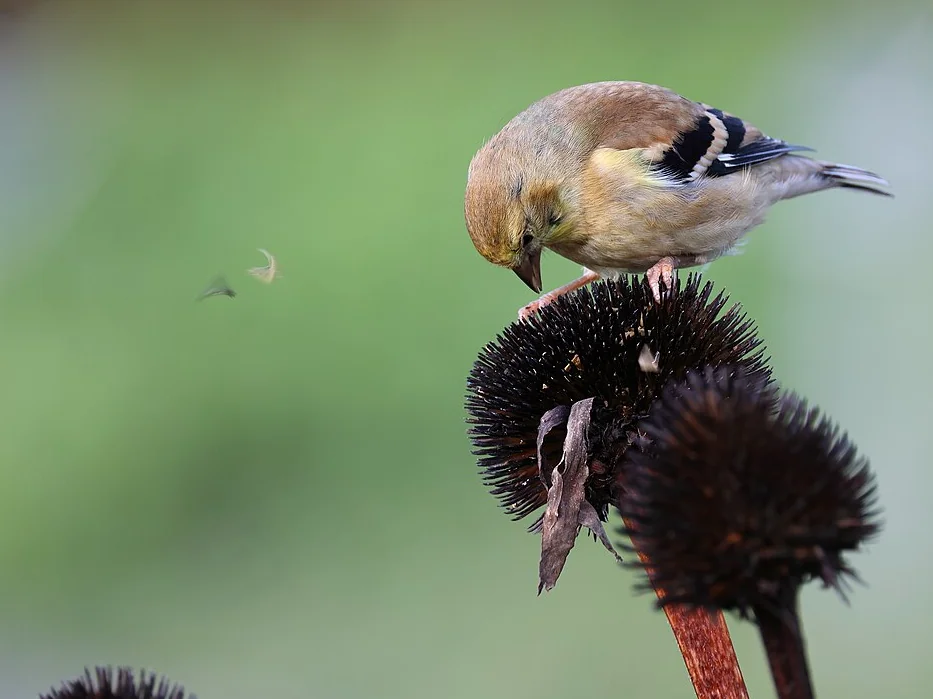
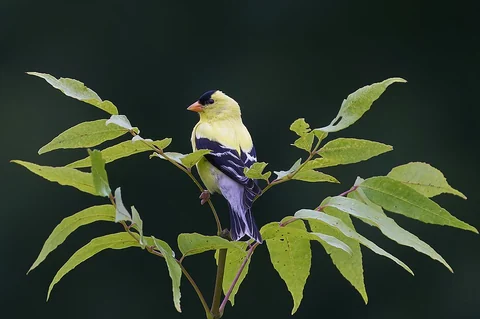
Photo: Cephas · Echinacea purpurea Spinus tristis JRVdH 05.jpg · CC BY-SA 4.0. Cropped, gently adjusted, and resized for this guide.
Make selective cleanup part of the design
Decide which stems, seed heads, and leaves can remain in suitable places and which areas need to stay clear. A path, drain, or access point has different requirements from the back of a planting bed. Selective cleanup can preserve useful structure while keeping the yard understandable and manageable. Follow local conditions, fire guidance, and plant-specific care rather than treating all debris as either essential habitat or unwanted mess.
Use a neat edge or a clear path to make an intentionally retained area legible to the people sharing the space. Explain the plan to a gardener or household member so routine maintenance does not remove the features you meant to keep. Observe what happens through the season and adjust. The purpose is to create a practical habitat arrangement, not to prove commitment by allowing every part of the yard to become difficult to use.
Include patios and containers realistically
A container project can be worthwhile when ground planting is unavailable. Choose regionally appropriate species that also suit the container's depth, drainage, exposure, and winter conditions. Roots in a pot experience different conditions from roots in the ground, so seek local advice rather than assuming a plant's garden hardiness automatically covers an exposed balcony container.
Check building rules, weight limits, wind exposure, and where drainage water will go. Secure pots appropriately and keep access routes clear. Choose a scale you can water reliably, especially in hot weather. A small group of suitable plants can add observation opportunities without promising a complete habitat in a few square feet. If nearby glass reflects the planting, address it as part of the project. Creating an attractive reflected tree or flower patch without treating the glass can undermine the bird-friendly intention.
Connect habitat with safer glass and pets
Planting for birds should be accompanied by an assessment of windows and outdoor pet access. New vegetation can change reflections as it grows, so inspect the exterior view after planting and during seasonal changes. Use effective exterior treatments according to current collision-prevention guidance. A feeder or bird bath near the bed adds another reason to examine the whole setting.
Keep pet cats indoors or in a secure enclosure rather than relying on vegetation arrangement to prevent hunting. Consider where dogs move through the space and whether wildlife can use the planting without repeated disturbance. These are practical design decisions, not separate finishing touches. The yard works as a system: plants, structures, glass, equipment, and household routines interact. A beautiful planting becomes more useful when the surrounding conditions allow birds to approach and use it without avoidable hazards.
Small mistakes. Better moves.

Read the visual as text
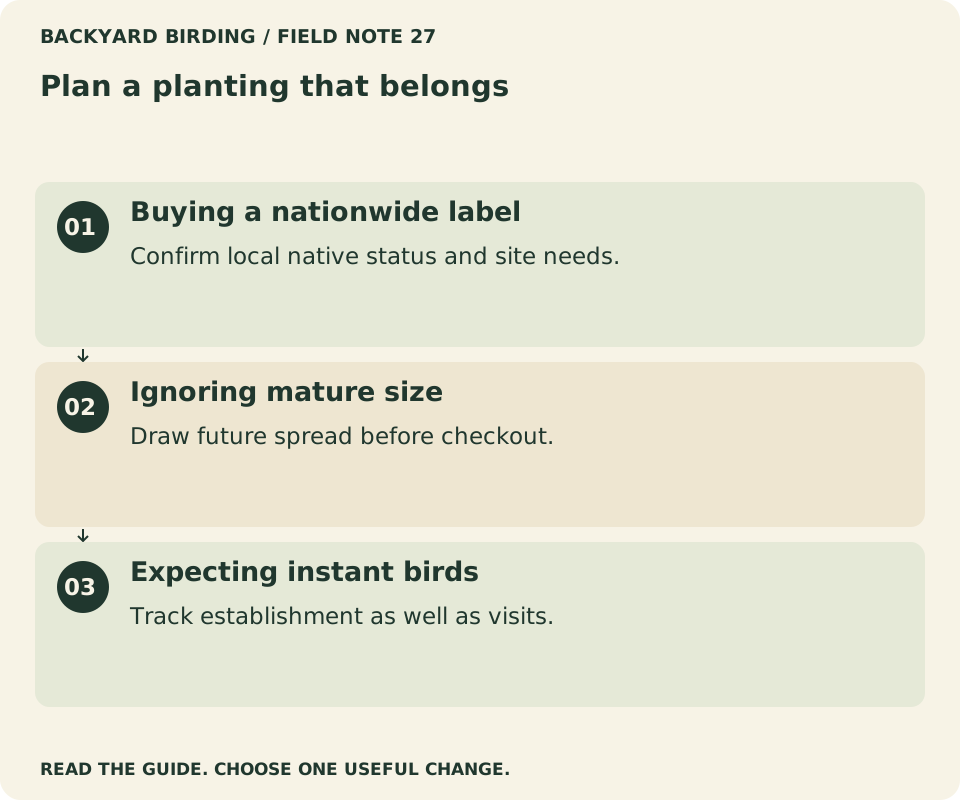
- Buying a nationwide label. Confirm local native status and site needs.
- Ignoring mature size. Draw future spread before checkout.
- Expecting instant birds. Track establishment as well as visits.
Observe results with realistic evidence
Keep a simple record of plant survival, growth, flowering, seed or fruit development, and observed wildlife use. Photograph from the same position periodically so you can compare the layout without relying on memory. Record bird visits to plants separately from feeder visits. A bird landing in the new bed is an observation; claiming the planting increased the local population would require much more evidence.
Do not label a plant unsuccessful because you missed a visit during a short watch. Some use is brief or occurs when you are indoors. Equally, do not ignore a plant that repeatedly fails to establish just because it appears on a popular list. Review light, moisture, competition, and care with a knowledgeable local source. The record helps you choose whether to wait, adjust maintenance, or replace a poor fit. Learning from one bed can guide the next project far better than another generic shopping list.
Three examples that show why regional checking matters
Use these plants as research examples, not as a ready-made planting list for every yard. Each illustrates a different decision: local distribution, long-term scale, or growth habit.
| Plant to investigate | What the reference tells you | What to check locally |
|---|---|---|
| Eastern purple coneflower, Echinacea purpurea | Native Plant Trust describes a primarily southeastern and midwestern distribution and specifically excludes New England from its native range | Whether it is native in your locality, rather than merely popular in local gardens |
| White oak, Quercus alba | The USDA Forest Service documents its eastern North American range and substantial mature tree habit | Space, soil, utilities, and professional advice for a long-lived large tree |
| Switchgrass, Panicum virgatum | Native Plant Trust describes a rhizomatous grass providing upright structure and seasonal seed heads | Regional suitability, mature spread, and whether the selected form fits your bed |
The coneflower example is particularly useful: a familiar plant sold as native can still be outside its native range in the place where you garden. The oak example makes a different point. Even a locally native tree may be unsuitable beneath utilities or in a very narrow bed. Switchgrass shows why growth habit belongs beside flower color on your shortlist. Verify the particular species or cultivar, buy appropriate nursery-grown stock, and keep the reference with your planting notes.
Your first planting plan, ready to use
Write a one-page plan containing the site's dimensions, seasonal light, moisture observations, selected species and scientific names, mature spacing, and establishment routine. Add the local sources you consulted and two acceptable alternatives for unavailable plants. Before buying, walk through the plan outside and confirm that paths, feeder access, glass treatments, and watering all still work.
Begin with the part of the plan you can plant and care for promptly. Keep the labels and dates, and photograph the bed from the same position as it develops. At the end of the season, compare growth, moisture, and available space with your original notes. Ask a local nursery or extension service about any plant that struggled before buying a replacement. Use what established successfully to guide the next small addition.
For an open-habitat species plan, explore How to Attract Bluebirds: Habitat, Mealworms, Water, and Nest Boxes.
For seasonal fruit and nectar visitors, read How to Attract Orioles: Oranges, Nectar, Habitat, and Seasonal Care.
Watch it. Then try it.
Review the steps and common mistakes in two short, silent animations. Each has a complete text transcript below.
Your four-step action map
Read the complete video transcript
Plan a planting that belongs.
- Read the site. Map seasonal light, moisture, and available space.
- Verify local fit. Check scientific names and regional sources.
- Plan the mature planting. Allow access, spacing, and establishment care.
- Observe and adapt. Record survival and wildlife use over time.
Try the steps, then note any problem that still needs attention.
Three mistakes to avoid
Read the complete video transcript
Plan a planting that belongs.
- Buying a nationwide label. Confirm local native status and site needs.
- Ignoring mature size. Draw future spread before checkout.
- Expecting instant birds. Track establishment as well as visits.
Try the steps, then note any problem that still needs attention.
Both animations use this real photograph by Courtney Celley/USFWS. Photo source · Public domain. The photo is adapted into original educational animations, not recordings of a field test.
At a glance
| Before your next step | Your practical check |
|---|---|
| A first small bed | Choose a project you can establish properly. |
| A yard with mature trees | Inventory existing value before redesigning. |
| Uncertain results | Record plant condition and observed use separately. |
Sources & evidence
- Audubon: Native plants for birds and regional plant database
- Audubon: How to make your yard bird friendly
- Cornell Lab: Current guidance on preventing window collisions
- Cornell Lab: Downy Woodpecker life history
- Native Plant Trust: Eastern purple coneflower regional distribution
- USDA Forest Service: White oak
- Native Plant Trust: Switchgrass
Our standard: real evidence before ratings. Corrections follow our editorial process.
Our verdict & your next actions
Choose the row that describes your setup, then follow the suggested check or adjustment.
| Your situation | Our verdict | Your next action |
|---|---|---|
| A first small bed | Choose a project you can establish properly. | Use the planting worksheet. |
| A yard with mature trees | Inventory existing value before redesigning. | Review woodpecker habitat. |
| Uncertain results | Record plant condition and observed use separately. | Start a habitat notebook. |
Your pocket field checklist
Tick off the steps as you go.
0 of 4 steps completed
Keep building your knowledge in birds, or search the full backyard library.