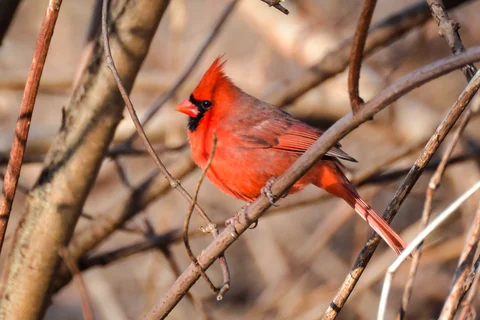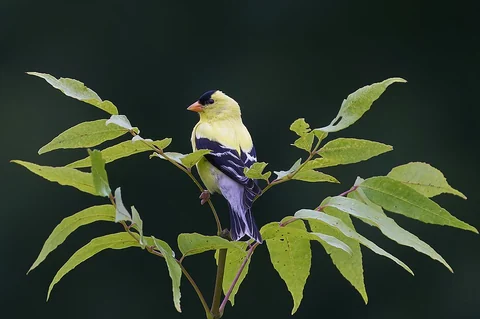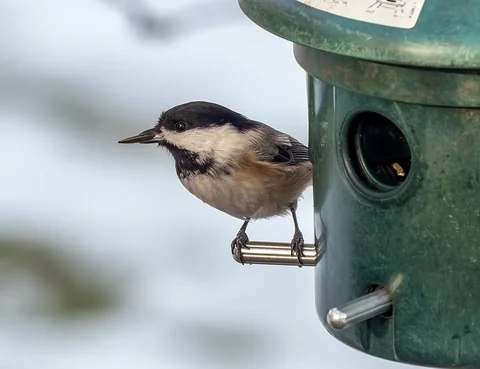
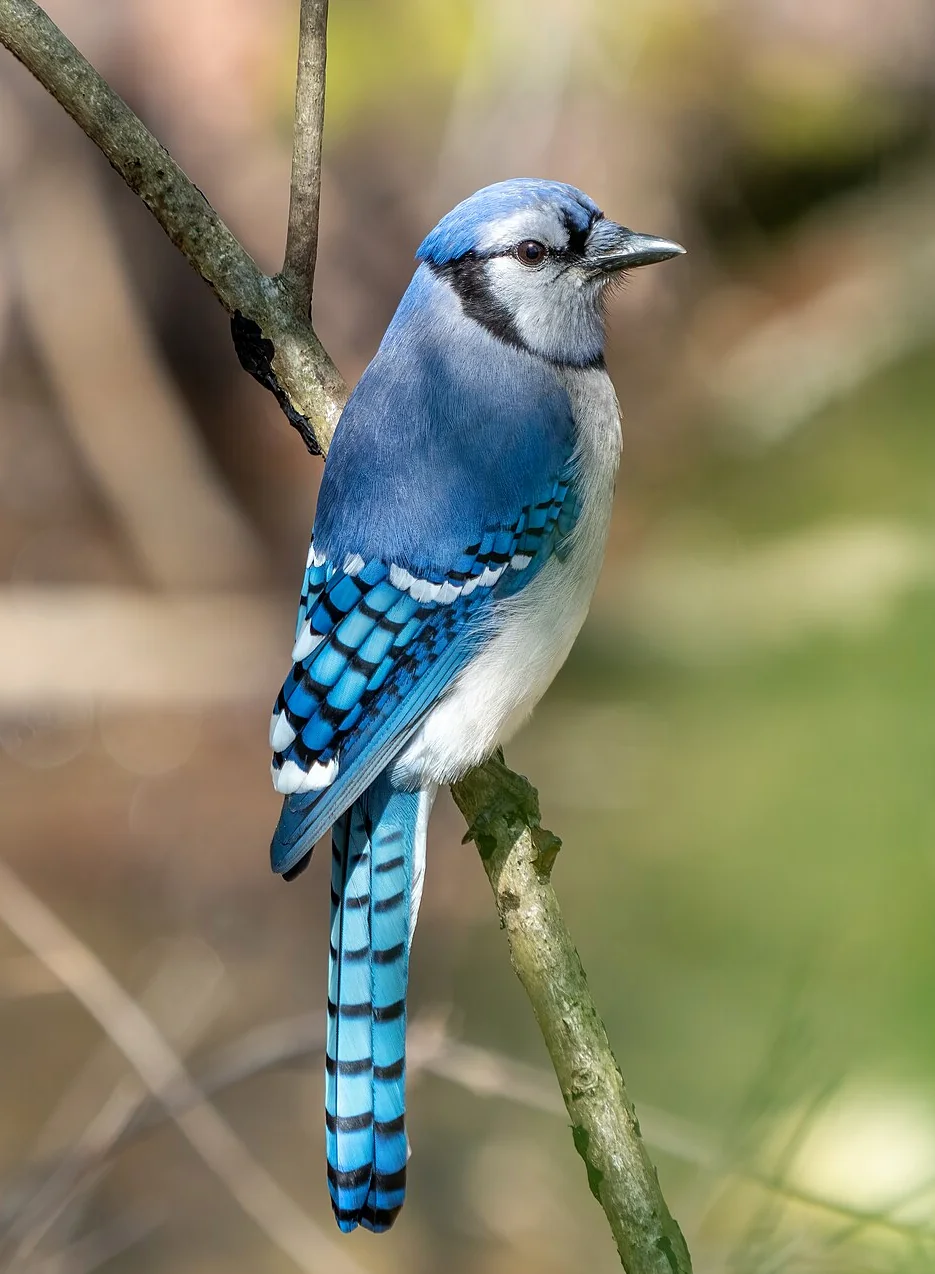
Photo: Rhododendrites · Blue jay in PP (30960).jpg · CC BY-SA 4.0. Cropped, gently adjusted, and resized for this guide.
The short answer
Identify the crest and contrasting pattern in regional context. Offer appropriate food on a clean, accessible surface, and distinguish observed actions from assumptions about motives.
Meet the Blue Jay on its own terms
Blue Jays are conspicuous, adaptable birds whose visits can make a familiar yard feel newly active. They are also easy to oversimplify: a loud arrival becomes evidence of aggression, a carried peanut becomes proof of immediate hunger, and a quiet period becomes a mystery. A better starting point is to observe what the bird actually does, then connect those actions with reliable species information.
In much of eastern and central North America, a Blue Jay is a plausible backyard visitor, but check the regional range before identifying every blue bird as this species. Western jays and other blue birds require different comparisons. This guide focuses on recognizing Blue Jays, offering a manageable feeding opportunity, understanding ordinary behavior, and watching without disturbance. It does not promise that a particular food will attract them to every yard or that you can infer an individual bird's intentions from a single visit.
Recognize the combination of crest and pattern
Look for the overall combination: a crested head, blue upperparts, pale underparts, contrasting black markings around the face and neck, and patterned wings and tail. The shape and pattern are more dependable than the exact shade of blue in changing light. A bird in deep shade or a poorly exposed photograph can appear much darker than the bright examples in a guide.
Start with the whole silhouette before enlarging small details. A bluebird has a different structure, while other jay species vary in crest, facial markings, and range. Compare a regional guide rather than choosing the first matching color in an image search. If you can, watch the bird turn so you see the wing and head together. A short written description helps preserve the features you noticed before a reference image influences your memory of the sighting.
Do not assign sex from brightness alone
Male and female Blue Jays have similar visible plumage, so a brighter-looking bird is not a reliable backyard shortcut to sex. Lighting, angle, feather condition, and camera processing can change the impression of color. Two birds photographed on different days are especially difficult to compare fairly. It is entirely reasonable to record a Blue Jay without assigning sex.
The same restraint helps when thinking about age. A young bird may have a different overall appearance or behavior, but one untidy feather or a subdued crest does not supply a complete age determination. Watch the context and consult an appropriate guide if the distinction matters. For most backyard observations, species, date, food use, and behavior provide plenty of useful information. Leaving a field blank is better than building later conclusions on a guess that seemed harmless at the time.
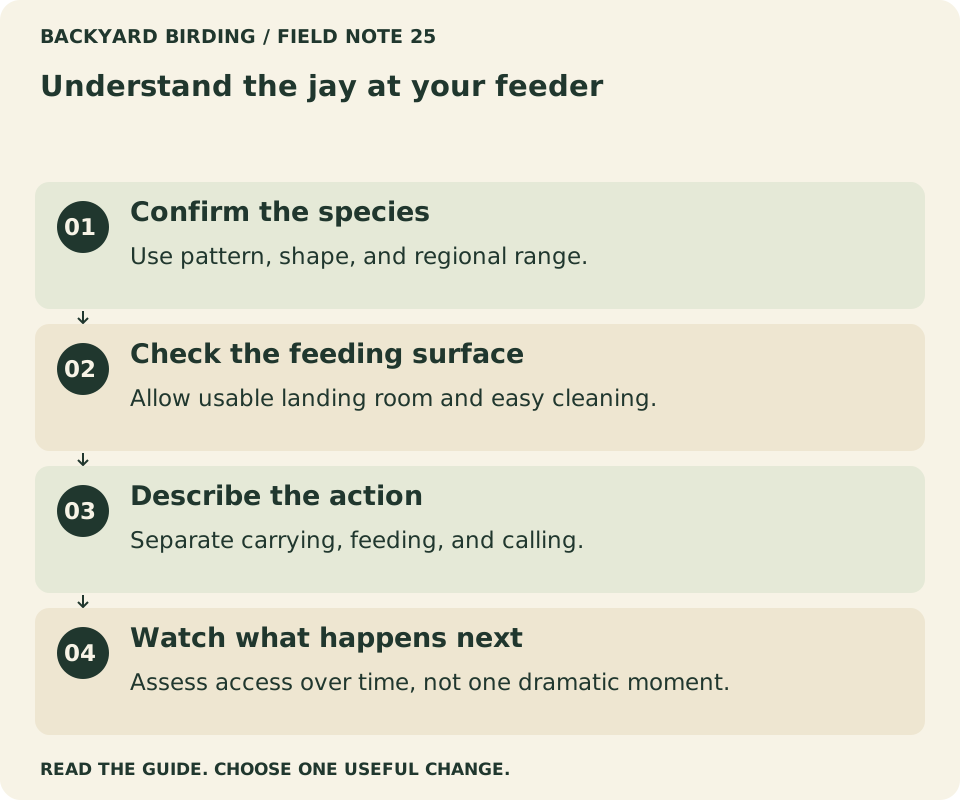
Your visual action map

Read the visual as text
- Confirm the species. Use pattern, shape, and regional range.
- Check the feeding surface. Allow usable landing room and easy cleaning.
- Describe the action. Separate carrying, feeding, and calling.
- Watch what happens next. Assess access over time, not one dramatic moment.
Check the yard's natural resources
Cornell describes Blue Jays using forests and edges, often around oaks, as well as urban and suburban settings. Nuts, seeds, insects, and other foods form part of their varied diet. A feeder is therefore one possible resource within a larger area, not the sole explanation for a jay's presence. Look at trees, shrubs, and neighboring habitat before deciding the yard needs more equipment.
Make a small map of the features birds already use. Note landing trees, open routes, and places where jays pause with food. You may find that your best observation point faces an oak rather than the feeding station. If you plan new vegetation, choose regionally appropriate plants that fit the available space and soil. Our native planting guide explains how to make that decision without treating a nationwide list of attractive plants as a local planting prescription.
Choose a feeding surface with enough room
A Blue Jay needs a usable landing and feeding surface, not simply a food it might like. A broad, stable platform or an appropriate hopper can be easier to evaluate than a tiny port designed for a much smaller bird. Check the actual dimensions, support, drainage, and cleaning access. The word “jay” on packaging is less useful than seeing how the bird would stand and reach the food.
Start with a modest fill and inspect the surface after use. Broad trays can accumulate droppings, hulls, and rainwater, so accessibility for the caretaker matters too. Make sure the feeder can be removed from level ground and that nearby glass has been addressed. Our guide to feeder designs compares these practical trade-offs. A large bird's successful visit is not a reason to accept a tray that becomes difficult to keep clean.
Offer a considered food choice
Suitable seed or plain, unsalted peanuts intended for bird feeding can be options to investigate where Blue Jays occur. Use food in sound condition and a dispenser appropriate to its size. Avoid seasoned snack products and food that has become damp or moldy. Keep packaging and storage directions so you know what you are offering and can respond if a batch's condition changes.
Begin with a small amount rather than a permanent heap. Observe whether food is eaten at the feeder, carried away, or left behind. Those are different patterns and should inform how much you put out. A bird rapidly removing several items does not necessarily mean every item is being consumed immediately. Keep the wider station in view, including waste and other visitors. Food selection should make the routine more understandable, not create an escalating contest to keep a tray continuously full.
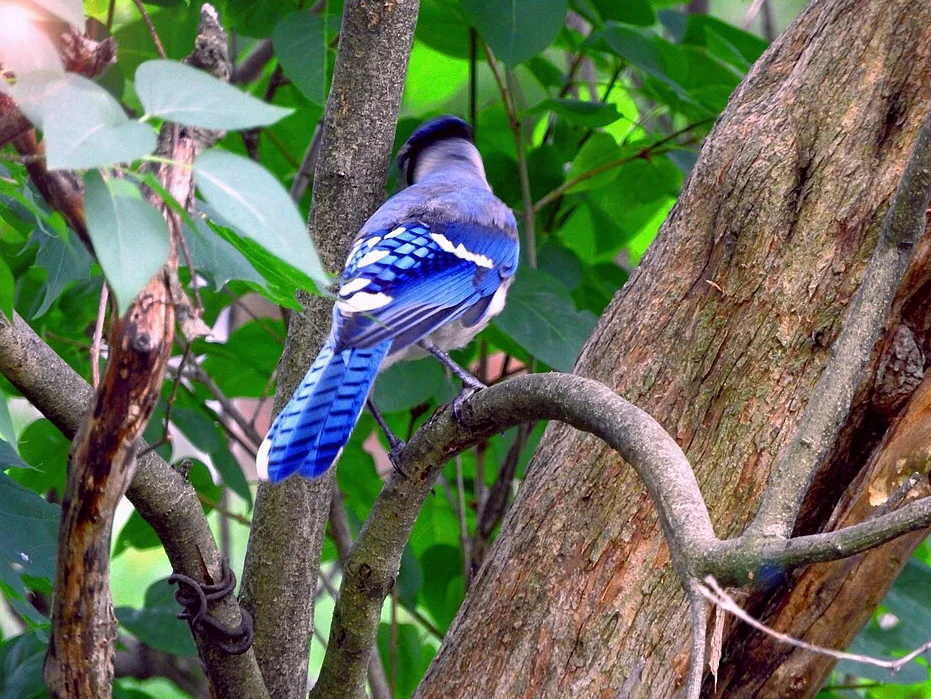
Photo: Clarise Samuels · Blue Jay In The Trees (166879159).jpeg · CC BY-SA 3.0. Cropped, gently adjusted, and resized for this guide.
“Write what the jay did before deciding why it did it.”
Backyard Birding — editorial takeaway
Understand carrying and caching without guessing a destination
Blue Jays store food in caches, a behavior described in Cornell's life-history account. Seeing a jay carry a nut away can therefore reflect storage as well as feeding elsewhere. You may not be able to determine which from the feeder window. Avoid assuming that a fast sequence of removals is evidence of unusual hunger or that every item goes to a nest.
Watch the departure route from your existing position and record only what you can see. If the bird disappears behind a fence, the observation ends there. Do not follow repeatedly or disturb a place where it is storing food. A useful notebook entry distinguishes “carried three items away during the watch” from “fed three young,” which would require different evidence. This simple separation keeps interesting behavior from turning into a story whose most important details were supplied by the observer.
Read calls as information, not a complete explanation
Blue Jays have a varied vocal repertoire and can imitate some hawk calls. A hawk-like sound near the yard is therefore worth checking visually when possible. It is not proof that a jay is deliberately tricking every other bird, nor does a loud call reveal a single fixed motive. Context matters, and several birds may be calling at once.
Listen to reference recordings from a reliable species account, then connect naturally occurring sounds with birds you can see. Record the situation: another jay arriving, a predator visible, a bird moving between trees, or no obvious event. Over time, you may recognize patterns without needing to translate each call into a human sentence. Avoid repeated outdoor playback to provoke a response. Patient listening lets you learn the local soundscape while leaving the birds' interactions as undisturbed as practical.
Assess feeder crowding by access over time
A jay arriving at a feeder may cause smaller birds to move away temporarily. That moment can look dramatic, but it does not describe the whole day's access. Watch what happens next. Do the smaller birds return, use another surface, or remain excluded through repeated observation periods? A short clip can exaggerate conflict by omitting the quieter intervals before and after it.
If crowding genuinely limits access, compare feeder design and placement before adding deterrents. A separate small-bird feeder may create another opportunity, but it also adds maintenance. Put any change through the same glass, cleanup, and support checks as the original station. Avoid promising that one product will sort birds into perfectly separate groups. The practical goal is a manageable arrangement with multiple ordinary opportunities to feed, not a yard where you attempt to control every natural interaction between species.
Find your situation

Read the visual as text
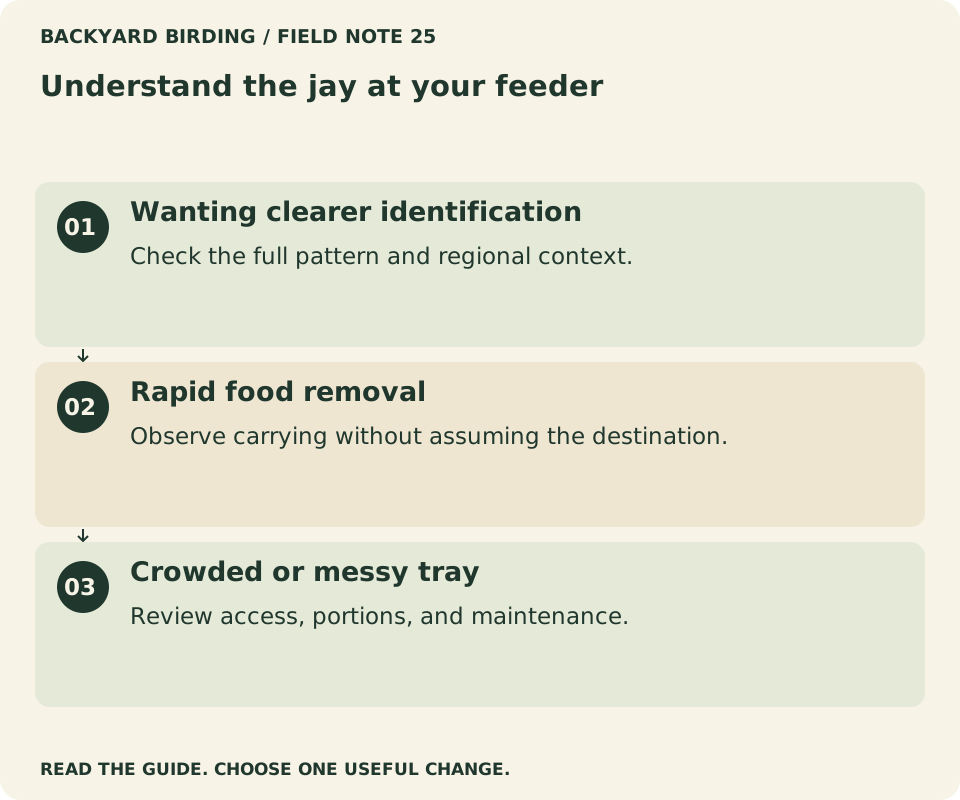
- Wanting clearer identification. Check the full pattern and regional context.
- Rapid food removal. Observe carrying without assuming the destination.
- Crowded or messy tray. Review access, portions, and maintenance.
Keep water independent of falling food
A clean bird bath can provide another place to observe jays and other local birds. Place it where seed and droppings from the feeder do not fall into the basin. Choose a stable, cleanable design with accessible water depth and footing. A dramatic decorative bowl may photograph well while being awkward to empty, scrub, or approach.
Watch from a comfortable distance and allow birds to use the water without repeated visits from you. A jay that looks around before drinking is not inviting a closer camera position. Record use as you would at the feeder: time, action, and any obvious disturbance. Our bird bath cleaning guide covers the care routine. If adding water stretches your maintenance capacity, simplify the food station or postpone the extra feature. More resources help only when their condition remains part of your regular attention.
Give family groups and young birds space
Young Blue Jays can spend time outside the nest while still receiving parental care. A bird on a branch or the ground is not automatically abandoned. If you are concerned, observe from a distance and contact a qualified local wildlife rehabilitator for situation-specific advice rather than attempting to feed or raise it yourself. Keep pets away and avoid gathering people around the bird.
Watch adult movements discreetly without approaching a suspected nest. Repeated visits for photographs may be disruptive even when your intentions are good. A garden observation can remain worthwhile without establishing the exact nest location or number of young. If routine yard work would bring you close to active nesting behavior, seek appropriate guidance and postpone discretionary disturbance where practical. The most useful response is often to create space and let normal care continue, rather than turning uncertainty into an immediate intervention.
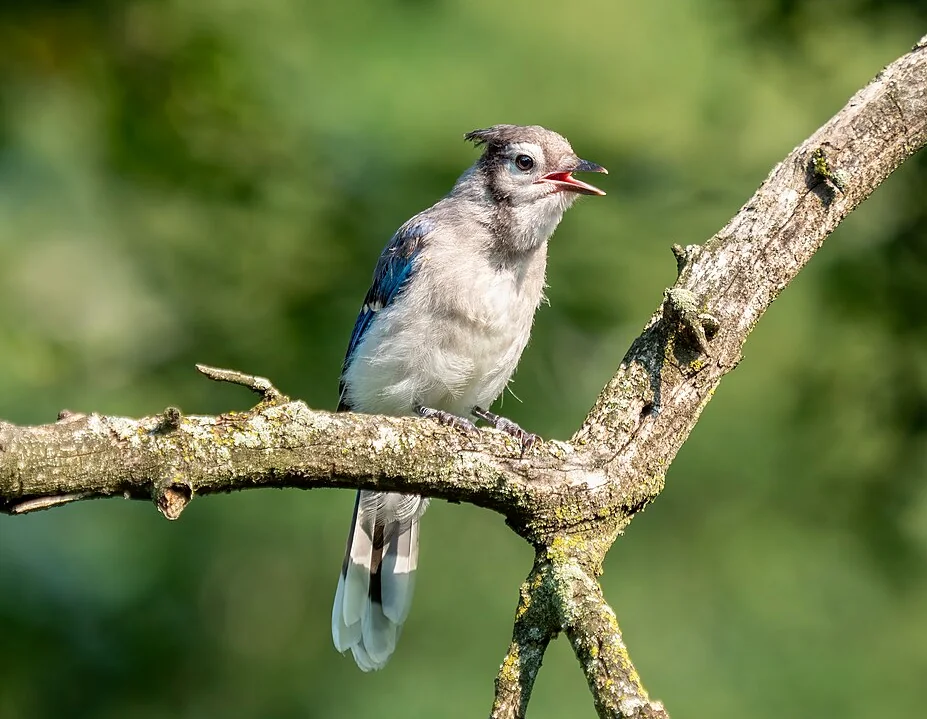
Photo: Rhododendrites · Blue jay fledgling (53513).jpg · CC BY-SA 4.0. Cropped, gently adjusted, and resized for this guide.
Avoid turning nest predation into a species verdict
Blue Jays can take eggs or nestlings, but their diet and behavior are broader than that single fact. Cornell's account places nest predation within an omnivorous diet rather than portraying the species as defined by it. It is misleading to use one upsetting event to label all jays as harmful visitors or to promise that excluding them will make a yard free of predation.
Focus on changes you can manage, such as keeping cats indoors, reducing disturbance, and maintaining suitable vegetation. If you are concerned about a particular nest or an injured bird, ask a qualified local wildlife professional before acting. Keep your account specific when seeking advice: describe what you saw, where it happened, and whether there is an immediate hazard. A single event does not tell you how excluding one species would affect the rest of the yard.
Notice seasonal changes without inventing a migration rule
Blue Jay movement patterns are complex, and some individuals migrate while others remain resident. Cornell notes that their migration is not fully understood. A yard may feel busy in one period and quiet in another without giving you enough evidence to identify the same individuals or explain where they went. Avoid assuming every jay you see in winter is the bird you watched in summer.
Use dates and comparable watch periods to describe your own pattern. Note whether you observed a single bird, several together, or a passing group that did not stop. Keep feeding changes and weather in the record as possible context, not proven causes. Local observations can help you recognize seasonal possibilities, but your yard is only one small sampling point. The honest conclusion may be that jay activity changed during the month, with the reason still uncertain.
Build a behavior notebook that stays factual
Choose a few observation categories and use them consistently. This makes ordinary visits more interesting and reduces the temptation to supply a story for every action. Keep a separate space for questions you want to investigate later.
| What you saw | A useful record | A conclusion to avoid without evidence |
|---|---|---|
| Food carried away | Item type and departure direction | Exact destination or recipient |
| Crest raised | Posture and nearby activity | A precise emotional state |
| Several calls | Sound pattern and visible birds | A word-for-word translation |
| Smaller birds leave | What happens over the next minutes | Permanent exclusion from one moment |
Try these example fields during three short watches and compare your notes. If food repeatedly disappears behind the same fence, record the visible departure route without adding a destination. If you want to learn what happens next, choose a viewing position with a wider sightline for your next session, while keeping your distance from the birds.
Small mistakes. Better moves.

Read the visual as text
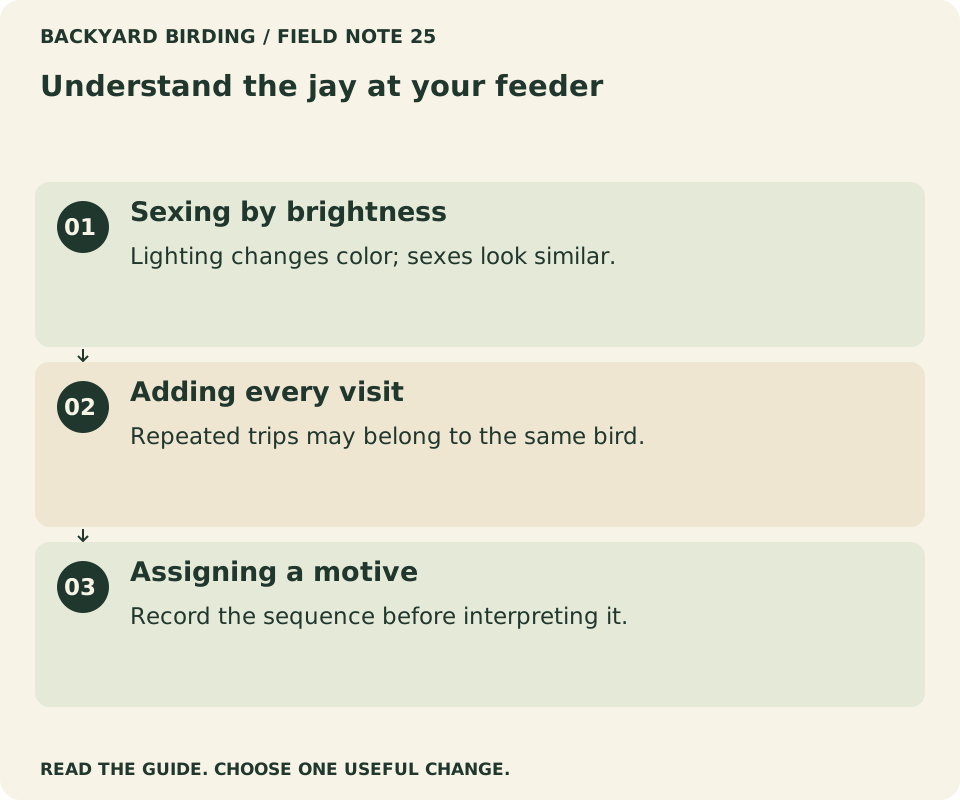
- Sexing by brightness. Lighting changes color; sexes look similar.
- Adding every visit. Repeated trips may belong to the same bird.
- Assigning a motive. Record the sequence before interpreting it.
Troubleshoot an empty or messy jay feeder
If the intended food remains untouched, confirm that Blue Jays occur locally and can use the feeding surface. Check food condition, support movement, and nearby disturbance. Give a sound new setup time to be encountered instead of changing several features every day. A platform that looks generous to you may still be poorly positioned or difficult to approach.
If food disappears rapidly but waste accumulates, reduce the portion and inspect which animals are using the station. Avoid assuming jays are responsible for every missing item simply because they are conspicuous. A quiet watch or appropriately configured camera can provide evidence, but it does not replace cleanup. Our seed scattering guide helps separate hulls, rejected food, and dispenser problems. The next step should respond to the specific condition you can see, not to a general impression that the birds are being wasteful.
Make your next visit more informative
For the next Blue Jay watch, choose one question: how the bird reaches the feeder, which food it handles, whether it carries items away, or how smaller birds return afterward. Watch from a settled position and write a few concrete details. Resist collecting every possible fact at once. A focused question often reveals more than an hour of distracted glances.
Then review the station itself: food quality, clean surfaces, sound mounting, safe glass, and manageable waste. Those are the conditions you can improve directly. Keep the bird's behavior open to observation rather than trying to make it match a personality you have assigned. Blue Jays are rewarding precisely because familiar-looking visits can contain different actions. A useful yard gives them room to behave naturally and gives you enough patience and context to notice what is actually happening.
Watch it. Then try it.
Review the steps and common mistakes in two short, silent animations. Each has a complete text transcript below.
Your four-step action map
Read the complete video transcript
Understand the jay at your feeder.
- Confirm the species. Use pattern, shape, and regional range.
- Check the feeding surface. Allow usable landing room and easy cleaning.
- Describe the action. Separate carrying, feeding, and calling.
- Watch what happens next. Assess access over time, not one dramatic moment.
Try the steps, then note any problem that still needs attention.
Three mistakes to avoid
Read the complete video transcript
Understand the jay at your feeder.
- Sexing by brightness. Lighting changes color; sexes look similar.
- Adding every visit. Repeated trips may belong to the same bird.
- Assigning a motive. Record the sequence before interpreting it.
Try the steps, then note any problem that still needs attention.
Both animations use this real photograph by Rhododendrites. Photo source · CC BY-SA 4.0. The photo is adapted into original educational animations, not recordings of a field test.
At a glance
| Before your next step | Your practical check |
|---|---|
| Wanting clearer identification | Check the full pattern and regional context. |
| Rapid food removal | Observe carrying without assuming the destination. |
| Crowded or messy tray | Review access, portions, and maintenance. |
Sources & evidence
- Cornell Lab: Blue Jay identification
- Cornell Lab: Blue Jay life history
- Cornell Lab: Suet and other bird foods
- Audubon: Native plants for birds and regional plant database
Our standard: real evidence before ratings. Corrections follow our editorial process.
Our verdict & your next actions
Choose the row that describes your setup, then follow the suggested check or adjustment.
| Your situation | Our verdict | Your next action |
|---|---|---|
| Wanting clearer identification | Check the full pattern and regional context. | Use the species guide. |
| Rapid food removal | Observe carrying without assuming the destination. | Start a behavior record. |
| Crowded or messy tray | Review access, portions, and maintenance. | Compare feeder designs. |
Your pocket field checklist
Tick off the steps as you go.
0 of 4 steps completed
Keep building your knowledge in birds, or search the full backyard library.